
Ptychopterid flies
Ptychoptera
Description
How to identify
Ptychopterid flies, commonly known as phantom crane flies, belong to the family Ptychopteridae within the order Diptera. These insects are relatively large and resemble crane flies, but they possess distinct wing venation that makes them unique.
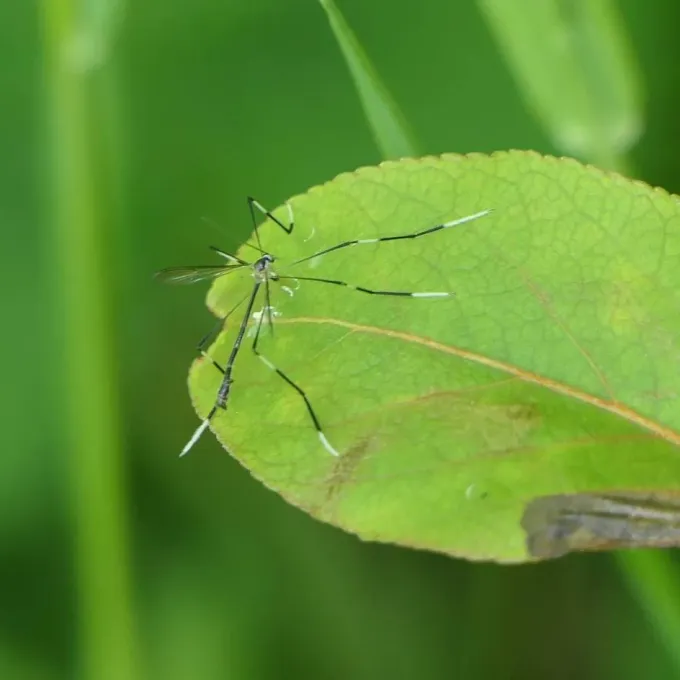
Adult flies are characterized by a slender body and long legs, often displaying contrasting colors. The head and thorax are well-developed, and the mouthparts are of the sucking type, adapted for feeding on flower nectar.
The larvae of Ptychoptera have an elongated body and are equipped with a long, retractable breathing tube at the posterior end, which allows them to breathe atmospheric air while submerged in water or saturated mud.
Larval coloration is typically grayish or muddy yellow, providing effective camouflage in benthic sediments or moisture-rich organic substrates where they reside.
Pupation occurs within the substrate, where the pupa also utilizes a long respiratory appendage that protrudes above the surface to facilitate gas exchange during the metamorphic stage.
What it damages
While adult phantom crane flies do not threaten crops, their larvae can reside in areas with excessive soil moisture, where they may occasionally impact vegetable or cereal crop health.
Primary damage occurs under waterlogged soil conditions, where larvae can feed on or damage the root systems of young seedlings, leading to stunted growth or overall plant weakness.
In standard agricultural practice, they are rarely considered major pests; however, their presence often indicates an underlying issue with the field's water management or drainage systems.
Infestation typically occurs in low-lying areas of fields, peat bogs, or poorly drained plots where the soil remains saturated for extended periods.
The most vulnerable crops include early vegetables and transplants set in heavy, damp soils where larvae feed on decaying organic matter and, under high density, on soft root tissues.
When it appears
Adult fly activity occurs during the warmer months, typically spanning from late spring through late summer, which aligns with the active growing season for many crops.
The peak emergence of adults often occurs in May or June, when environmental conditions are optimal for reproduction and population development in moist habitats.
The life cycle includes the egg stage, four larval instars, and the pupal stage, with larvae capable of overwintering in deep soil layers or benthic mud.
Usually, one generation develops per year, which limits their potential to become a significant pest compared to insects with multiple annual generations.
Seasonal temperatures directly dictate the rate of larval development and adult emergence, meaning a cold, lingering spring can shift their typical appearance dates.
Signs of infestation
The presence of Ptychopterid flies can be diagnosed by observing adult insects near irrigation canals, drainage ditches, and waterlogged segments of the field.
Signs of larval damage include overall plant growth retardation, yellowing of leaves near the stem base, and seedlings being easily pulled from the soil due to root system degradation.
An indirect indicator is the existence of persistent standing water on the field, which serves as an ideal breeding ground for this type of Diptera.
- Observation of adults with characteristic wing patterns.
- Damaged root collars of transplants in low-lying areas.
- Identification of larvae with long breathing tubes in the soil.
Visual inspection of the root zone by excavating the soil remains the most accurate method for confirming their presence and assessing the infestation level.
Control measures
The primary management strategy is the optimization of soil hydrological conditions, which involves maintaining efficient field drainage to prevent water saturation.
Agronomic practices focus on regular soil cultivation and aeration, which disrupts larval habitats and ensures oxygen reaches the plant root zones, discouraging their growth.
Crop rotation serves as a critical preventive measure, as alternating crops with deep tillage helps lower the population density and prevents the accumulation of pests.
Chemical control is rarely required and only implemented if the economic threshold is exceeded, typically through the application of soil-applied systemic insecticides.
Effective preventive maintenance includes the timely removal of plant debris from fields, which serves as the primary food source for larvae during the off-season.
Taxonomy
- Latin name
- Ptychoptera
- Order
- Diptera (flies)
- Family
- Ptychopteridae
- EPPO code
- PYCHSP
Discussion
No discussions yet — be the first.