
Conifer tortrix
Ptycholomoides aeriferana
Description
How to identify
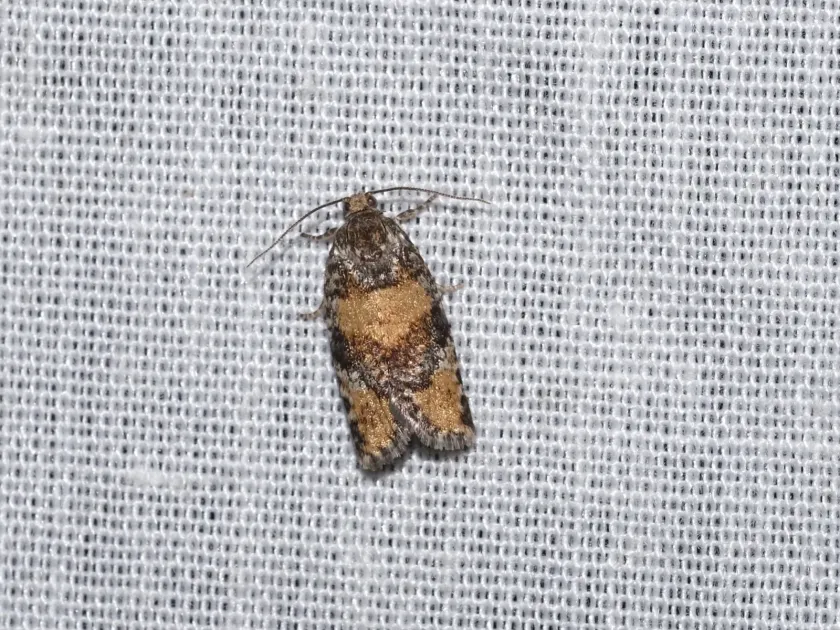
The Conifer tortrix Ptycholomoides aeriferana is a species of moth belonging to the family Tortricidae. The adult moths are small, typically with a wingspan ranging from 16 to 22 mm, featuring complex patterns on their forewings that act as camouflage against tree bark.
The larvae, or caterpillars, progress through five distinct stages of development. Initially light in color, they gradually darken as they mature, typically sporting a shiny black head and a body covered in fine, sparse setae that help them navigate the needles.
The life cycle is closely synchronized with the growth of host trees. The species typically overwinters in the early larval stage, tucked away in silk-spun shelters hidden within the needles or bark crevices to survive harsh weather conditions.
Adult moths are primarily nocturnal, remaining hidden during the day. Their activity patterns make them difficult to spot without specialized light traps or pheromone monitoring, which are often used in commercial forestry management.
As a specialist pest, Ptycholomoides aeriferana is well-adapted to surviving on various conifer species, making it a persistent concern in nurseries and ornamental landscapes where coniferous trees are grown.
What it damages
This pest targets a range of conifer species, with spruce (Picea) and larch (Larix) being the most frequent hosts. In some cases, pine and fir trees can also suffer from heavy infestations if nearby populations are high.
Larvae consume the needles and young shoots of the current year's growth. By spinning silk webs around groups of needles, they create protective enclosures where they feed securely, leading to tissue damage and needle desiccation.
Severe infestations cause thinning of the crown, reducing the aesthetic value of ornamental plants. In young trees, the constant feeding on new shoots can lead to stunted growth and irregular branch development.
The damage caused by the larvae also weakens the tree, making it susceptible to secondary infections and colonization by wood-boring insects. This compounding effect can lead to long-term decline in tree health.
In forest environments, widespread outbreaks can significantly reduce the annual growth increment, posing a challenge for forest health and wood production quality.
When it appears
The activity of the Conifer tortrix follows a distinct annual cycle. Larvae emerge from their overwintering sites in early spring, precisely when the trees begin their new growth phase, providing an abundant food source.
Pupation occurs within the silk-lined shelters created during the larval feeding phase. This transformation typically takes place in late spring, marking the final stage of the larvae's impact on the current year's growth.
Adult flight occurs mid-summer, usually during June and July. This is the period when mating takes place and females deposit eggs, ensuring the next generation is positioned correctly for the upcoming season.
Newly hatched larvae appear late in the summer, feeding briefly before finding a suitable site for hibernation. This single-generation cycle per year is critical for timing management interventions effectively.
Understanding this calendar helps managers target the most vulnerable stages of the moth's life, significantly reducing the success of the pest population throughout the growing season.
Signs of infestation
The most recognizable sign of an infestation is the presence of webbed clusters of needles. Larvae pull individual needles together using silk threads, creating nests that are easily spotted upon close inspection.
Accumulated frass, which appears as small dark pellets, is often visible trapped within these webbed enclosures, serving as a clear indicator of active feeding by the caterpillars.
Damaged needles tend to turn yellow or brown, creating a patchy appearance on the branches. In severe cases, the tips of the shoots may look ragged or withered due to the loss of tissue and water transport.
Checking branches for larvae or evidence of silk construction is a simple yet effective way to assess the health of your trees. During the flight period, light traps can confirm the presence of adult moths.
In ornamental settings, sudden branch tip dieback or discoloration without a clear cause often suggests the presence of leaf-rolling moth larvae hiding inside silk retreats.
Control measures
Effective management requires a combination of strategies. Physically removing and destroying infested needles or tips can be highly successful on smaller, individual trees where manual intervention is feasible.
Chemical control using systemic or contact insecticides is best applied during the larval emergence period. Timing is crucial, as treatments must be administered before larvae build protective silk nests that shield them from sprays.
Biological control agents, including specialized bacteria like Bacillus thuringiensis, offer an eco-friendly alternative that targets the larvae without significantly harming beneficial insects in the garden.
- Regular monitoring of tree crowns during early spring.
- Using pheromone traps to disrupt mating cycles.
- Providing adequate water and nutrients to stressed trees.
Maintaining a balanced environment that encourages natural predators, such as parasitic wasps and predatory beetles, can help keep the Conifer tortrix population below damaging thresholds in the long term.
Taxonomy
- Latin name
- Ptycholomoides aeriferana
- Order
- Lepidoptera (butterflies)
- Family
- Tortricidae
- EPPO code
- PTYCAE
Discussion
No discussions yet — be the first.