
Ptycholomoides
Ptycholomoides
Description
How to identify
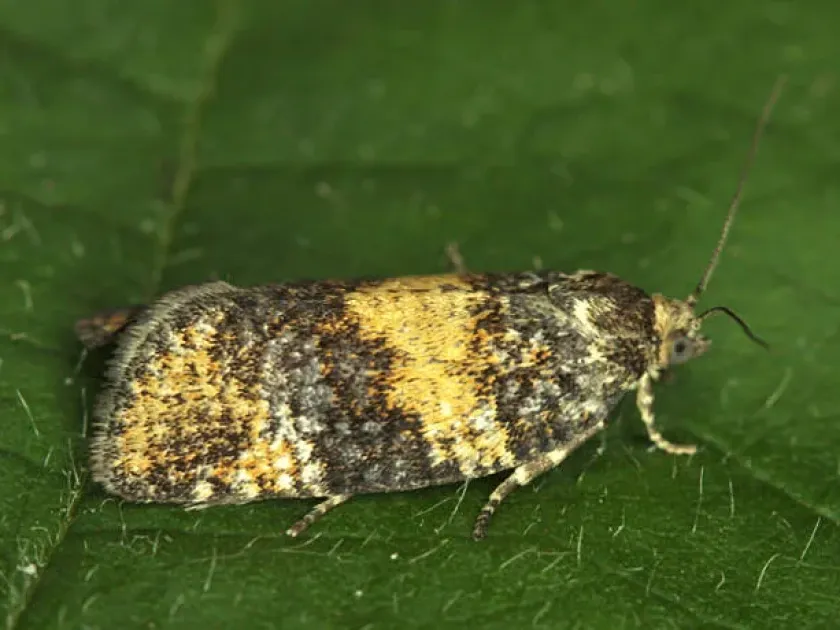
Ptycholomoides (specifically the species Ptycholomoides aeriferana) is a member of the Tortricidae family within the order Lepidoptera. These insects are small moths that are typically nocturnal or crepuscular.
The adult moths have a wingspan ranging from 15 to 20 mm. Their forewings feature a mottled brown and ochre pattern, which serves as excellent camouflage against tree bark, making them hard to spot during the day.
The larvae, or caterpillars, are typical of the leafroller group: they have a cylindrical, flexible body with well-developed thoracic legs and a darkened head capsule. They are known for their agile escape behavior when disturbed.
The life cycle involves complete metamorphosis, consisting of egg, larva, pupa, and adult stages. Oviposition occurs on leaves or bark, and the emerging larvae begin feeding shortly after hatching.
Overwintering typically takes place at the early larval stage. They form dense, protective silken cocoons hidden within deep crevices of the tree bark, providing resilience against harsh winter weather conditions.
What it damages
Ptycholomoides primarily infests members of the Rosaceae family. Their favorite hosts include apple, pear, and various stone fruits such as plums and cherries found in temperate orchards.
Early season damage is caused by larvae feeding on developing buds. By hollowing out these buds, they prevent the emergence of flowers and foliage, which directly impacts the potential yield of the fruit tree.
As the season progresses, the larvae move to the leaves. They use silk to roll or bind leaves together into tubular nests, creating a sheltered environment where they feed, often skeletonizing the leaf tissues.
In cases of high infestation, the larvae may also feed on the surface of developing fruit. This damage causes deformities, scarring, and entry points for further pathogens, which lowers the commercial value of the crop.
Continuous damage throughout the season places significant physiological stress on the tree. Weakened trees exhibit reduced growth rates and become more susceptible to bark diseases and other secondary stressors.
Signs of infestation
The most recognizable sign of infestation is the presence of rolled or folded leaves bound together by silk threads. Inside these structures, larvae or their dark frass (droppings) are usually found.
In early spring, damage to buds is observed when they fail to open or appear stunted with chewed margins. These buds often contain a solitary larva actively feeding during the warmer hours.
Surface feeding on the developing fruit is a critical sign. Affected fruit often shows small, scabby patches or distorted growth patterns, indicating the presence of the caterpillar earlier in the season.
The presence of adult moths during dusk or their attraction to light traps can serve as an early warning sign for growers to initiate monitoring and pest scouting procedures.
Overall canopy thinning and the appearance of scorched or drying leaf clusters are indicators of localized infestations, suggesting that the population density requires management intervention.
Control measures
Integrated pest management (IPM) is essential. Cultural practices, such as scraping loose bark from tree trunks during winter, can physically remove overwintering larvae and reduce the early season population.
Manual removal and destruction of infested leaf rolls are effective in smaller gardens or at the start of an infestation. This mechanical control helps prevent the spread of the next generation.
The use of biological insecticides, specifically those containing Bacillus thuringiensis, is highly effective against larval stages while remaining safe for beneficial garden insects and pollinators.
Chemical control should be applied based on economic injury thresholds. Systemic or contact insecticides are most effective when applied during the larval stage, particularly when they are actively feeding on exposed foliage.
Encouraging natural predators, such as parasitic wasps and predatory bugs, plays a vital role in biological control. Maintaining a healthy garden ecosystem helps keep the Ptycholomoides population below damaging levels.
Taxonomy
- Latin name
- Ptycholomoides
- Order
- Lepidoptera (butterflies)
- Family
- Tortricidae
- EPPO code
- PTYCSP
Discussion
No discussions yet — be the first.