
Ptycholoma lecheana
Ptycholoma
Description
How to identify
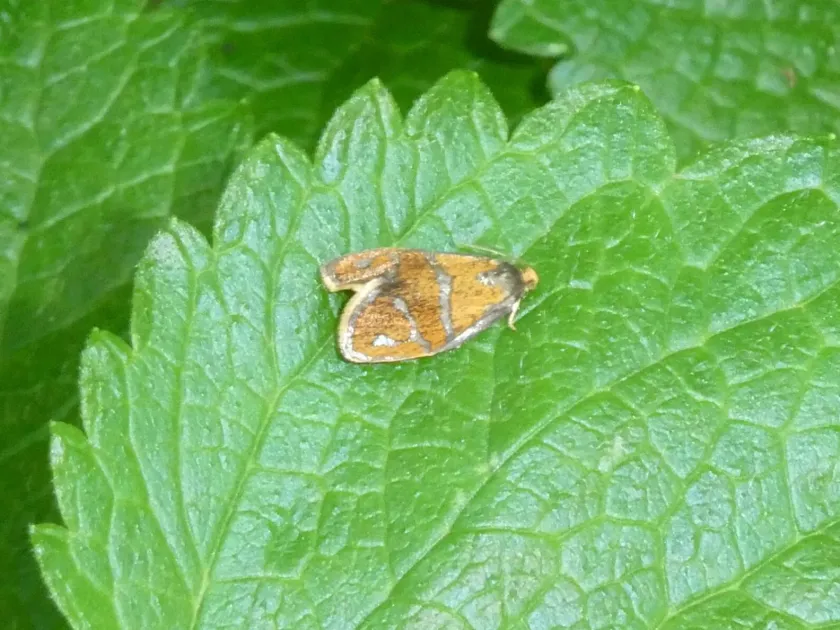
Ptycholoma lecheana, commonly known as a type of leafroller moth, is a small insect with a wingspan of approximately 17–22 mm. Its forewings are characterized by ochre-yellow to brownish coloring with distinct dark transverse lines and patterns.
The larvae, or caterpillars, grow up to 20 mm in length. They typically exhibit a dark green or grayish-green body color, complemented by a shiny, dark brown or black head capsule, which is a key diagnostic feature for field identification.
Taxonomically, this species belongs to the order Lepidoptera, family Tortricidae. These moths are nocturnal or crepuscular, spending daylight hours hiding in dense canopy cover or crevices.
The life cycle undergoes complete metamorphosis, including egg, larva, pupa, and adult stages. In most temperate regions, the species completes one generation per year, overwintering as partially developed larvae.
Overwintering larvae reside in protective, dense silken cocoons hidden in bark crevices, tree forks, or near bud scales, providing them with effective shelter against winter weather conditions.
What it damages
This pest is a polyphagous insect that primarily targets fruit-bearing trees. Commonly affected hosts include apple, pear, plum, and cherry trees, as well as various broad-leaved forest trees like oak and lime.
In spring, larvae cause severe damage to opening buds, consuming the internal tissues. This early-season feeding often results in the loss of flower buds and potential fruit yield.
As the season progresses, the caterpillars migrate to young leaves. They pull the leaves together using silk webbing, creating a shelter where they continue to feed, which leads to significant defoliation.
Damage also extends to young fruit and developing ovaries. Larvae may bore into the fruit flesh, causing deformities, premature drop, and increased susceptibility to fungal rot infections.
Large-scale infestations can cause substantial loss of leaf area, reducing the tree's photosynthetic capacity, weakening its overall growth, and negatively impacting the formation of fruit buds for the following year.
When it appears
Larval activity begins in spring, coinciding with the bud-burst phase of host trees, typically occurring in April and May. This is the period when they are most susceptible to control efforts.
Pupation occurs from late May through June. The larvae transform within the webbed leaf shelters, with the pupal stage lasting approximately two weeks depending on the temperature.
Adult moths emerge during June and July. During this time, they mate, and females lay eggs on the leaves of host plants, usually in groups covered by a protective secretion.
New larvae hatch in mid-summer. They feed briefly on foliage before entering their overwintering stage, where they move to protected sites on branches or tree trunks to spin their cocoons.
Monitoring for adults during the summer flight period is crucial for understanding population density and predicting the potential threat for the following spring season.
Signs of infestation
The first sign of infestation in spring is the presence of damaged or hollowed-out buds, often accompanied by fine silk threads surrounding the site of injury.
Characteristic leaf-rolling is the most reliable indicator. Leaves tied together into "nests" or tubular shapes are clear evidence of the presence of larvae actively feeding inside.
Visible damage to foliage, such as ragged holes or partially consumed leaves, confirms an active infestation. Close inspection of these leaf clusters usually reveals the presence of larvae.
During the dormant winter season, small white cocoons hidden in the rough bark or branch junctions indicate where the population is surviving the winter, allowing for targeted preventive measures.
The use of pheromone or bait traps during the flight period allows for the detection of adult moths, providing an early warning system for orchards and garden owners.
Control measures
Management of Ptycholoma lecheana involves a combination of cultural, biological, and chemical methods. Cleaning tree bark and whitewashing trunks can destroy overwintering sites.
Biological control includes the use of natural enemies like Trichogramma wasps, which parasitize the eggs, and microbial insecticides that specifically target early-stage larvae without harming beneficial insects.
Chemical control should be timed strategically. Applications of insecticides are most effective during the green tip stage and immediately after bloom when the larvae are actively feeding and exposed.
Monitoring using pheromone traps allows for precise timing of interventions, reducing the need for broad-spectrum insecticide applications and protecting the orchard's natural balance.
- Manual removal of webbed leaves containing larvae.
- Encouraging local populations of insectivorous birds to control pests.
- Pruning and thinning tree crowns to improve air circulation and reduce hiding spots for moths.
Taxonomy
- Latin name
- Ptycholoma
- Order
- Lepidoptera (butterflies)
- Family
- Tortricidae
- EPPO code
- PTYHSP
Discussion
No discussions yet — be the first.