
Pentail treeshrew
Ptilocercus lowii
Description
How to identify
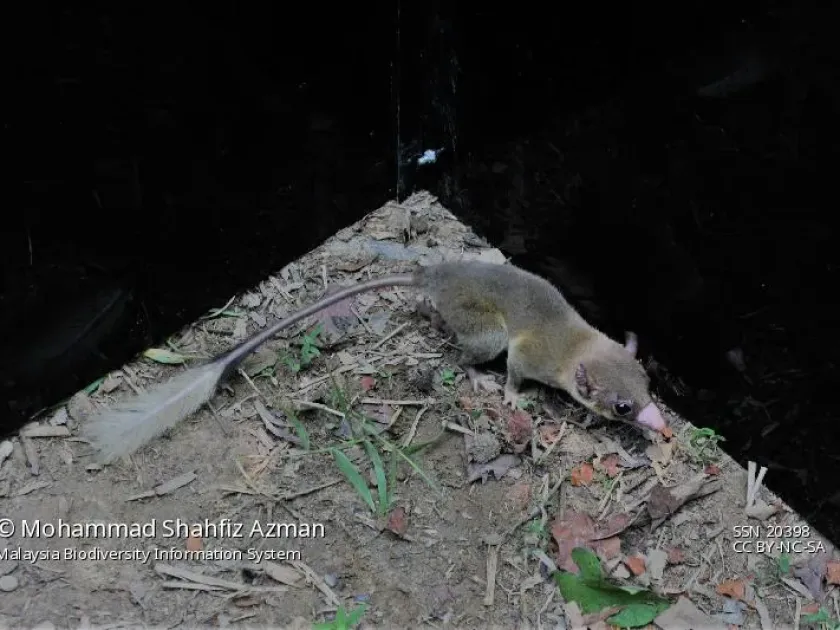
The pentail treeshrew is a small mammal characterized by a distinctive tail with a feather-like tip of hair, which makes it easily recognizable in its natural habitat.
As a member of the Ptilocercidae family, it is an nocturnal animal with a specialized anatomy that facilitates climbing and maneuvering within dense forest canopies.
The species weighs approximately 40 to 60 grams and exhibits a grey to brownish coat, which serves as a natural camouflage against tree bark and foliage.
Its evolutionary history is unique, placing it in an ancient lineage of mammals that retains many primitive traits alongside specialized adaptations.
Morphologically, the contrast between the scaled base of the tail and the terminal plumage is the key identifying feature for researchers and field agronomists.
What it damages
Pentail treeshrews are known to cause damage to oil palm plantations by feeding on developing inflorescences and sugary palm nectar, which is often fermented.
Feeding activities can lead to the destruction of floral parts, preventing successful pollination and resulting in significant yield losses for growers.
By gnawing on bark and tender shoots, they create wounds on the palm stems, providing entry points for wood-rotting fungi and secondary infections.
The stress induced by repeated feeding can severely stunt the growth of young palms, increasing the time required for them to reach maturity.
In agricultural regions, the interaction between these treeshrews and crops is exacerbated by the loss of natural forest habitats, forcing the animals to adapt to commercial crops.
Signs of infestation
The primary indicators of infestation include systematically gnawed palm inflorescences and shredded tender leaf tissues found on the plantation grounds.
Claw marks on the bark of palms serve as a strong diagnostic sign that the area is being visited by climbing mammals during nocturnal hours.
Detection is often difficult due to their nocturnal habits, so monitoring activity usually requires the use of trail cameras or targeted night observations.
Observing a sudden decline in the pollination success of specific palm rows can be a key sign of treeshrew damage during the flowering season.
Presence of excreta at the base of the trees or along frequent climbing routes confirms the active use of the site for foraging purposes.
Control measures
Installing metal or plastic collars on palm trunks is the most effective mechanical strategy to prevent treeshrews from reaching the sensitive crown area.
Clearing underbrush and maintaining sparse spacing between trees can disrupt the movement paths of the animals, making the area less attractive for foraging.
Repellents that create an unpleasant olfactory barrier may be used as a supplementary measure to protect highly vulnerable seedling stages.
Biological monitoring and precise identification of hotspots are essential for implementing targeted control measures rather than broad-scale intervention.
Developing management plans that prioritize biodiversity conservation alongside crop protection is recommended to maintain ecological balance in the region.
Taxonomy
- Latin name
- Ptilocercus lowii
- Family
- Ptilocercidae
- EPPO code
- PTLCLO
Discussion
No discussions yet — be the first.