
Pen-tailed treeshrew
Ptilocercus
Description
How to identify
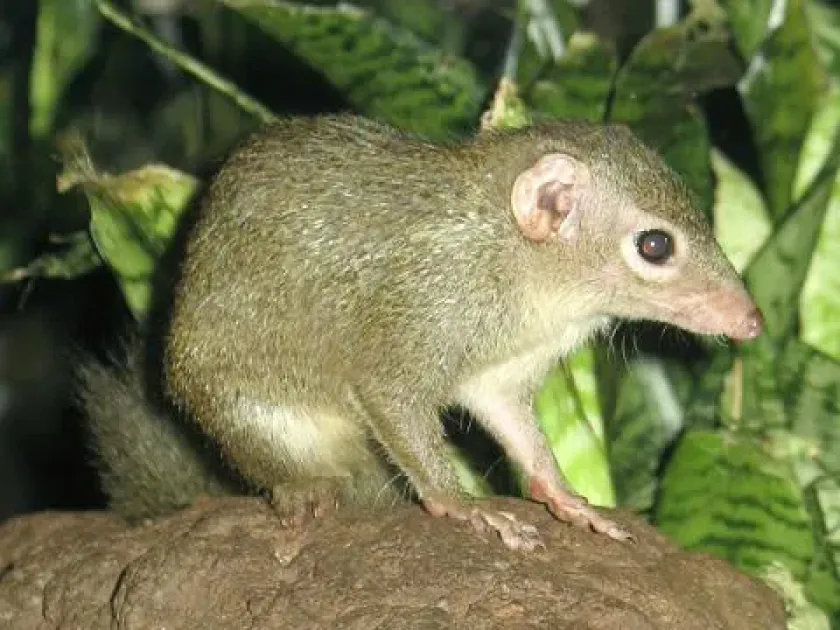
The pen-tailed treeshrew (Ptilocercus lowii) is a small, nocturnal mammal belonging to the order Scandentia and the family Ptilocercidae.
It is distinguished by its unique tail, which features a row of stiff hairs on both sides, resembling a bird's feather, and a grayish-brown fur coat.
These animals are highly adapted to an arboreal lifestyle, possessing sharp claws and agility that allow them to navigate complex forest structures.
While they are biologically fascinating for their ability to consume fermented nectar, they often come into conflict with agricultural interests.
Identifying them involves recognizing their distinct morphological features and their preference for dense, forested habitats near plantations.
What it damages
The pen-tailed treeshrew is known to feed extensively on the nectar of wild palms, such as the bertam palm, and can cause significant damage to plantation-grown species.
By feeding on nectar, they damage inflorescences, which disrupts the pollination process and prevents the development of fruits and seeds.
Beyond flowers, they may consume young shoots and buds of tropical plants, leading to stunted growth and reduced overall plant health.
The mechanical injuries caused by their teeth serve as entry points for various pathogens, including bacteria and fungi, in tropical environments.
Such damage results in decreased yields, impacting the economic viability of crops that rely on successful flowering and fruiting cycles.
When it appears
In their native tropical habitats, pen-tailed treeshrews do not exhibit seasonal hibernation, remaining active throughout the entire year.
Activity levels are largely synchronized with the flowering periods of the plants they feed upon, as these represent peak resource availability.
As nocturnal animals, they are most active during the night, making them difficult to detect during standard daytime agricultural inspections.
Fluctuations in rainfall can lead to changes in food availability, potentially causing treeshrews to concentrate their feeding activity on specific plantation blocks.
Long-term observation shows that their impact is most significant when local flowering synchronizes with periods of high metabolic demand for the population.
Signs of infestation
The presence of pen-tailed treeshrews is often revealed by bite marks on flowers and inflorescence stems that show signs of small, precise incisions.
Evidence of feeding is often accompanied by the presence of fecal droppings at the base of the tree or on the lower branches.
Tree bark may show characteristic scratches and wear from the repeated use of climbing routes by these agile mammals.
- Premature dropping of flowers due to stem damage.
- Presence of saliva residues on the nectar-secreting parts of the plant.
- Unevenly gnawed buds or young fruit clusters.
Using camera traps during the night is the most effective way to confirm their presence and accurately identify the culprit behind observed crop damage.
Control measures
Physical exclusion, such as the use of protective netting or metal baffles on tree trunks, is the most effective way to prevent treeshrew access to crops.
Repellents that mask the scent of nectar can be applied to inflorescences to discourage feeding, though this requires consistent reapplication.
Humane trapping and relocation programs can be employed to manage population numbers in sensitive areas where damage is economically critical.
Habitat management, such as clearing unnecessary brush around plantation perimeters, helps reduce the cover available for these nocturnal visitors.
Integrated pest management strategies should prioritize non-lethal deterrents to maintain ecological balance while protecting the harvest from damage.
Taxonomy
- Latin name
- Ptilocercus
- Family
- Ptilocercidae
- EPPO code
- PTLCSP
Discussion
No discussions yet — be the first.