
Elm bark beetle
Pteleobius vittatus
Description
How to identify
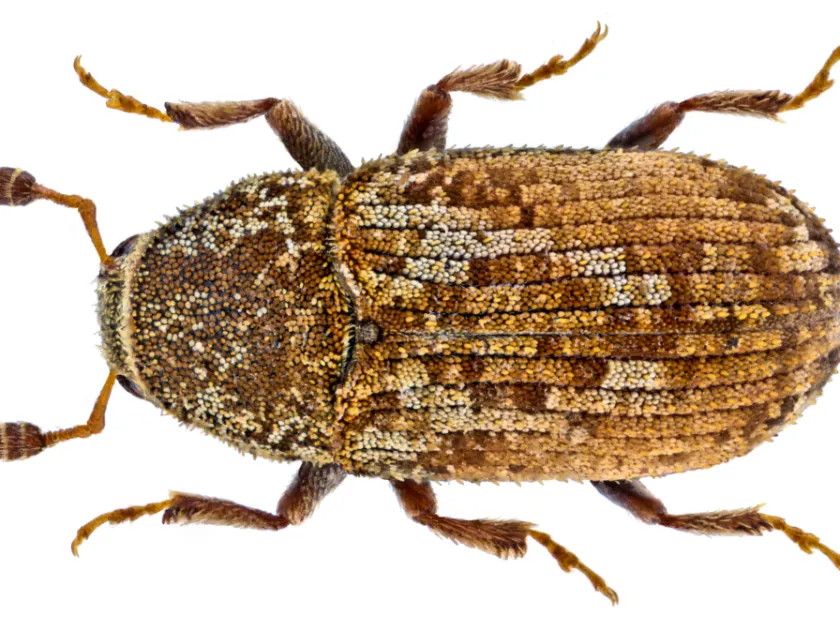
The elm bark beetle (Pteleobius vittatus) is a small wood-boring insect belonging to the Curculionidae family and the Scolytinae subfamily.
Adult beetles are typically 2 to 3 mm in length, featuring a cylindrical body that is dark brown or black, often with distinctive lighter markings on the elytra.
The larvae are legless, cream-colored, and C-shaped, living primarily within the inner bark, where they feed on the cambium layer of the host tree.
Pupation occurs within the bark galleries, and the emerging adults bore their way out to find new host trees, repeating the cycle of destruction.
Their morphological characteristics, including specialized structures on the head for boring, make them highly efficient at colonizing weakened woody tissues.
What it damages
These beetles primarily infest various species of the Ulmus genus, especially those that are already physiologically stressed or decaying.
The most significant impact is their role as a vector for the fungal pathogens Ophiostoma ulmi and Ophiostoma novo-ulmi, which cause Dutch elm disease.
By excavating extensive galleries in the phloem and cambium, the beetles interrupt the tree's vascular system, leading to rapid decline and mortality.
Even without the associated fungal infection, high beetle populations can physically girdle a tree, cutting off nutrient transport between the roots and the crown.
Urban elms and forest stands are particularly susceptible to widespread damage, leading to significant loss of biodiversity and ornamental value.
When it appears
Adult beetle activity usually commences in early spring, as rising temperatures trigger the emergence from winter dormancy under the bark.
Depending on regional climate, the beetle may complete one to two generations per year, with activity peaking during the warmer summer months.
The overwintering stage involves either adults hiding in thick bark or larvae remaining deep within the wood, protected from extreme winter cold.
Spring is the most critical period for control efforts, as the initial colonizing flight determines the extent of infestation for the upcoming season.
Hot and dry summers often accelerate the beetle's reproductive cycle, while simultaneously weakening the host trees, creating an ideal environment for outbreaks.
Signs of infestation
The most reliable sign of an infestation is the presence of small, round entry holes on the bark, often referred to as "shot holes."
Frass (fine sawdust produced by boring) accumulating around the base of the tree or in bark crevices is a clear indicator of active colonization.
Wilted or yellowing foliage in the crown during the mid-summer months is a classic symptom of the vascular disruption caused by the beetle and the associated fungi.
Removing a section of bark often reveals a central egg gallery with larval tunnels radiating outward, resembling a specific pattern characteristic of the species.
Premature bark shedding or distinct patches of dead wood on the trunk indicate advanced stages of the beetle's activity within the stem.
Control measures
Sanitation is the most effective management strategy; this involves identifying, cutting, and removing infested trees before the beetles can spread to healthy ones.
Keeping elm trees healthy through regular watering and proper site management significantly increases their resistance to successful beetle attack.
Insecticidal sprays applied to the bark during the spring flight period can provide temporary protection for high-value ornamental trees.
Pheromone traps are used by arborists and forestry managers to monitor population levels and determine the timing of specific control measures.
- Immediate removal of dead or dying elm branches to destroy beetle breeding grounds.
- Avoidance of pruning during the flight season to prevent attracting beetles with tree sap.
- Monitoring urban elm stands for early symptoms of Dutch elm disease and beetle presence.
Taxonomy
- Latin name
- Pteleobius vittatus
- Order
- Coleoptera (beetles)
- Family
- Curculionidae
- EPPO code
- PTELVI
Discussion
No discussions yet — be the first.