
Cattle psorobid mite
Psorobia bos
Description
How to identify
The cattle psorobid mite Psorobia bos belongs to the family Psorobidae, order Trombidiformes. It is a microscopic ectoparasite that is virtually invisible to the naked eye.
The mite has a round, flattened body shape, which is typical for most members of this family. The cuticle surface is covered with microscopic scales, allowing the mites to attach securely to the host's epidermis.
Identification of this parasite can only be performed in laboratory settings using skin scrapings. Microscopic examination of the biological material collected from the affected areas is required for a positive diagnosis.
The life cycle of this mite takes place entirely on the host animal. The development process includes egg, larva, protonymph, deutonymph, and adult stages.
The constant body temperature of the mammal provides an ideal environment for the reproduction and survival of this mite population throughout the year.
What it damages
This parasite affects only cattle. It is a highly specialized species and does not pose a threat to plants or other types of agricultural animals.
The mites inhabit the superficial layers of the epidermis, feeding on tissue fluids and lymph. Their activity causes profound disruption in the structure of the animal's skin.
The primary economic damage is reflected in reduced livestock productivity, degradation of hide quality, and a weakened immune system due to constant irritation and stress.
Prolonged infestation leads to chronic dermatitis, characterized by severe itching and structural changes in the skin, negatively impacting the welfare of the herd.
In industrial farming, an infestation with the cattle psorobid mite leads to significant losses due to veterinary costs and reduced growth rates of the animals.
Signs of infestation
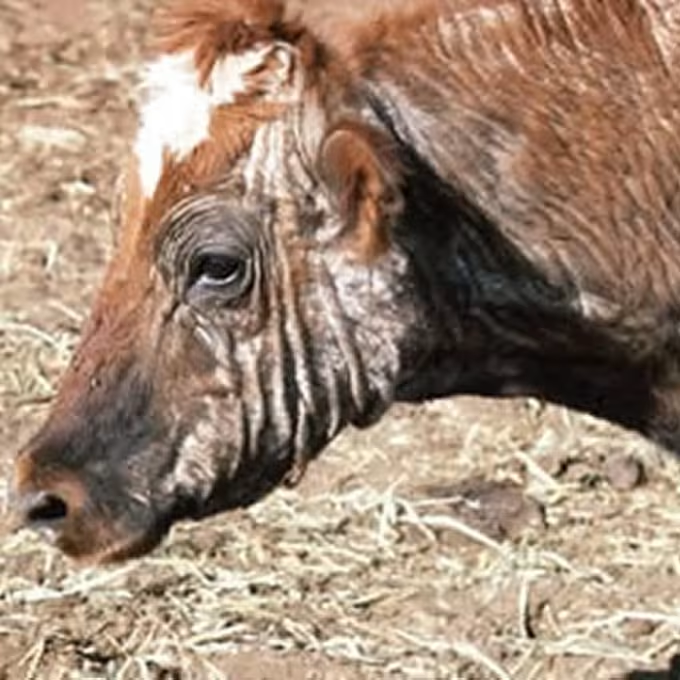
The initial sign of infestation is the appearance of dry and flaky skin patches. Animals show signs of discomfort and are frequently observed rubbing against stalls or other hard objects.
Hair loss (alopecia) is commonly observed in the affected skin areas. The coat loses its luster, becomes brittle, and a grayish deposit composed of epidermal scales may form on the denuded skin.
Upon inspection, redness and thickening of the skin folds are noticeable. In areas of intense mite density, secondary bacterial infections often develop due to constant scratching.
Itching tends to intensify during warm weather and under crowded conditions, as the mites move between hosts more easily through direct contact.
In advanced cases, the animal's skin thickens and takes on a parchment-like appearance, which indicates a chronic stage of psorobiosis requiring immediate professional veterinary care.
Control measures
Controlling the cattle psorobid mite requires a comprehensive approach, involving individual treatment of affected animals and thorough disinfection of their housing facilities.
The main control method is the application of acaricidal agents, either by spraying or by using pour-on treatments along the spine. Strict adherence to treatment schedules is crucial to eradicate subsequent generations of the parasite.
Modern veterinary products based on ivermectin or other macrocyclic lactones are widely used due to their systemic effect against ectoparasites.
A mandatory quarantine period for all new animals introduced to the farm is essential to prevent the spread of the infestation to healthy members of the herd.
- Regular cleaning and disinfection of housing.
- Application of professional insecto-acaricidal products.
- Sanitation of grooming tools and equipment.
- Periodic veterinary screening of the entire herd.
Taxonomy
- Latin name
- Psorobia bos
- Order
- Mites
- Family
- Psorergatidae
- EPPO code
- PSRBBO
Discussion
No discussions yet — be the first.