
Psocids
Psocus
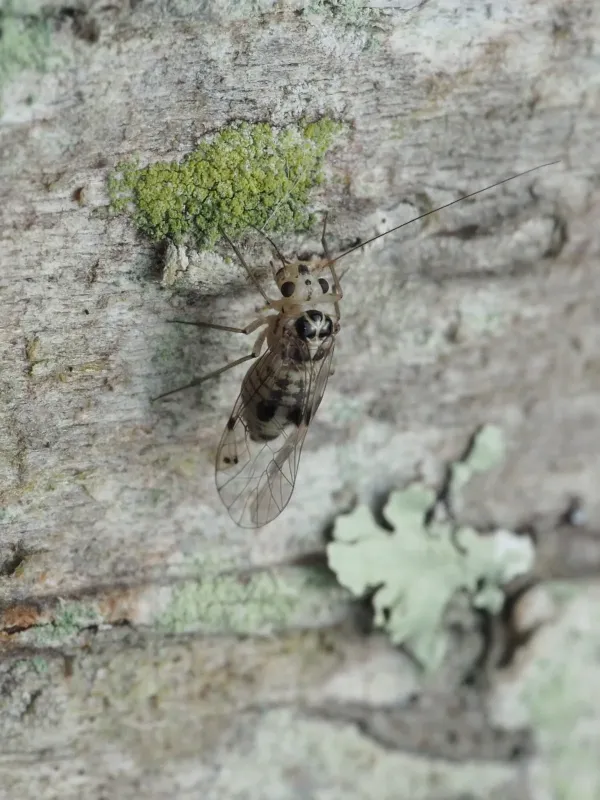
Description
How to identify
Psocids (order Psocoptera) are tiny insects typically measuring between 1 and 5 millimeters in length. While they may resemble small beetles, they are biologically related to parasitic lice, possessing soft bodies and long, thread-like antennae.
The coloration of these insects ranges from pale yellow to dark brown. Winged species feature two pairs of transparent wings with distinct venation, which are folded roof-like over the abdomen when at rest, though many indoor species are wingless or lead a hidden lifestyle.
A key identification feature is their movement pattern: they scurry in sudden, jerky spurts followed by complete stillness. In large infestations, they may produce a subtle ticking sound, leading to their common name, "booklice."
Nymphs resemble smaller versions of the adults but lack developed wings. They undergo several growth stages, gradually increasing in size while developing the morphological features of adult insects.
Precise identification often requires a microscope to examine the structure of the mouthparts and wing venation, as many members of the family Psocidae share similar physical characteristics.
What it damages
Psocids are primary storage pests that specialize in feeding on microflora such as molds and fungi. They primarily cause damage to grain, flour, cereals, and dried fruit that have already been compromised by high humidity.
While they rarely consume dry, healthy grain, their presence is a clear indicator of poor storage conditions. They thrive in damp environments, damaging the germ of the seed and contaminating food supplies with their excrement and body fragments.
They pose a significant threat to herbarium collections, library archives, and food warehouses. By feeding on fungal spores, they indirectly facilitate the spread of mold infections throughout the entire stock.
In the agricultural industry, the presence of psocids often signals the onset of "hot spots" within grain silos. They colonize damp areas, turning high-quality grain into sub-standard produce that is unsuitable for human consumption.
Indirect damage involves creating ideal conditions for secondary infestations by more harmful storage pests, as the compromised grain coat becomes susceptible to mites and weevils.
When it appears
Psocids can breed year-round in temperature-controlled warehouses. Optimal conditions for their development include temperatures between +20 and +30 degrees Celsius and relative humidity levels exceeding 60 percent.
Activity spikes significantly during the summer months when ambient temperatures rise, leading to exponential population growth. During this time, they easily infiltrate storage facilities through structural gaps and vents.
Winter in unheated warehouses slows their development; however, if internal grain temperature rises due to microbial activity (hot spots), psocids can continue to thrive even in freezing weather.
The life cycle from egg to adult is remarkably fast, taking only 3–4 weeks under favorable conditions. This allows the population to expand rapidly if management practices are neglected.
In natural environments, peak activity occurs during warm, humid months when fungal growth on decaying plant matter provides an abundant food source for these insects.
Signs of infestation
The first sign of an infestation is a dusty or powdery film on the surface of grain or packaging, which consists of fungal spores and insect waste products.
A musty or earthy odor often precedes visible signs of mold and is a characteristic indicator of psocid activity. These insects are intrinsically linked to the processes of decay and mold development in organic matter.
Upon careful inspection of storage bags, walls, or the product itself, tiny, frantically moving specks may be observed. Using a magnifying glass makes these pests clearly visible.
Finding empty seed coats or damaged embryos during laboratory analysis of grain samples is definitive proof of an infestation.
- High humidity levels within the storage facility
- Visible mold growth on walls or packaging
- Ticking noises heard in quiet storage areas
- Detection of live insects on monitoring traps
Control measures
The primary control strategy against psocids is maintaining grain moisture content below critical levels (typically less than 14–15%). Without fungal growth to feed on, the psocid population cannot sustain itself.
Strict ventilation control is essential for all storage facilities. Regular aeration minimizes the risk of condensation forming, which creates the initial moist environment necessary for psocid colonization.
If an infestation is detected, thorough cleaning and disinfection of the warehouse are required. Chemical control methods, such as fumigation or aerosol treatments, are effective in eliminating existing populations.
Agrotechnical measures must include meticulous cleaning of grain to remove weed seeds and cracked kernels, which are highly prone to molding and subsequent psocid infestation.
As a preventive measure, regular monitoring of grain temperature and moisture using probes is recommended, allowing facility managers to identify and treat hot spots before pests become established.
Taxonomy
- Latin name
- Psocus
- Family
- Psocidae
- EPPO code
- PSOCSP
Discussion
No discussions yet — be the first.