
Spruce needle tortrix
Pseudohermenias abietana
Description
How to identify
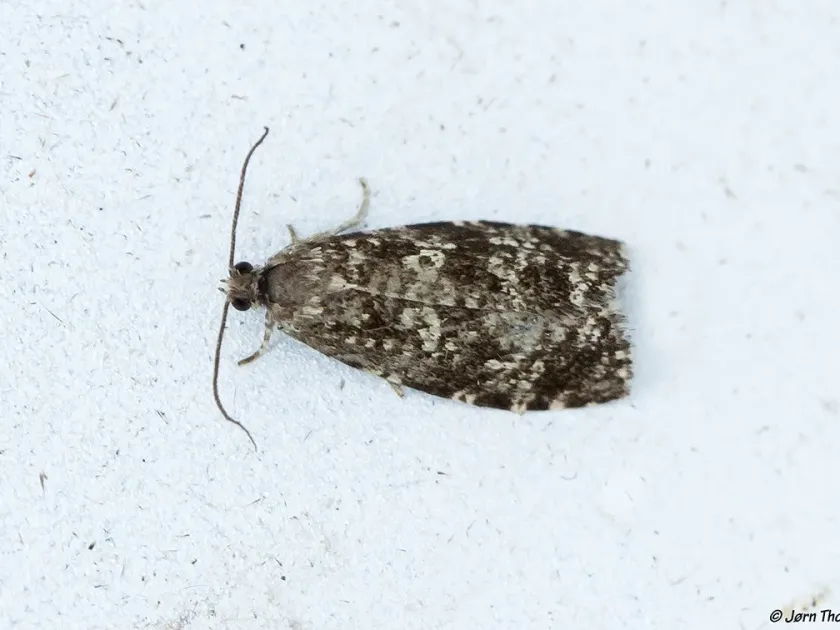
The spruce needle tortrix (Pseudohermenias abietana) is a moth belonging to the family Tortricidae. The adult moths are small, typically featuring a wingspan of 14–18 mm, with forewings that exhibit a cryptic, brownish-grey mottled pattern.
The larvae, or caterpillars, are the primary stage causing damage. They grow to approximately 15 mm in length and possess a dull green body with a dark head capsule and a distinct prothoracic plate, making them characteristic of this species.
Taxonomically, this pest is part of the order Lepidoptera. It is considered a localized but potentially significant pest in coniferous forests, nurseries, and ornamental plantings, preferring spruce trees as its primary host.
The insect’s life cycle is closely synchronized with the growth of spruce trees. While usually kept in check by natural enemies, favorable climate conditions can lead to sporadic outbreaks that threaten young saplings.
Adult moths are nocturnal, which makes visual identification challenging without the aid of light traps or pheromone monitoring during the flight season, which usually occurs in early summer.
What it damages
The larvae feed on the needles of spruce trees, initially hollowing them out. As they develop, they create webbed nests by tying several needles together with silk, which provides them with shelter and a localized food source.
Heavy infestations result in widespread needle loss, often referred to as defoliation. This process causes the affected needles to turn yellow, then brown, and eventually fall off, significantly weakening the tree's health.
Young trees in nurseries are at particular risk, as the destruction of new growth can cause severe stunting and deformation of the crown. Repeated defoliation can lead to the mortality of saplings if not managed properly.
In ornamental landscapes, the aesthetic damage is often the primary concern. The presence of tangled, brown, webbed foliage ruins the natural appearance of the spruce and reduces its commercial or decorative value.
Weakened trees become susceptible to secondary infestations by bark beetles and other wood-boring insects, which can be even more lethal to the coniferous host in the long term.
When it appears
Adult moths emerge in early summer, typically between mid-June and August. During this period, mating occurs, and females lay eggs on the spruce needles or near the buds of current-year growth.
The species overwinters as larvae. They construct small, inconspicuous cocoons in the bark crevices or near buds, where they remain dormant throughout the winter months until the temperature rises in spring.
Spring activity resumes with the onset of bud break. Larval feeding begins in May and continues through June, which is the period when most visible damage occurs on the spruce branches.
Pupation takes place within the webbed nests constructed during the feeding phase. After a short pupal period, the next generation of moths emerges to continue the annual cycle.
Management strategies should be timed to match the larval emergence period, as this is the most vulnerable stage for applying control measures before significant damage is done to the tree's crown.
Signs of infestation
The most prominent sign of infestation is the appearance of webbed clumps of needles. These nests are often filled with brownish, hollowed-out needles and black larval excrement pellets.
Visual inspection of the foliage reveals discoloration, starting with yellowing of the needle tips and progressing to a distinct reddish-brown color as the needles die and dehydrate.
On closer inspection, one may find silk threads connecting the needles. This webbing distinguishes the damage caused by the spruce needle tortrix from natural needle drop or fungal needle cast diseases.
In the spring, stunted development of new terminal or lateral shoots can indicate that larvae have been feeding on the developing buds, disrupting the tree's normal growth pattern.
A high density of larvae can cause noticeable thinning of the crown density, particularly in the middle and upper parts of the tree, which are preferred areas for the moth's egg-laying.
Control measures
Chemical control involving systemic insecticides is the most effective approach for large-scale infestations. Applications must be timed correctly to coincide with the period when larvae start feeding in the spring.
Biological control, using formulations containing Bacillus thuringiensis, is a highly recommended eco-friendly option. It is effective against young larvae and does not harm beneficial predatory insects.
Good horticultural practices, such as ensuring adequate watering and proper soil nutrition, help trees withstand and recover from larval feeding damage more effectively than stressed trees.
Physical removal and destruction of visible webbed nests can be sufficient for small trees or isolated garden plantings if the infestation is detected early enough.
- Systemic insecticide spraying during spring bud break.
- Application of Bacillus thuringiensis based biological products.
- Pruning and destroying infected branches in small-scale plantings.
- Monitoring populations with pheromone or light traps.
- Maintaining tree vigor through proper fertilization and watering.
Taxonomy
- Latin name
- Pseudohermenias abietana
- Order
- Lepidoptera (butterflies)
- Family
- Tortricidae
- EPPO code
- ARGPHR
Discussion
No discussions yet — be the first.