

Pest · Hemiptera (bugs, aphids, leafhoppers) · affects Common sunflower, Watermelon, Winter rapeseed
Mealybug
Pseudococcus
Description
How to identify
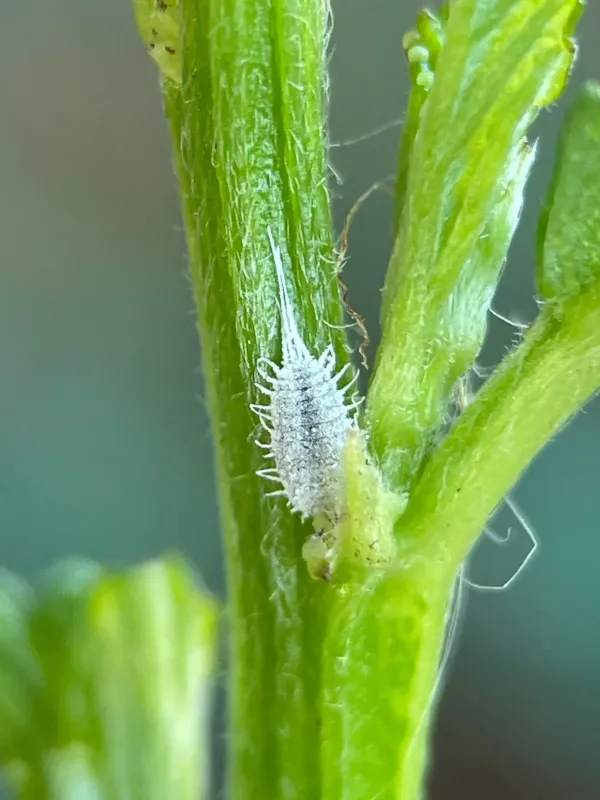
The mealybug (genus Pseudococcus) belongs to the family Pseudococcidae under the order Hemiptera. These small, soft-bodied insects are characterized by their white, powdery wax covering, which gives them a distinctive woolly or flour-dusted appearance.
Adult females are the primary life stage encountered, as they are wingless and remain on the plant to feed and reproduce. Males are rarely seen; they are winged, do not feed, and live only briefly to mate with females.
The bodies of these insects are often adorned with waxy filaments along the margins. Adult mealybugs typically measure between 3 to 6 millimeters in length, depending on the specific species and the nutritional quality of the host plant.
Mealybugs are relatively sedentary, preferring to congregate in sheltered locations such as leaf axils, under foliage, or within bark crevices. They secrete a sugary substance known as honeydew, which often leads to the growth of sooty mold.
Reproduction involves the female depositing eggs into a protective white waxy ovisac (egg sac). This structure shields the eggs from predators, moisture loss, and environmental stressors, ensuring high survival rates for the next generation.
What it damages
Mealybugs are polyphagous pests that attack a wide variety of agricultural, ornamental, and houseplant species. Common targets include citrus trees, grapevines, succulents, cacti, orchids, and a vast range of tropical foliage plants.
The pests use piercing-sucking mouthparts to penetrate plant tissues and extract phloem sap. This feeding process depletes the plant's nutrient reserves, leading to stunted growth, yellowing leaves, and significant loss of plant vigor.
Heavy infestations can cause severe deformation of new growth, premature flower or fruit drop, and in extreme cases, the total collapse of the plant. The aesthetic value of ornamental plants is often ruined by the presence of the pests and associated mold.
Honeydew secretion covers leaves in a sticky layer that blocks stomata and provides a substrate for sooty mold growth. This secondary infection hinders photosynthesis, further weakening the plant and increasing its susceptibility to other diseases.
The saliva of the mealybug contains toxins that can cause metabolic imbalances in the host plant. This can result in abnormal growths, gall formation, and increased stress, making the plant unable to perform basic physiological functions effectively.
When it appears
In greenhouses, interiorscapes, and homes, mealybugs can reproduce throughout the year. Under warm, stable conditions with temperatures between 20°C and 25°C, their generation time can be as short as one month, leading to rapid population explosions.
In outdoor environments, population activity typically peaks during the warm growing season. They thrive in moderate temperatures and high humidity, which facilitate faster development and more frequent reproductive cycles.
As temperatures drop in autumn, mealybugs migrate to protected areas, such as the base of the plant, underground, or deep within bark cracks to survive the winter months. Monitoring remains essential during this transitional period.
The period of most intensive damage coincides with active plant growth. During this time, tender shoots provide easy access for the pests to feed and multiply rapidly, requiring growers to maintain strict scouting protocols.
Understanding the life cycle is crucial for success, especially regarding the 'crawler' stage. Crawlers are young, mobile nymphs that disperse across the plant and are significantly more susceptible to control measures than the waxy-covered adults.
Signs of infestation
The most recognizable sign of a mealybug infestation is the presence of white, cotton-like masses on the stems, leaf undersides, or growth points. These clusters are easy to spot once you know what to look for.
A sticky, shiny residue on the leaves, known as honeydew, is a strong indicator of an active infestation. Over time, this substance often darkens to a black color as sooty mold colonizes the area, creating a dirty, unkempt look.
Infested plants often display reduced growth rates, drooping or yellowing leaves, and a general lack of vigor despite adequate irrigation. Flower buds may fail to open or fall off prematurely due to the stress caused by the feeding insects.
Root mealybugs, which live beneath the soil surface, are harder to detect. They cause the plant to wilt suddenly, and a thorough check of the root system during repotting will reveal the telltale white, woolly egg masses near the roots.
The presence of ants roaming over a plant can also be a signal. Ants are often attracted to the honeydew secreted by mealybugs and will actively guard the pests from natural enemies, effectively helping the infestation spread.
Control measures
Managing mealybugs requires a multifaceted and persistent approach. The most effective strategy involves combining mechanical removal with targeted chemical or biological treatments to address all life stages of the pest.
Mechanical control is effective for small populations; you can dip a cotton swab in rubbing alcohol and touch each mealybug directly. This kills the insect instantly and helps clear away the protective wax, although it is labor-intensive.
For larger infestations, systemic insecticides are the standard choice. These chemicals are absorbed by the plant and kill the pests as they feed, providing long-lasting protection even against those hidden deep within cracks.
Consistency is key to eradication; apply treatments in a series of 3 to 4 applications spaced 7 to 10 days apart. This cycle is necessary to catch and eliminate new crawlers as they hatch, as most sprays cannot penetrate the protective egg sacs.
- Isolate infested plants immediately to prevent the spread of the colony.
- Inspect all new plants thoroughly before introducing them to your garden or collection.
- Introduce biological controls like the mealybug destroyer (Cryptolaemus montrouzieri) in greenhouse settings.
- Practice good sanitation by removing infested plant debris and keeping the environment clean.
Content graph
Connections · Mealybug
Most often together:
Marketplace
Products · 1
Biology
Taxonomy
- Latin name
- Pseudococcus
- Order
- Hemiptera (bugs, aphids, leafhoppers)
- Family
- Pseudococcidae
- EPPO code
- PSECSP
Community
Discussion
No discussions yet — be the first.