
Japanese weevil
Pseudocneorhinus bifasciatus
Description
How to identify
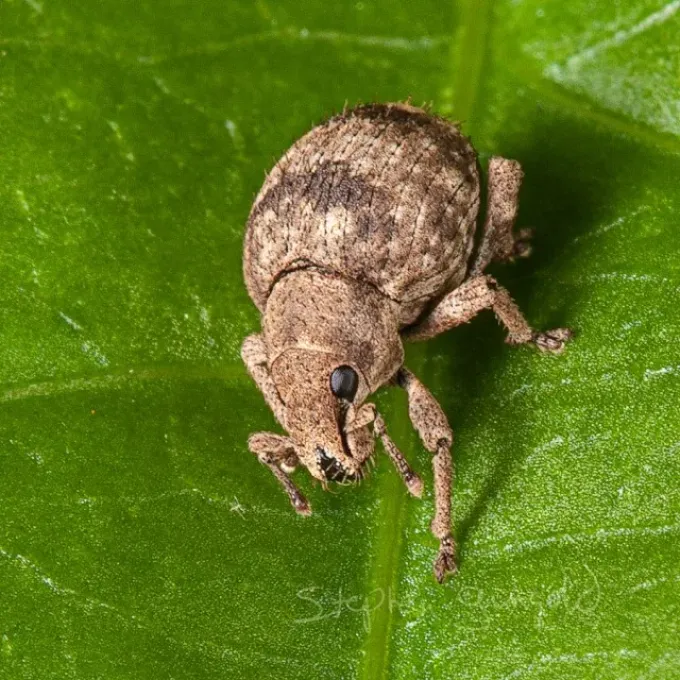
The Japanese weevil (Pseudocneorhinus bifasciatus) is a member of the Curculionidae family, order Coleoptera. Adult beetles typically measure between 6 and 8 mm in length, possessing an oval-shaped body covered with dense scales that create a mottled brownish-gray or black camouflage pattern.
The most recognizable feature is the short, broad rostrum (snout) characteristic of this genus, which distinguishes it from other common weevil species. They have elbowed antennae with a clubbed end, consistent with their taxonomic classification.
The larval stage consists of legless, creamy-white larvae with a dark head capsule. These larvae remain primarily underground, where they feed on the roots of host plants, making them extremely difficult to detect without careful soil examination.
The life cycle involves complete metamorphosis, typically completing one generation per year. Adults are the primary dispersing stage, often moving from the soil to foliage during the spring and summer months to initiate feeding and mating.
Overwintering occurs as adults tucked away in debris or the top few centimeters of soil. As temperatures rise in spring, the beetles emerge, beginning their activity period and seeking host plants to sustain their population.
What it damages
The Japanese weevil is a generalist feeder (polyphagous), attacking a diverse array of ornamental plants, fruit trees, and small fruit bushes. Common targets include rhododendrons, roses, hydrangeas, and various other garden perennials.
Adult beetles feed on leaves, creating distinctive notched or jagged edges along the leaf margins. Heavy infestations can lead to significant defoliation, which hampers the plant's ability to perform photosynthesis effectively.
Larval damage is often more destructive to plant health. By feeding on the root system, the larvae impair the plant's capacity to absorb water and essential nutrients, which frequently leads to wilting, stunted growth, and in severe cases, plant death.
Young transplants and nursery stock are particularly vulnerable to larval feeding. Since the damage occurs beneath the soil surface, it often goes unnoticed until the plant shows visible signs of physiological stress.
The cumulative effect of adult foliage feeding and larval root feeding weakens the plant, making it significantly more susceptible to secondary pathogens, including soil-borne fungi and bacterial wilts that exploit the damaged tissues.
Signs of infestation
The most prominent sign of infestation is the irregular, notched leaf margins. These cuts are typically coarse and jagged, clearly indicating that a chewing insect has been active on the foliage during the evening or night hours.
Because these insects are nocturnal, they are rarely seen during the day. They possess excellent camouflage and retreat into the dense parts of the plant or soil litter as soon as daylight arrives, which is why active monitoring is necessary.
To detect the presence of the weevils, one can shake host plants over a white sheet at night or during twilight. This simple technique often reveals the beetles and confirms an infestation before the damage becomes extensive.
Unexpected wilting or sudden loss of vigor in a plant that is otherwise well-watered is a major indicator of root system damage. Digging into the root zone of such plants often reveals the presence of larvae or evidence of feeding.
In addition to wilting, one might notice stunted growth or yellowing leaves (chlorosis). These signs suggest that the root system is being compromised, preventing the plant from maintaining its normal physiological functions.
Control measures
Cultural control methods involve maintaining good soil hygiene, such as removing leaf litter and weeds around the base of plants, which eliminates potential hiding spots for adults and sites for egg-laying.
Biological control, particularly the use of entomopathogenic nematodes, has proven effective for targeting larvae in the soil. Applying these beneficial organisms provides a sustainable way to reduce the larval population without chemicals.
Chemical control may be necessary for large populations. Products containing systemic insecticides can be effective when applied according to label directions, typically during the evening when the adults are most active.
Integrated Pest Management (IPM) strategies, including monitoring with light traps and periodic scouting, are essential for keeping weevil populations below the economic injury level in nurseries and gardens.
Always inspect new plant material carefully for signs of root or foliage damage before introducing them to your landscape. This quarantine-like approach prevents the spread of the Japanese weevil to currently uninfested areas.
Taxonomy
- Latin name
- Pseudocneorhinus bifasciatus
- Order
- Coleoptera (beetles)
- Family
- Curculionidae
- EPPO code
- PCNRBI
Discussion
No discussions yet — be the first.