
Pseudocleonus
Pseudocleonus
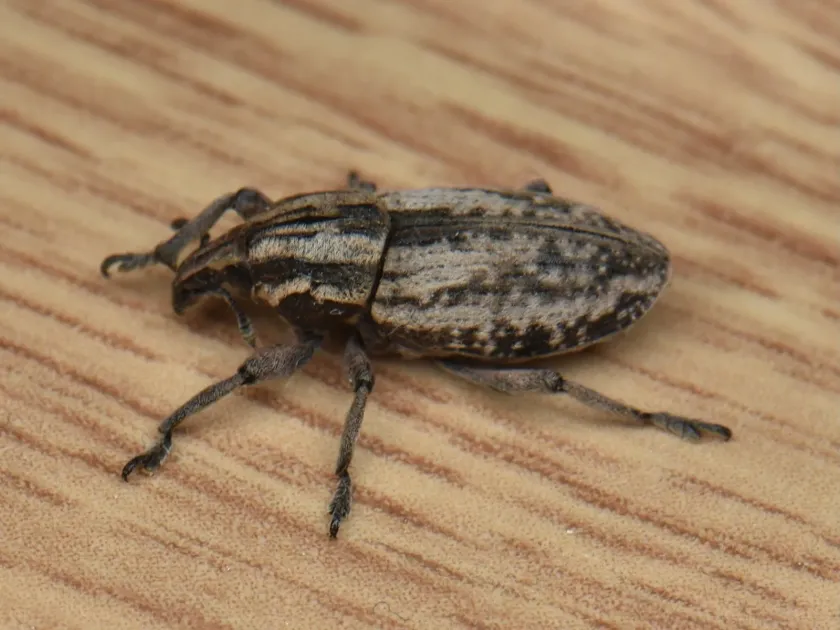
Description
How to identify
Pseudocleonus belongs to the Curculionidae family, which are part of the Coleoptera order. These are large-bodied beetles covered in fine scales, which provide a grey or brownish camouflage, making them difficult to spot against the soil.
Adults possess a well-developed snout characteristic of all weevils. Larvae are legless, fleshy, and white to cream-colored, typically sporting a prominent, brownish-colored head capsule.
The life cycle involves a complete transformation: egg, larva, pupa, and adult. Unlike many other foliage pests, the larvae develop primarily underground, which often masks early-stage infestations.
Breeding takes place in the soil or near the crown of host plants. Females deposit eggs in the earth, and upon hatching, larvae immediately begin feeding on the plant's roots, weakening the crop significantly.
The insects overwinter mainly as adult beetles, which burrow deep into the soil or hide beneath crop debris, providing them with effective protection against freezing temperatures.
What it damages
The primary food source for Pseudocleonus consists of crops in the Amaranthaceae family, particularly sugar, table, and fodder beets. Damage is caused by both the adult beetles and the larvae.
Adult beetles feed on the aerial parts of the plant, chewing the edges of young leaves and petioles. This is particularly devastating to seedlings at the cotyledon stage, potentially causing crop thinning and requiring reseeding.
The larvae cause the most severe harm by feeding on the root system and the taproot itself. They tunnel into the tissues of the root, creating entry points for secondary infections such as rots and various fungal diseases.
As a result of root system damage, the plant loses its ability to absorb moisture and nutrients effectively, leading to wilting, stunted growth, and a reduction in sugar content within the beets.
In cases of heavy infestation, yield losses can be catastrophic, as damaged roots store poorly in clamps and lose their overall marketability and quality.
When it appears
Adult Pseudocleonus typically appear in fields when consistent warm temperatures arrive in the spring, usually during April or May, just as sugar beet seedlings are at their most vulnerable stage.
Adult activity peaks during the daylight hours, though they move actively across fields when the weather is sunny and dry, facilitating the rapid expansion of infestation zones.
The larval stage develops throughout the summer. The larvae go through several instars in the soil, growing in size and increasing their feeding intensity as the root crop matures.
Pupation occurs during the summer-autumn period in cells formed by the larvae in the soil at a depth of 5–20 centimeters. From these pupae, new adults emerge but remain in the soil until the next season.
The appearance dynamics of this pest are highly dependent on soil moisture: prolonged spring rains can inhibit adult activity, whereas a dry, warm spring often triggers massive emergence.
Signs of infestation
The first signs of a Pseudocleonus infestation are the characteristic notched edges of leaves, caused by adults feeding on young foliage.
During the growing season, inspecting the root system may reveal winding tunnels and holes in the taproot. If the plant is easily pulled from the ground, it usually confirms root damage caused by larvae.
The presence of adults can be verified by visually inspecting the soil surface during the early morning. Beetles often feign death when threatened by pulling their legs against their bodies, making them look like small lumps of dirt.
- Thinning of crop stands during spring field assessments.
- Yellowing of leaves on individual plants in rows.
- Holes in the taproots visible at harvest time.
- Growth suppression in specific infestation zones.
To monitor pest populations, agronomists conduct soil excavations, allowing them to detect larvae and pupae before widespread damage to the root crop occurs.
Control measures
A robust defense strategy against Pseudocleonus relies on strict crop rotation. It is not recommended to plant sugar beets in the same field for at least 3–4 years to disrupt the life cycle of these soil-dwelling pests.
Effective agrotechnical control includes deep autumn plowing. This process mechanically destroys overwintering beetles and larvae and exposes them to the surface, where they succumb to cold weather or are eaten by birds.
To target larvae in the soil, granular insecticides are applied during the sowing process. This creates a protective zone around the roots during the crop's most susceptible early developmental stages.
If high numbers of adults are detected on the seedlings, spraying with systemic insecticides is necessary. The choice of chemical should be based on population density and the presence of other pests.
Crucially, maintaining weed-free fields is essential, as weeds can serve as alternative food sources for adults during the absence of the main crop, while maintaining soil fertility ensures rapid seedling establishment.
Taxonomy
- Latin name
- Pseudocleonus
- Order
- Coleoptera (beetles)
- Family
- Curculionidae
- EPPO code
- PSCLSP
Discussion
No discussions yet — be the first.