
Oregon leafroller
Pseudexentera oregonana
Description
How to identify
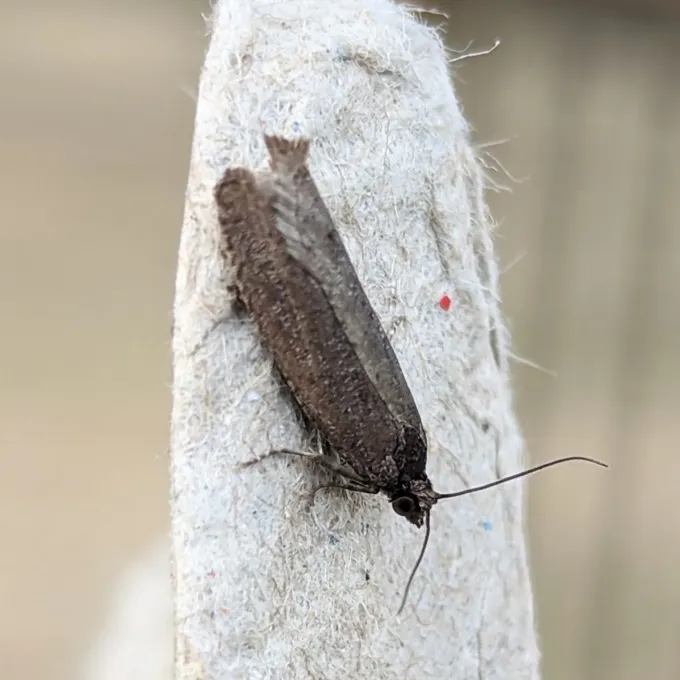
The Oregon leafroller Pseudexentera oregonana belongs to the family Tortricidae, order Lepidoptera. The adult moth is small, with a wingspan of approximately 15–20 mm, exhibiting a brown-grey coloration that provides excellent camouflage against tree bark.
Larvae pass through several developmental stages, shifting in color from light to greenish-brown. A distinct characteristic is their high agility; when disturbed, the larvae wriggle rapidly and drop from the leaf on a silken thread to escape.
Females deposit eggs singly or in small clusters on buds and young foliage. This timing is precisely synchronized with the start of the host plant's growing season, ensuring that neonate larvae have immediate access to fresh nutrients.
The biology of this pest is highly dependent on regional climate patterns, as larval development requires specific heat units. Pupation typically occurs in the soil, protected by dense cocoons, where the insect survives unfavorable conditions.
This species is a specialized feeder, favoring particular deciduous tree species, which allows arborists to predict potential hotspots and concentrate monitoring efforts accordingly.
What it damages
The Oregon leafroller primarily targets members of the Rosaceae family, including aspen, poplar, and various fruit trees. The larvae cause the most significant damage during the early stages of plant growth.
Early-stage larvae bore into swelling buds before they open, destroying floral and foliar primordia. This results in significant reductions in potential fruit yield and stunts the overall development of the host tree.
Once the buds open, the larvae transition to young leaves, rolling them into tight tubes or clumps secured with silk. These shelters protect the larvae from environmental stressors and many natural predators.
Severe infestations can lead to the complete defoliation of branches and tree sections, which impairs photosynthesis and weakens the plant’s defense mechanisms against other diseases and environmental stress.
The economic impact involves not only immediate crop losses but also the stunted growth of saplings, which is particularly detrimental in fruit orchards and forest nursery settings.
When it appears
The life cycle begins in early spring as temperatures rise, signaling the emergence of the adult moths. This period is dedicated to mating and egg-laying on the host plant's fresh growth.
Larval activity peaks during the bud-break and flowering phases of the host tree. This is the critical window for management, as the pest is most vulnerable and the damage is most easily preventable at this time.
Development concludes during the summer months, leading to pupation. The insect spends the remainder of the season and winter in a state of diapause, safely ensconced in the soil litter.
The species typically completes one or two generations per year, depending on the latitude and local climate, which dictates the severity and duration of the pest outbreak.
Monitoring the flight of adult moths using pheromone traps is an essential tool for arborists to predict the onset of larval activity and schedule protective measures accurately.
Signs of infestation
The initial sign of an infestation is the presence of buds that fail to open or appear "hollowed out" in the spring. This indicates that larvae have already consumed the internal tissues.
Rolled or tied leaves on the terminal ends of branches are a classic symptom. When these rolled leaves are opened, one can usually find the larvae or the dark frass (droppings) they leave behind.
Silken webbing visible between leaves or along twigs is a clear indicator that a colony has established itself and is actively feeding within the tree canopy.
Browning or premature wilting of terminal shoots in mid-season is a secondary sign of damage, suggesting that the infestation has reached a level requiring intervention.
- Unopened, damaged buds.
- Leaves rolled into tubes or clumps.
- Visible silk webbing on twigs.
- Stunted growth of apical shoots.
Control measures
Cultural control methods include autumn soil cultivation beneath host trees to disrupt pupation sites and destroy dormant larvae overwintering in the ground litter.
Biological control, such as the use of Bacillus thuringiensis, is highly effective against young larvae while remaining environmentally friendly and safe for beneficial insects.
Chemical control involves the application of registered insecticides during the peak larval emergence period. It is crucial to follow local regulations to minimize impacts on non-target pollinators.
Integrated Pest Management (IPM) strategies, utilizing pheromone monitoring and targeted intervention, are the most effective way to keep populations below economic injury levels without excessive chemical use.
Regular inspection and sanitation, such as removing heavily infested branches during the dormant season, help maintain tree vigor and reduce the overall pest pressure in the landscape.
Taxonomy
- Latin name
- Pseudexentera oregonana
- Order
- Lepidoptera (butterflies)
- Family
- Tortricidae
- EPPO code
- PSEXOR
Discussion
No discussions yet — be the first.