
Pale apple leafroller
Pseudexentera mali
Description
How to identify
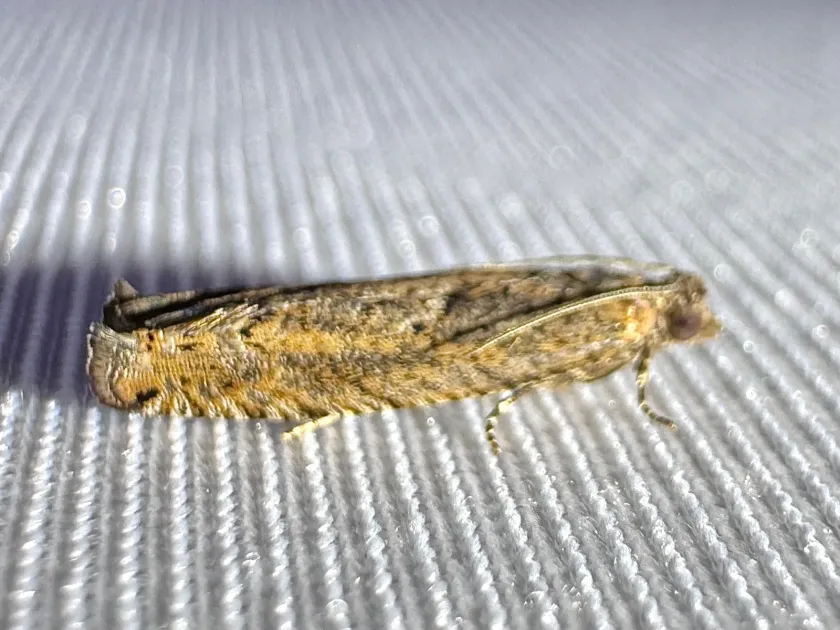
The pale apple leafroller Pseudexentera mali belongs to the Tortricidae family. These small moths are characterized by their cryptic coloration, which helps them blend into the bark of apple trees, their primary host, during the daytime when they are inactive.
The larvae are typically light green or yellowish with a dark head capsule. They are known for their habit of rolling leaves with silk, which provides them with a sheltered environment for feeding and protection from environmental factors and predators.
What it damages
This pest is primarily an issue for apple orchards. The larvae feed on opening buds in early spring, often destroying the potential for fruit and leaf growth. This feeding habit can severely impact the tree's health if the infestation level is high.
Beyond buds, the larvae move on to the foliage, consuming the leaf tissue. When fruit is present, they may also cause surface damage, which diminishes the marketability of the produce and creates entry points for fungal pathogens.
When it appears
The species overwinters as pupae, typically in the soil or protected crevices of the tree bark. Adult emergence occurs in early spring, coinciding with the green tip or tight cluster stage of apple tree development.
After mating, females lay eggs on the bark or near developing buds. The timing of egg-hatch is critical, as the newly emerged larvae immediately seek out the succulent green tissues of the host tree to begin their development cycle.
Signs of infestation
The most visible sign of an infestation is the presence of chewed or hollowed-out buds in early spring. As the season progresses, the characteristic leaf-rolling becomes apparent, revealing the presence of larvae inside.
- Hollowed-out or damaged terminal buds.
- Leaves tightly rolled or webbed together.
- Presence of larval frass (excrement) on leaves.
- Surface feeding marks on young apple fruit.
- General decline in shoot growth vigour.
Control measures
Integrated Pest Management (IPM) is essential for controlling this leafroller. Cultural practices such as maintaining healthy trees and removing debris from the orchard floor can reduce the number of overwintering pupae.
Monitoring using pheromone traps is standard practice to determine the peak flight periods of the adults. This allows for precisely timed applications of insecticides, which is critical when larvae are most vulnerable upon emerging from their initial feeding sites.
Biological control agents, including parasitic wasps and predatory beetles, can play a significant role in suppressing populations if broad-spectrum insecticide use is minimized during the critical early stages of the growing season.
Taxonomy
- Latin name
- Pseudexentera mali
- Order
- Lepidoptera (butterflies)
- Family
- Tortricidae
- EPPO code
- PSEXMA
Discussion
No discussions yet — be the first.