
Pseudanthonomus validus
Pseudanthonomus validus
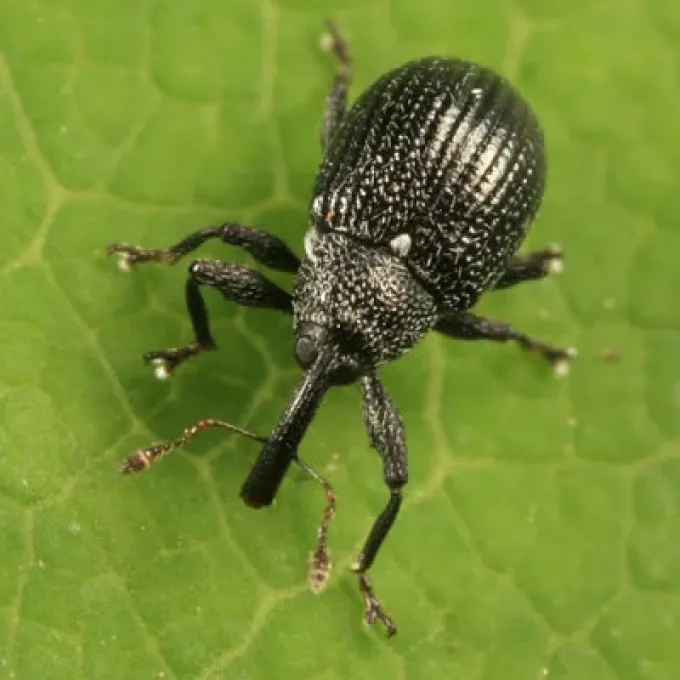
Description
How to identify
Pseudanthonomus validus is a small weevil species belonging to the Curculionidae family. Like other members of its genus, it possesses a characteristic elongated rostrum (snout) used for feeding on plant tissues and oviposition.
The adult beetles are typically brown or reddish-brown in color, providing excellent camouflage against the bark and stems of berry shrubs. Given their small size of only a few millimeters, they are often difficult to spot in the field without close inspection.
The larvae are legless, C-shaped, and creamy white with a dark head capsule. They develop hidden within the plant tissues, specifically inside buds or developing fruits, making the early stages of infestation largely invisible to the grower.
Taxonomically, this species is classified within the order Coleoptera. Proper identification requires distinguishing it from other similar weevil species found on host plants, focusing on specific morphological traits like the shape of the elytra and the length of the snout.
The biology of this pest is strictly synchronized with the phenology of its host plants. The life cycle consists of egg, larva, pupa, and adult stages, with overwintering occurring primarily in the adult stage within leaf litter or tree bark crevices.
What it damages
The primary hosts for Pseudanthonomus validus are plants within the Ericaceae family, particularly blueberries and related species. The pest shows high host specificity, focusing its reproductive efforts on these berry-producing shrubs.
Adult beetles cause the most significant damage during the budding and flowering phases. By feeding on internal bud tissues, they often kill the developing flowers, which leads to bud drop and significant yield reduction.
Larvae developing inside the buds or young fruits consume the interior structures, effectively destroying the plant's reproductive success. This behavior directly translates into lower fruit quantity and quality at the time of harvest.
In years with high pest pressure, the damage can be substantial, leading to deformed or shriveled berries that are unsuitable for commercial sale. Such fruit is often prone to early abscission, making it a complete loss for the producer.
The economic impact is measured not only by the direct loss of fruit but also by the costs associated with monitoring and applying protective measures. Preventing widespread infestation is crucial for maintaining the profitability of berry plantations.
When it appears
Adult activity of Pseudanthonomus validus typically begins in early spring, triggered by the rise in ambient temperature. This coincides with the initial bud swell of host plants, marking the beginning of the growing season.
The critical period for the plant is during the green-tip and flower-bud development phases. During this time, the beetles emerge from hibernation and begin their intense feeding and reproductive cycle.
Following mating, females oviposit into the buds. The larval stage follows closely, coinciding with the rapid growth of the host plant's reproductive organs. This period is when the most visible damage occurs as the larvae feed and mature.
By late summer, a new generation of adults may appear, although their impact is usually less severe than the spring generation. As temperatures drop, these adults seek protected locations in the soil or plant debris to overwinter.
Understanding the phenological correlation between the pest and the crop allows agronomists to implement timing-sensitive management strategies, ensuring that protection is applied when the pest is most vulnerable.
Signs of infestation
The first sign of an infestation is the appearance of tiny, pin-prick holes on the buds. These holes are caused by adult feeding or by the female weevil during the process of oviposition.
A major symptom of a widespread problem is the premature dropping of buds and flowers. Finding a significant amount of aborted buds beneath the bushes is a strong indicator of larval development within the plant tissue.
Wilting of the flower clusters is another common sign. Because the larvae often feed on the base of the flower or the pedicel, the structural integrity is compromised, causing the cluster to wither and die prematurely.
Malformed or stunted berries are a common outcome if the larvae feed on the fruit after petal fall. These berries often fail to develop normally, remaining small and distorted compared to healthy fruits.
- Small feeding punctures on buds.
- Excessive bud and flower abscission.
- Withering of flower clusters.
- Deformation of developing berries.
- Presence of larvae inside infested plant parts.
Control measures
Effective management of Pseudanthonomus validus relies on an integrated pest management (IPM) approach. This includes a combination of cultural practices, monitoring, and, when necessary, targeted chemical interventions.
Cultural control is essential; removing plant debris, dead leaves, and pruning residue from the base of the bushes helps destroy overwintering sites for the adults, significantly reducing the population pressure for the next season.
Chemical control should be applied judiciously, focusing on the pre-bloom period. Using systemic or contact insecticides before flowers open helps protect the crop while minimizing the risk to pollinators like bees.
Biological alternatives, such as the use of entomopathogenic nematodes or fungi, can be applied to the soil to target the pupae of the weevil. This reduces the number of emerging adults without relying heavily on broad-spectrum pesticides.
Consistent monitoring using pheromone or visual traps helps identify the onset of the activity period. This allows for precise timing of interventions, which is both more cost-effective and environmentally sustainable than calendar-based spraying.
Taxonomy
- Latin name
- Pseudanthonomus validus
- Order
- Coleoptera (beetles)
- Family
- Curculionidae
- EPPO code
- PSDNVA
Discussion
No discussions yet — be the first.