
Pselactus spadix
Pselactus spadix
Description
How to identify
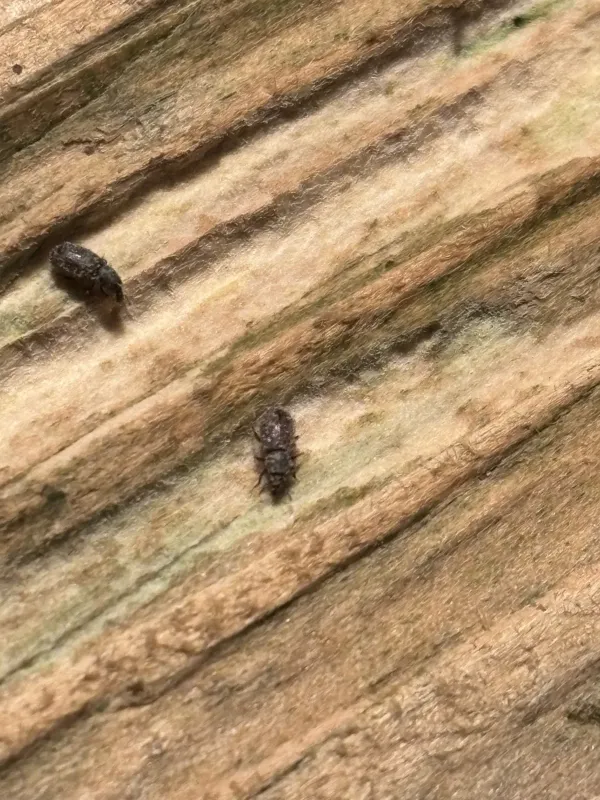
Pselactus spadix is a small beetle belonging to the Curculionidae family, order Coleoptera. Adult individuals have an elongated cylindrical body ranging from 3 to 4 millimeters in length, typically colored in dark brown or nearly black tones.
A distinctive feature of this species is the presence of a characteristic long rostrum (snout), which is typical for all members of the Curculionoidea superfamily. The surface of the elytra features pronounced sculpted punctation, which helps identify the insect during detailed examination under a magnifying lens.
The larvae of the pest are legless, white, with a yellowish head capsule, and possess the typical C-shaped body form common to weevils. They are adapted to a hidden lifestyle within plant tissues, where they spend a significant portion of their development.
This species is characterized by high ecological plasticity, successfully colonizing weakened areas of wood. Despite their small size, the population of these beetles can increase rapidly when favorable conditions for feeding are present.
In its natural habitat, the insect is mainly found on wood debris and in the damaged tissues of various plant species, making it a significant pest in forestry and applied plant science.
What it damages
The primary food source for Pselactus spadix is the weakened or dying parts of coniferous and some deciduous trees. Damage is caused by both larvae and adult individuals, which excavate galleries within the wood.
The pest prefers tissues with high moisture content, often observed in the root zone or in wood sections infected by fungal diseases. This makes it a secondary pest that accelerates the death of weakened specimens.
During mass outbreaks, the beetles can damage the sapwood, disrupting the normal flow of nutrients in the trunk and branches. This leads to the gradual drying of individual plant parts and reduces the overall resistance to abiotic factors.
The greatest damage is recorded in plantations with poor sanitary conditions, as well as in areas where untreated timber is stored. In horticulture, damage manifests when the bark of old or diseased ornamental shrubs and trees is infested.
The pest also contributes to the spread of pathogenic fungal spores, carrying them on their bodies into fresh galleries, thereby provoking rot processes in the deeper layers of the wood.
When it appears
The active period of Pselactus spadix begins in spring, with the onset of steady positive temperatures, when adults begin searching for suitable breeding grounds.
Peak activity of imago is observed during the summer period, when mass mating occurs, followed by egg-laying in bark crevices or previously prepared holes in the wood.
The larval stage is the most prolonged and covers most of the growing season, continuing until the onset of autumn cooling, when the pest begins to prepare for hibernation.
Overwintering is carried out primarily by adult beetles, which shelter inside the galleries they have excavated or under tree bark, where a microclimate that protects against extreme cold is maintained.
In warmer climatic zones, the development cycle can be shortened, allowing the population to increase in size faster, which requires enhanced monitoring throughout the warm season.
Signs of infestation
One of the main signs of the pest's presence is the appearance of small, round holes on the bark surface, known as exit holes, through which the beetles leave the wood.
The presence of frass—fine wood dust ejected by larvae while boring galleries in the trunk—clearly indicates active infestation of the plant.
Upon removing part of the bark in affected areas, one can notice a complex network of winding galleries filled with larval excrement, which is typical for this species' life activity.
Visual weakening of the plant, manifested by yellowing needles or wilting of young shoots, is often a secondary sign indicating that the pest has already caused significant damage to internal structures.
In areas where beetles congregate, bark peeling is often observed, revealing colonies of insects at different stages of development, which is the most accurate method for diagnosing infestation.
Control measures
The primary protection strategy is maintaining a high level of sanitary culture: timely removal and disposal of infested, diseased, or dead trees.
To prevent the spread of the pest, it is necessary to treat timber storage areas, ensuring rapid transport and processing before the mass emergence of beetles begins.
The application of systemic insecticides is effective during periods of peak imago activity, when beetles move across the bark surface before laying eggs.
An important agrotechnical practice is regular fertilization and irrigation of plants, which increases their natural immunity and makes tissues less attractive for colonization by pests.
In cases of large-scale infestation, the use of pheromone traps is appropriate to monitor population levels and reduce the number of sexually mature individuals at early stages of invasion.
Taxonomy
- Latin name
- Pselactus spadix
- Order
- Coleoptera (beetles)
- Family
- Curculionidae
- EPPO code
- RHYOCU
Discussion
No discussions yet — be the first.