
Pselactus
Pselactus
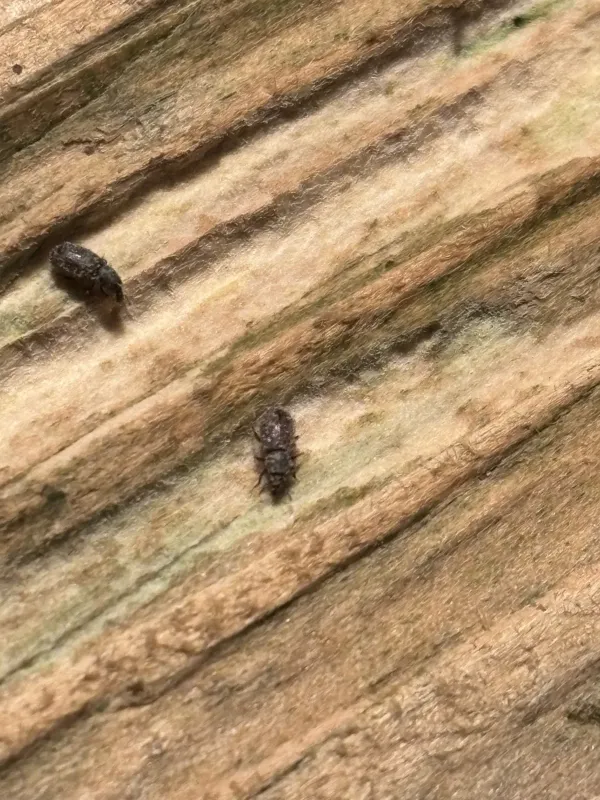
Description
How to identify
Pselactus is a genus of weevils belonging to the Curculionidae family. These small insects are typically associated with woody plants and play a significant role as wood-boring pests.
Adult beetles are characterized by their elongated snout and compact, dark-colored bodies that blend seamlessly into the bark of their host trees.
Larvae are legless, white, and specialized for boring into the cambium layer. Their physiological development is entirely dependent on the nutritional value of the host's inner bark.
The life cycle is largely cryptic, with the insects spending most of their time beneath the surface, making visual inspection a challenging task for orchardists.
Entomologists identify specific species of Pselactus through detailed examinations of their morphology, including antennae structure and the texture of their elytra.
What it damages
Pselactus beetles primarily target trees that are already physiologically stressed, weakened by drought, disease, or mechanical injuries.
The larvae tunnel through the phloem and cambium, effectively girdling the tree if the infestation is severe enough, which disrupts nutrient flow.
Adults contribute to the damage by feeding on buds and the outer bark, causing minor wounds that can facilitate secondary infections by fungal pathogens.
Repeated attacks by this pest lead to branch dieback, crown thinning, and eventually the death of the entire host tree in neglected orchards.
In forest nurseries, Pselactus can cause stunted growth in saplings, significantly reducing the economic value of the planted timber or fruit stock.
Signs of infestation
A primary indicator of infestation is the presence of small, perfectly circular exit holes on the bark of trunks and larger branches.
Fine wood dust or frass accumulating at the base of the tree or within the crevices of the bark is a clear sign of larval tunneling activity.
Foliage symptoms such as yellowing, premature leaf drop, or general loss of vigor often reflect the underlying damage to the vascular system of the tree.
Patches of necrotic bark or sunken areas on the trunk indicate where the larvae have been feeding, often leading to the eventual peeling of the bark.
Increased activity of woodpeckers on certain trees in an orchard can sometimes signal a hidden infestation of wood-boring insects, including Pselactus.
Control measures
The most effective management strategy is to maintain tree health through proper fertilization, irrigation, and pruning, as healthy trees are less susceptible to attack.
Sanitation is critical: all infested branches and severely weakened trees must be removed and destroyed to minimize the population of the pest.
Chemical control involving systemic insecticides can be applied during the adult flight period to prevent mating and subsequent egg-laying on susceptible trees.
Wounds and pruning cuts should be sealed with horticultural paints to prevent entry points for insects and pathogens.
- Annual monitoring of tree bark during spring.
- Removal and destruction of dead or dying branches.
- Application of whitewash to tree trunks as a barrier.
- Encouraging natural predators such as insectivorous birds.
Taxonomy
- Latin name
- Pselactus
- Order
- Coleoptera (beetles)
- Family
- Curculionidae
- EPPO code
- PZELSP
Discussion
No discussions yet — be the first.