
Psalidium maxillosum
Psalidium maxillosum
Description
How to identify
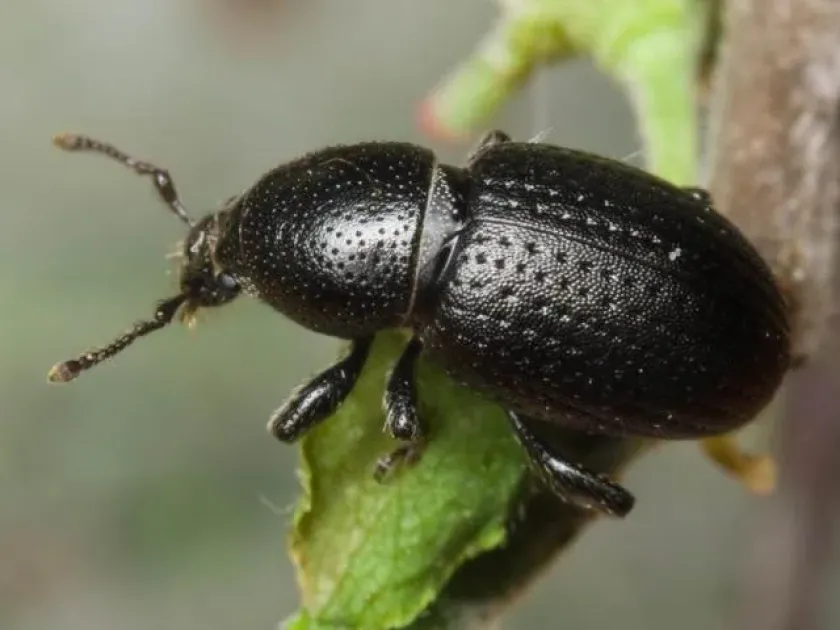
Psalidium maxillosum is a species of snout beetle (Curculionidae) known as a significant agricultural pest in certain steppe regions. The adult beetle is a robust insect, typically measuring 8 to 11 mm in length, with a dark, chitinous exoskeleton.
The larvae of this species are typical for the Curculionidae family: legless, white to cream-colored, with a hard, brown head capsule. They develop entirely underground, feeding on the root systems of various host plants.
The life cycle of the beetle is adapted to arid environments, making it a persistent problem in specific regions with low annual rainfall. Both adults and larvae can overwinter in the soil, depending on the stage of development.
Adult beetles have reduced flight capacity, which limits their primary dispersal but results in dense, localized populations that can devastate crop stands in specific areas of a field.
Identification is best achieved through soil sampling in the root zone or observing the fields during twilight hours when the nocturnal adult beetles emerge to feed.
What it damages
The pest primarily targets sugar beets, but it also impacts crops such as sunflowers, alfalfa, and other legumes. It is considered an opportunistic polyphagous insect that thrives in disturbed agricultural landscapes.
The larval stage causes the most severe damage by consuming lateral roots and scarring the primary taproot. This disruption of the root system stunts the growth of young plants and often leads to widespread seedling mortality.
Adult beetles feed on the foliage and stems of emerging seedlings. Excessive feeding on the cotyledons can destroy the entire plant, leading to significant gaps in the crop stand and necessitating replanting.
The economic impact is exacerbated during drought conditions, as damaged root systems fail to supply adequate water to the plant, leading to premature wilting and crop failure.
In addition to direct damage, root lesions caused by the larvae serve as entry points for soil-borne pathogens, contributing to secondary decay of the root tissues.
Signs of infestation
The most recognizable sign of adult activity is the presence of irregular, notched edges on leaves and stems. These feeding scars are indicative of nocturnal browsing by the beetles.
Stunted growth or wilting of seedlings in sunny conditions is a strong indicator of larval root feeding. If the plants are easily pulled from the ground, the roots are likely severely compromised.
Searching the soil around the base of the plant during the early morning or evening hours often reveals the presence of adult beetles, which tend to seek shelter in the soil during the day.
Patchy stands of crops in specific areas of a field, rather than uniform damage, are characteristic of the localized infestations typical for this species.
Soil excavation around the affected areas will usually reveal the white, C-shaped larvae, confirming the cause of the poor plant performance.
Control measures
Crop rotation is the most effective cultural control method, as it breaks the life cycle of the pest by removing the preferred host plants for a period of several years.
Deep plowing in the autumn helps to disrupt the larval population by exposing them to desiccation, predation by birds, and extreme temperatures, thereby reducing the overwintering survival rate.
Seed treatment with systemic insecticides is the standard practice for protection during the germination and seedling phases, providing a chemical shield during the most vulnerable period.
If field monitoring indicates that pest numbers exceed economic thresholds, foliar insecticide applications during the early evening hours can significantly lower the adult population.
- Maintain a regular monitoring program with soil probes.
- Control weeds in and around the fields that host the beetles.
- Ensure optimal plant vigor through fertilization to compensate for root damage.
Taxonomy
- Latin name
- Psalidium maxillosum
- Order
- Coleoptera (beetles)
- Family
- Curculionidae
- EPPO code
- PSAIMA
Discussion
No discussions yet — be the first.