
Protostrophus salignae
Protostrophus salignae
Description
How to identify
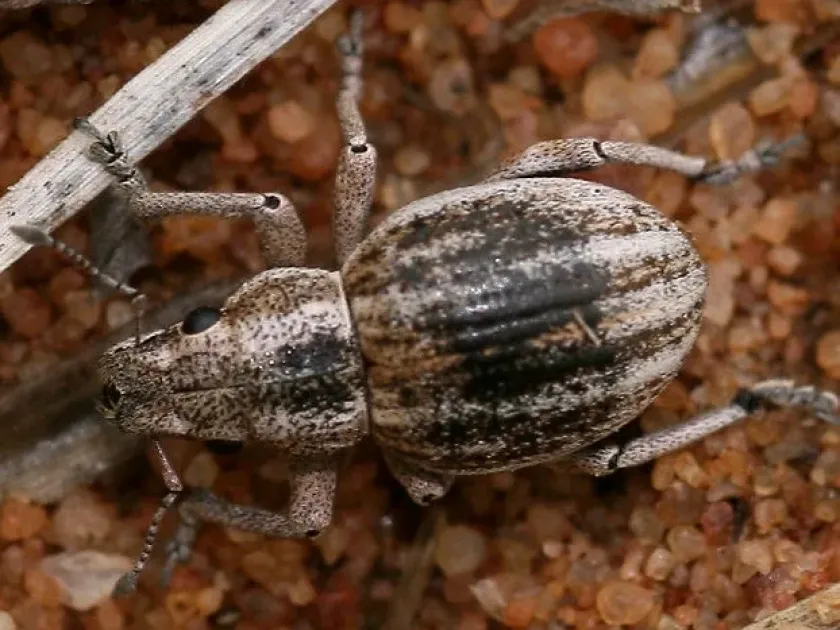
Protostrophus salignae belongs to the weevil family (Curculionidae), order Coleoptera. This small beetle features the characteristic snout (rostrum) typical of the Curculionidae family.
The insect's appearance is adapted to a cryptic lifestyle within the soil and on plant surfaces. Its body is covered with fine scales that change color depending on light, providing effective camouflage.
Larvae are legless, fleshy, and typically white or cream-colored. Pupation occurs directly in the soil, which complicates monitoring of the population during its early development stages.
For accurate identification, specialists use morphological analysis of reproductive structures or comparative studies against reference samples in entomological collections.
Adults exhibit the defensive behavior of "feigning death" when threatened, pressing themselves tightly against the substrate to avoid detection by predators.
What it damages
This pest attacks a wide range of agricultural crops, including legumes and various grain crops. The most significant damage occurs during the initial growth phases when plants are highly vulnerable.
Adult beetles damage above-ground organs by chewing notches along leaf margins and consuming young shoots, which leads to a significant loss of photosynthetic leaf surface.
Larvae living in the soil layer feed on the plant's root system. Root damage disrupts nutrient and water uptake, which stunts plant growth and can lead to the mortality of seedlings.
The greatest damage is observed during mass outbreaks, particularly in fields with poor agronomic practices and a lack of crop rotation.
- Reduced crop emergence and density
- Stunted physiological development of plants
- Increased risk of secondary fungal infections through damaged tissues
When it appears
Adult activity begins in the spring when ambient air and soil temperatures become consistently positive. Initial emergence coincides with the appearance of crop seedlings.
The highest intensity of feeding and reproduction occurs during the second half of spring and the beginning of summer. During this period, the pest is most active in damaging growing plants.
Summer is characterized by a decrease in adult activity, as a portion of the population retreats into the soil or switches host plants depending on environmental humidity.
The development cycle is closely linked to soil moisture, meaning rainy periods may favor the survival of a larger number of individuals.
Adults primarily overwinter in surface soil layers or beneath plant residues, where they remain in a state of diapause until favorable conditions return.
Signs of infestation
The first visual sign of pest presence is the appearance of characteristic notches or "scalloped" feeding patterns along the edges of leaf blades.
Wilted plants during daylight hours, despite sufficient soil moisture, indicate damage to the root system caused by the larvae.
Inspecting the soil surface near affected plants often reveals adult beetles, especially during the early morning or evening hours.
A reduction in field stand density and the presence of bare patches often signify local hotspots of this weevil's reproduction.
The accumulation of frass on leaves and in the root zone is also an indirect sign of high population density.
Control measures
The primary control method is strict adherence to crop rotation, which disrupts the pest's life cycle and removes its food source.
Deep autumn plowing helps eliminate a portion of overwintering adults and larvae by moving them to unfavorable conditions or exposing them to predators on the surface.
The application of contact and systemic insecticides is justified when the economic injury level is exceeded during the period of mass adult emergence.
Timely weed control on fields and adjacent areas eliminates additional feeding and breeding sites for the pest.
Biological control methods, including the use of entomopathogenic fungi and nematodes, show promise within integrated plant protection programs.
Taxonomy
- Latin name
- Protostrophus salignae
- Order
- Coleoptera (beetles)
- Family
- Curculionidae
- EPPO code
- PROOSA
Discussion
No discussions yet — be the first.