
Weevil Protostrophus avidus
Protostrophus avidus
Description
How to identify
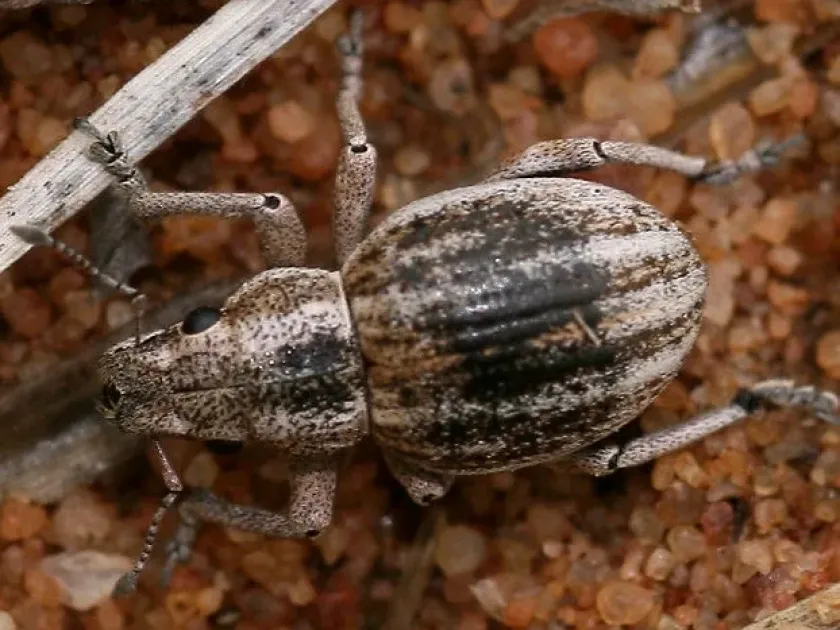
The weevil Protostrophus avidus belongs to the Curculionidae family within the Coleoptera order. Adult beetles are characterized by a distinct rostrum and a cryptic coloration, ranging from matte brown to black, which aids in camouflage on the soil surface.
Larvae of this species are soil-dwelling, legless, and white in color. They develop within the root zone of host plants, which makes them difficult to detect without systematic soil sampling during the vegetation period.
The life cycle follows complete metamorphosis: egg, larva, pupa, and adult. Hibernation typically occurs in the adult stage within the upper soil horizons or under plant debris, where they await favorable spring temperatures.
Beetles exhibit nocturnal behavior, hiding during the day to avoid desiccation and predation. This habit necessitates nocturnal field surveys to determine the actual population density and the timing of active feeding periods.
Identification of the species often requires careful examination of the elytra morphology and genital structures, as the genus Protostrophus contains several morphologically similar species that occupy similar ecological niches.
What it damages
This pest poses a significant threat to various agronomic crops, including cereals and legumes. The larvae cause direct damage by feeding on the root system, which disrupts the plant's nutrient and water uptake capabilities.
Adult beetles inflict damage on the aerial parts of plants by consuming leaf margins. In cases of high pest pressure, they can cause extensive defoliation, leading to seedling loss and significant reductions in potential harvest yields.
When it appears
Adult emergence typically commences in early spring when soil temperatures reach 10-12 degrees Celsius. This timing often synchronizes with the germination of spring-sown crops, making young seedlings particularly vulnerable to attack.
After a period of supplemental feeding, adults mate and oviposit in the soil. The resulting larvae persist throughout the growing season, continuing to feed on subterranean plant parts, which can lead to late-season crop stress.
Signs of infestation
The most diagnostic sign of an infestation is the characteristic scalloped or notched appearance of the leaf margins. Affected plants often display stunted growth, chlorosis, and, in severe cases, premature wilting and death.
Field inspection reveals the presence of larvae when digging around the roots of symptomatic plants. During the evening, adult weevils may be observed active on the soil surface or climbing the lower stems of plants to feed on foliage.
Control measures
Integrated pest management strategies include crop rotation, which breaks the pest's cycle by removing preferred host plants. Deep autumn plowing is an effective mechanical method to expose overwintering stages to adverse weather conditions.
If population thresholds are exceeded, chemical control via insecticides is warranted. Applications should be timed for evening hours to coincide with the beetles' peak activity, maximizing contact with the active stages of the pest.
Taxonomy
- Latin name
- Protostrophus avidus
- Order
- Coleoptera (beetles)
- Family
- Curculionidae
- EPPO code
- PROOAV
Discussion
No discussions yet — be the first.