
Maple Shoot Borer
Proteoteras aesculana
Description
How to identify
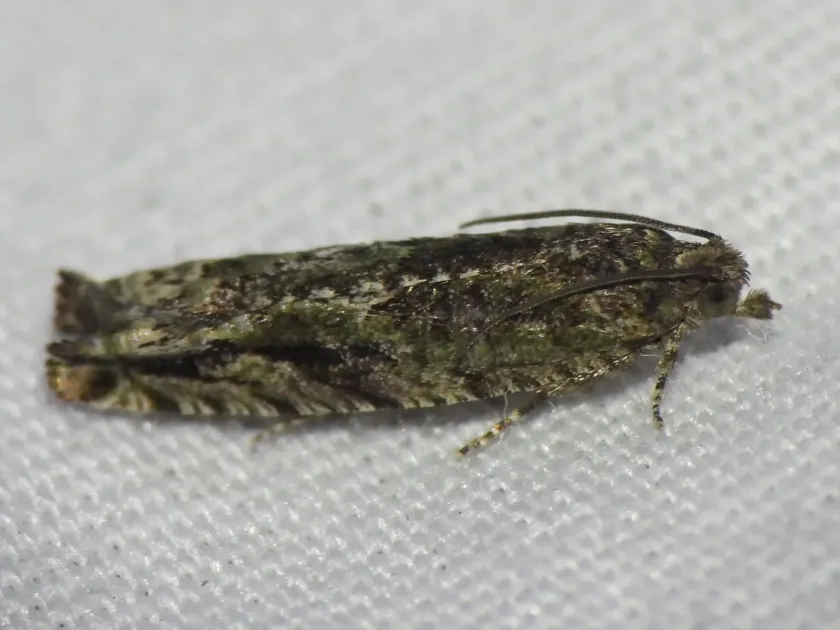
The Maple Shoot Borer (Proteoteras aesculana) is a moth belonging to the family Tortricidae. The adult moth has a wingspan of approximately 15–20 mm, with mottled brownish-gray forewings that provide excellent camouflage against the bark of maple trees.
The larvae, or caterpillars, reach lengths of 12–15 mm. They are typically cream-colored or pale green with a dark head and thoracic shield. These distinct features help in distinguishing them from other leaf-rolling species found in the same habitat.
The pupae are brown and are usually found sheltered within damaged buds, rolled leaves, or tucked away under the bark of the host tree. This cryptic pupation makes them difficult to spot without thorough inspection of the tree's architecture.
Females lay eggs singly or in small clusters on maple buds, petioles, or young shoots. The eggs are relatively small and smooth, blending seamlessly into the texture of the host plant, which protects them from predators.
This species is specifically adapted to the genus Acer. Its life cycle is tightly synchronized with the host tree's phenology, specifically the bud-burst phase, which provides the necessary nutrients for the early larval stages to survive.
What it damages
The Maple Shoot Borer primarily attacks various species of maple trees. It is a notable pest in ornamental landscapes, parks, and tree nurseries, where aesthetic quality is of primary importance to growers and city planners.
Larvae consume the interior of buds before they unfurl, which frequently destroys the developing shoots or leaves. This type of damage can significantly stunt the development of young maple trees.
Repeated infestation over several years leads to the weakening of the tree's vigor. The destruction of the leading buds causes abnormal branching, which ruins the natural, balanced shape of the maple canopy, reducing its ornamental value.
The wounds created by the feeding larvae serve as entry points for secondary pathogens, such as fungi and bacteria. These infections can cause twig dieback and further degrade the health of the host tree.
In commercial nursery settings, this pest can cause economic losses by rendering trees unsalable due to their deformed growth patterns and stunted appearance, necessitating intensive management efforts.
When it appears
The insect overwinters as mature larvae within silken cocoons located in protected crevices, bark scales, or inside empty buds. As spring temperatures rise, the larvae resume activity and begin to feed.
Spring feeding coincides with the bud break of the maple trees. During this time, the larvae are highly active and destructive, making this the critical window for effective intervention and control measures.
Pupation occurs in early summer, typically in June. The pupal stage lasts for two to three weeks, depending on ambient temperatures, after which the adult moths emerge to begin the next reproductive cycle.
Adult moths are nocturnal and active during the twilight hours. Because they are attracted to artificial light, light traps are often used by researchers and arborists to monitor population levels and predict peak egg-laying times.
A second generation of larvae may develop later in the season. These individuals feed on leaves and shoots before preparing for diapause as temperatures drop in late summer, completing the cycle for the next wintering period.
Signs of infestation
One of the most obvious signs is the failure of buds to open in the spring, or buds that appear shriveled and brown. Closer inspection reveals small holes where the larva bored into the tissue.
Rolled or tied leaves, often secured with silk webbing, are a hallmark of this pest's activity. Examining these leaf clusters usually reveals the presence of the caterpillar or its dark granular frass.
Small piles of frass, held together by silk strands near the base of the petioles or buds, are clear indicators that an active larva is feeding within the proximity of the branch.
Distorted or "witches' broom" style branching patterns result when the terminal bud is destroyed by the borer. This structural deformity is a telltale sign of long-term or severe infestation in maple trees.
Empty pupal cases protruding from exit holes in the bark or rolled leaves serve as post-facto evidence that the moth has successfully completed its development and emerged, signaling the end of that specific generation's cycle.
Control measures
Biological control methods include encouraging the presence of insectivorous birds, such as tits or chickadees, in landscape areas. These birds can significantly reduce larval populations during the spring feeding period.
Monitoring using pheromone or light traps is highly recommended to pinpoint the exact timing of adult activity. This allows for precise, targeted insecticide applications, minimizing the overall volume of chemicals used.
Mechanical control is effective for smaller, ornamental trees. Regularly pruning and destroying infested buds and rolled leaves in the early stages of the season can keep the population at manageable levels.
Chemical control involving systemic or contact insecticides should be applied during the early spring, just as the buds begin to swell but before the leaves fully unfurl, to catch the larvae upon emergence.
Environmentally friendly options, such as products containing Bacillus thuringiensis, are highly effective against young larvae while sparing beneficial insects, making them an excellent choice for integrated pest management programs.
Taxonomy
- Latin name
- Proteoteras aesculana
- Order
- Lepidoptera (butterflies)
- Family
- Tortricidae
- EPPO code
- PRTEAE
Discussion
No discussions yet — be the first.