
Promecops claviger weevil
Promecops claviger
Description
How to identify
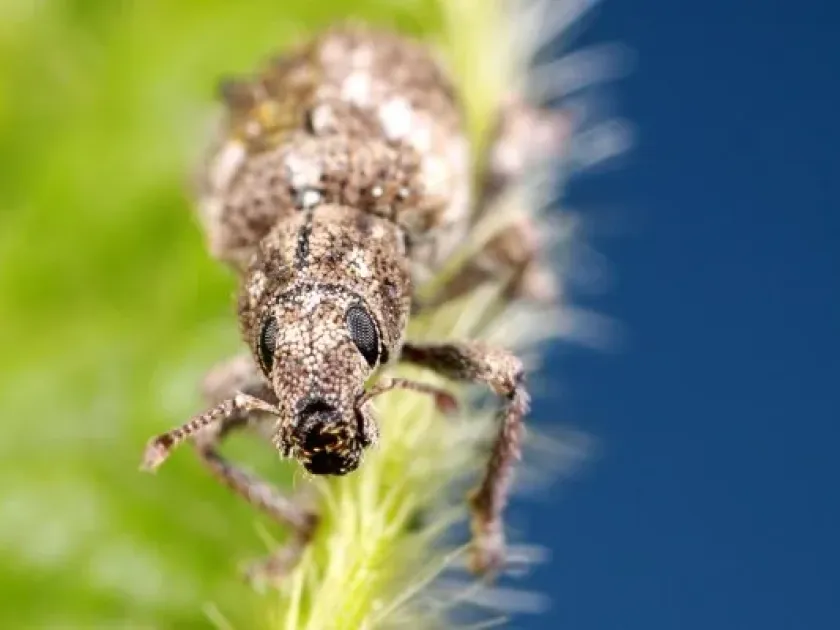
Promecops claviger is a species of weevil belonging to the family Curculionidae and the order Coleoptera. These beetles are characterized by their distinct snout (rostrum), which is typical for the family and is used for feeding and laying eggs in plant tissues.
The adult beetles possess cryptic coloration, often blending in with their host plants. Their elytra are frequently covered with scales or setae, providing camouflage that makes visual inspection in the field quite challenging for agronomists.
Larvae are legless, C-shaped grubs with creamy-white bodies. They typically develop in sheltered environments, such as soil or within plant stems, which protects them from predators and environmental fluctuations during their growth stage.
The insect undergoes a complete metamorphosis, including egg, larval, pupal, and adult stages. The duration of each stage is highly dependent on ambient temperatures and humidity levels prevalent in their habitat range.
Effective identification in the field often requires the use of sweep nets to sample adult populations. Monitoring should be conducted regularly, particularly during the early growth phases of host crops when the beetles are most active.
What it damages
Promecops claviger primarily targets leguminous crops, including soybeans. Both adults and larvae can inflict damage, though the nature of the destruction varies depending on the specific life stage of the pest and the growth stage of the plant.
Adult beetles feed on leaves, creating irregular holes or scalloping the edges of the foliage. This reduces the photosynthetic capacity of the plant, potentially hindering its overall development and vigor during the critical vegetative phase.
Larval feeding can occur on root systems or at the base of the stem, causing significant structural damage. This can lead to stunted growth, reduced nutrient uptake, and in severe cases, the death of young seedlings.
The damage is often sporadic, but under favorable conditions, the pest population can increase rapidly. This results in significant patchiness in field performance, affecting both the health of the plants and the final yield volume.
- Reduction in leaf surface area
- Inhibition of root system development
- Decreased plant vigor and health
- Increased vulnerability to secondary infections
When it appears
The activity cycle of Promecops claviger is closely linked to the growing season of its host plants. Adults emerge from overwintering sites as temperatures rise in the spring, coinciding with crop emergence and development.
The reproduction period is often extended, meaning that different life stages may be present in the field simultaneously. This continuous presence requires vigilant monitoring throughout the season to prevent cumulative damage.
Overwintering typically occurs in the soil or beneath crop residues. The success of the overwintering population is a major factor in determining the potential pest pressure for the upcoming growing cycle.
Weather patterns, particularly rainfall and temperature, significantly influence the speed of the life cycle and the success rate of larval development. Wet seasons may alter the behavior and movement patterns of the pest within the field.
Early-season scouting is critical, as young plants have little tolerance for foliage loss or root damage. Detecting the pest before the population threshold is reached is essential for effective management.
Control measures
Integrated Pest Management (IPM) is the most effective approach for controlling Promecops claviger. This strategy combines preventative agricultural practices with targeted interventions to minimize crop loss.
Cultural control practices, such as deep plowing, help disrupt the life cycle of the pest by destroying overwintering larvae in the soil. Furthermore, robust crop rotation cycles can reduce the buildup of pest populations in specific fields.
Chemical control involving insecticides is used when economic injury levels are exceeded. Proper timing of applications is necessary to target the most vulnerable stages of the pest while minimizing impact on beneficial insects.
Utilizing plant varieties with natural resistance or tolerance to weevil damage can be a powerful tool. These varieties often show less severe foliage loss and recover more effectively from larval feeding stress.
Constant field monitoring, using tools such as pheromone traps or systematic counting methods, ensures that growers can respond quickly to pest pressure, maintaining healthy crop production throughout the season.
Taxonomy
- Latin name
- Promecops claviger
- Order
- Coleoptera (beetles)
- Family
- Curculionidae
- EPPO code
- PRMECL
Discussion
No discussions yet — be the first.