
Promecops carinicollis weevil
Promecops carinicollis
Description
How to identify
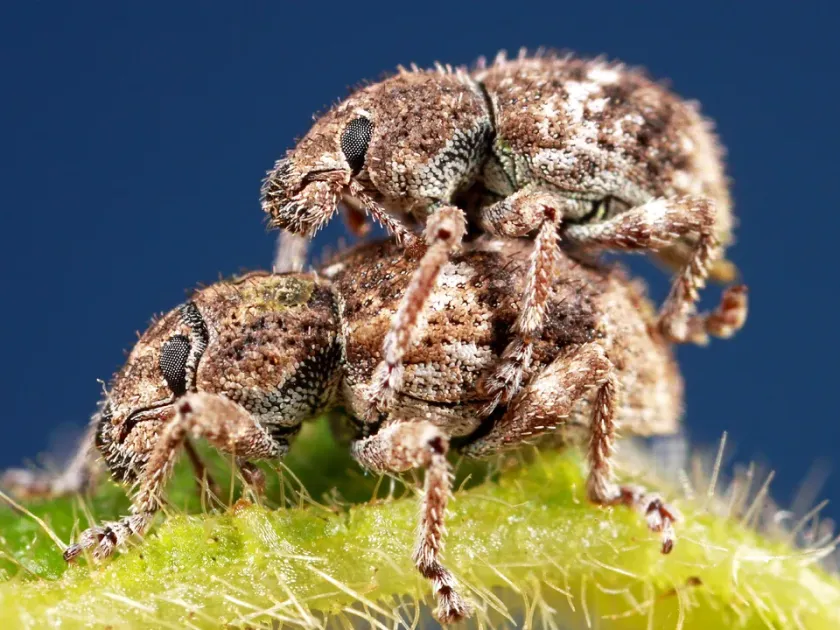
Promecops carinicollis is a beetle species belonging to the Curculionidae family, specifically the Entiminae subfamily, commonly known as broad-nosed weevils.
Adult beetles are characterized by a robust exoskeleton, often covered with specialized scales that provide camouflage against soil textures and organic debris.
The taxonomic identity of this species is confirmed by the distinct structure of the pronotum, which features prominent keels, a key morphological marker for field identification.
They possess the characteristic elongated rostrum, with geniculate (elbowed) antennae, which are typical sensory organs for this group of Coleoptera.
The larval stage consists of legless, creamy-white grubs with a hardened, brownish head capsule, specifically adapted for survival within subterranean soil environments.
What it damages
This weevil acts as a polyphagous pest, capable of damaging a wide variety of agricultural crops, including legumes and several cereal species.
Adult insects feed on the foliage, typically resulting in semicircular notches along the leaf margins, which is a classic symptom of their feeding behavior.
Seedlings are the most vulnerable stage; adult feeding on the apical meristem or leaves can significantly stunt growth or cause total plant mortality.
Larvae primarily damage the root system, tunneling into roots or consuming lateral rootlets, which severely impairs the plant's nutrient and water uptake capabilities.
This combined damage to foliage and roots often leads to significant stand loss, negatively impacting the total harvest potential of the affected fields.
When it appears
The life cycle of Promecops carinicollis is highly dependent on environmental variables, particularly soil moisture and ambient temperature patterns.
These pests generally overwinter as either mature adults or mature larvae deep within the soil profile, protected from the harsh winter climate.
As spring temperatures rise, the insects become active, emerging from the soil to initiate feeding on newly emerged agricultural seedlings.
Mating and oviposition typically coincide with the early vegetative phases of host plants, ensuring that larvae have immediate access to food sources upon hatching.
Population peaks are typically observed during late spring, which remains the period of highest risk for crop damage and economic loss.
Signs of infestation
The primary diagnostic sign in the field is the presence of characteristic scalloped or notched leaf margins on young, growing plants.
Field scouting conducted in the early morning hours is most effective, as adults can be observed resting on plants or hidden near the soil base.
Wilting of plants during the warmest part of the day, despite adequate soil moisture, often indicates heavy larval feeding on the root system.
Excavating the soil around stunted plants often reveals the presence of white, c-shaped larvae actively feeding on the crop roots.
Patches of sparse or thin plant stands within a field are strong indicators of a concentrated population of these soil-dwelling pests.
Control measures
Effective management of Promecops carinicollis requires an integrated approach that prioritizes prevention alongside chemical interventions.
Crop rotation is a fundamental tool, as it prevents the buildup of local pest populations by alternating host and non-host crop cycles.
Deep tillage practices are highly effective for disrupting overwintering sites, exposing larvae to surface-level predators and environmental extremes.
Seed treatments with systemic insecticides provide a crucial layer of protection, shielding young plants during the most vulnerable post-germination stage.
When monitoring indicates that pest populations have exceeded economic thresholds, timely application of contact or systemic foliar insecticides is necessary.
Taxonomy
- Latin name
- Promecops carinicollis
- Order
- Coleoptera (beetles)
- Family
- Curculionidae
- EPPO code
- PRMECA
Discussion
No discussions yet — be the first.