
Chilean fruit leafroller
Proeulia auraria
Description
How to identify
The Chilean fruit leafroller (Proeulia auraria) is a lepidopteran pest belonging to the Tortricidae family. It is recognized as a significant threat to deciduous fruit orchards, particularly in South American countries.
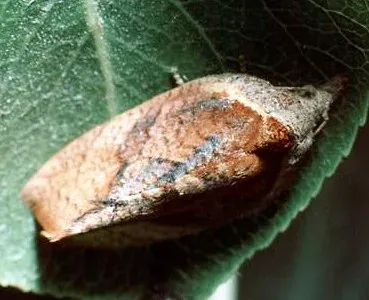
Adult moths have a wingspan typically ranging from 15 to 20 mm. Their forewings feature a distinctive golden-brown coloration with darker patterns that provide excellent camouflage against tree bark and foliage.
The larvae progress through several instars, varying in color from light yellow to greenish-brown. A key identification feature for the larvae is the dark, often brown or black, head capsule that stands out against their body.
Females lay eggs in flattened, scale-like clusters on the smooth surfaces of leaves or fruits. These egg masses are covered in a protective secretion, which makes them difficult to spot and resistant to external conditions.
As a representative of the Tortricidae family, its life cycle is deeply intertwined with the phenology of fruit-bearing trees. Recognizing the insect's morphology at each stage is essential for effective diagnostic and control efforts.
What it damages
This species is a polyphagous pest, meaning it feeds on a wide range of agricultural crops. It primarily infests stone and pome fruits, including apples, pears, peaches, and plums, as well as vineyards.
Early-stage larvae feed on the leaf epidermis, causing characteristic window-like damage. As they grow, they use silk threads to roll leaves into tubes or nests, creating protected feeding sites for further development.
The most severe economic impact occurs when larvae attack the fruit. They bore deep galleries into the flesh of the fruit, causing significant quality degradation and making the produce unsuitable for export or long-term storage.
Damaged fruit often serve as entry points for secondary infections, such as brown rot or other fungal pathogens. This results in significant post-harvest losses and reduced yields for growers.
In addition to direct consumption, the presence of larvae and their silk-covered excrement ruins the commercial appearance of the harvest, leading to serious financial losses in the agricultural sector.
When it appears
The development of Proeulia auraria is highly dependent on seasonal temperatures and humidity. The pest typically completes several generations throughout the growing season.
First-generation larvae emerge in early spring, synchronized with the budding phase of fruit trees. They primarily feed on emerging buds and young, succulent leaves, affecting the plant's early growth stages.
Summer generations are generally the most damaging, coinciding with fruit ripening. Increased population density during this time leads to high levels of fruit infestation across the orchard.
Pupation occurs in protected environments, including curled leaves, bark crevices, or ground debris. This allows the insect to safely overwinter in the pupal stage, awaiting favorable conditions for the next season.
Environmental factors significantly influence the survival rate of the pest. Warm and dry summers often lead to higher population explosions, while sudden shifts in weather can affect the synchrony of life cycle stages.
Signs of infestation
The first observable sign of infestation is the presence of silk webbing on shoot tips. Leaves in these areas are often distorted, rolled, or clumped together as the larvae establish their feeding sites.
Surface blemishes on fruits, such as shallow abrasions or necrotic spots, are classic indicators. These are caused by younger larvae feeding on the skin before they are capable of boring deep into the fruit.
As larvae mature and penetrate the fruit, excrement and frass mixed with silk webs become visible on the surface. This is a clear indicator of advanced infestation that warrants immediate intervention.
- Rolled or distorted leaf blades;
- Fine silk webbing on terminal shoots;
- Surface necrosis and shallow holes on fruit skin;
- Deep larval tunnels in the fruit flesh;
- Premature fruit drop and visible larval waste.
Orchard monitoring using pheromone traps is the most reliable method for detecting adult moth flights. Routine visual inspections of the tree canopy are also recommended to identify early signs of localized outbreaks.
Control measures
Integrated Pest Management (IPM) is the most effective approach for controlling the Chilean fruit leafroller. It combines cultural, biological, and chemical strategies to reduce the population below economic thresholds.
Cultural practices include rigorous sanitation, such as removing infested plant debris and fallen fruit. Proper winter and summer pruning helps eliminate overwintering sites, significantly curbing the pest's reproductive potential.
Biological control, utilizing beneficial parasitic wasps or entomopathogenic fungi, plays a vital role in natural population regulation. Maintaining a healthy ecosystem within the orchard supports these natural predators.
Chemical applications should be strictly timed based on monitoring data and economic threshold levels. Selective insecticides should be prioritized to minimize the impact on non-target beneficial insects like pollinators.
Rotating chemical products with different modes of action is crucial to prevent the development of resistance. Strict adherence to pre-harvest intervals ensures that the final fruit remains safe for consumer consumption.
Taxonomy
- Latin name
- Proeulia auraria
- Order
- Lepidoptera (butterflies)
- Family
- Tortricidae
- EPPO code
- PEULAU
Discussion
No discussions yet — be the first.