
Proctotrupids
Proctotrupes
Description
How to identify
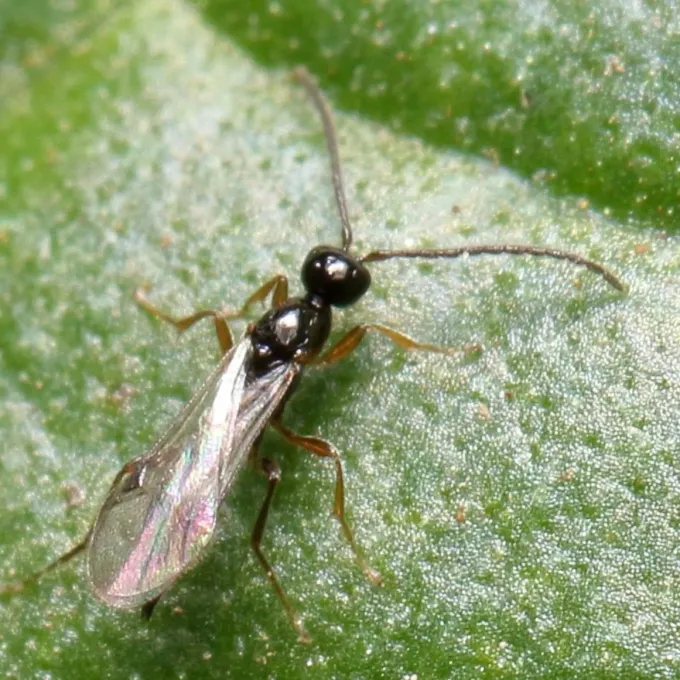
Proctotrupids (Proctotrupidae) are a family of parasitic Hymenoptera commonly found in soil environments. These insects are characterized by their small size, typically ranging between 3 to 7 mm in length.
Adult proctotrupids possess a smooth, shiny black or dark-brown exoskeleton, which makes them quite distinct among other soil-dwelling insects.
One of the primary anatomical features of these insects is the structure of the abdomen, where the first segment forms a narrow stalk attached to the thorax.
The wing venation is relatively simple, serving as a reliable taxonomic characteristic for entomologists to distinguish them from related wasp families.
They are highly specialized parasitoids, having evolved to target specific larvae of beetles that reside within the soil profile.
What it damages
It is important to note that proctotrupids are rarely considered pests in the traditional sense, as they do not feed on plant tissues like leaves or roots.
Instead, they function as beneficial insects by parasitizing soil-dwelling beetle larvae, thereby acting as natural regulators of potential pest populations.
They do not cause damage to crops. On the contrary, their presence is often indicative of a healthy ecosystem where biological control mechanisms are functioning.
In very rare instances, their population might become problematic in indoor greenhouse settings if they impact the natural enemies being used for integrated pest management.
For most agricultural crops, the impact of these wasps is either neutral or beneficial, helping to mitigate the buildup of harmful beetle populations in the soil.
When it appears
The seasonal activity of proctotrupids is closely linked to soil temperature and moisture levels, typically peaking during the warmer spring and summer months.
Adults emerge from their overwintering sites in the soil once temperatures are sufficient to facilitate mating and host-seeking behavior.
The lifecycle involves a complete metamorphosis, where the larvae develop entirely inside the host beetle larva buried beneath the soil surface.
As autumn approaches and soil temperatures decline, these insects enter diapause, overwintering in protected spots within the soil or ground debris.
Greenhouse environments can disrupt these seasonal patterns, potentially leading to year-round activity if climate control parameters remain constant.
Signs of infestation
Visual identification of proctotrupids in the field is difficult due to their small size and subterranean lifestyle, making them elusive to the casual observer.
The most reliable sign of their presence is the discovery of empty beetle larval cases in the soil, which often feature exit holes left by emerging wasps.
Field monitoring can be improved by using yellow sticky traps placed near the soil surface to capture active adults during their peak flight periods.
Changes in the population density of certain soil pests can act as a bio-indicator for the presence and activity levels of proctotrupid parasitoids.
Using soil sifting or extraction methods in a laboratory setting can help confirm the presence of these wasps and their associated hosts in a specific agricultural plot.
Control measures
Because proctotrupids are generally beneficial, there is no need for targeted control measures to eradicate them from agricultural land.
If their presence is deemed a nuisance in specialized greenhouse trials, adjusting soil moisture levels or implementing crop rotation can naturally discourage them.
It is recommended to avoid the use of broad-spectrum insecticides, which can indiscriminately kill these beneficial parasitoids and lead to secondary pest outbreaks.
Integrated Pest Management (IPM) strategies emphasize preserving such natural enemies as they provide a cost-effective and environmentally friendly way to manage pests.
Promoting soil health through the addition of organic matter supports a diverse biological community, ensuring that proctotrupid populations remain in natural balance.
Taxonomy
- Latin name
- Proctotrupes
- Order
- Hymenoptera
- Family
- Proctotrupidae
- EPPO code
- PRCOSP
Discussion
No discussions yet — be the first.