
Rock hyrax
Procavia capensis
Description
How to identify
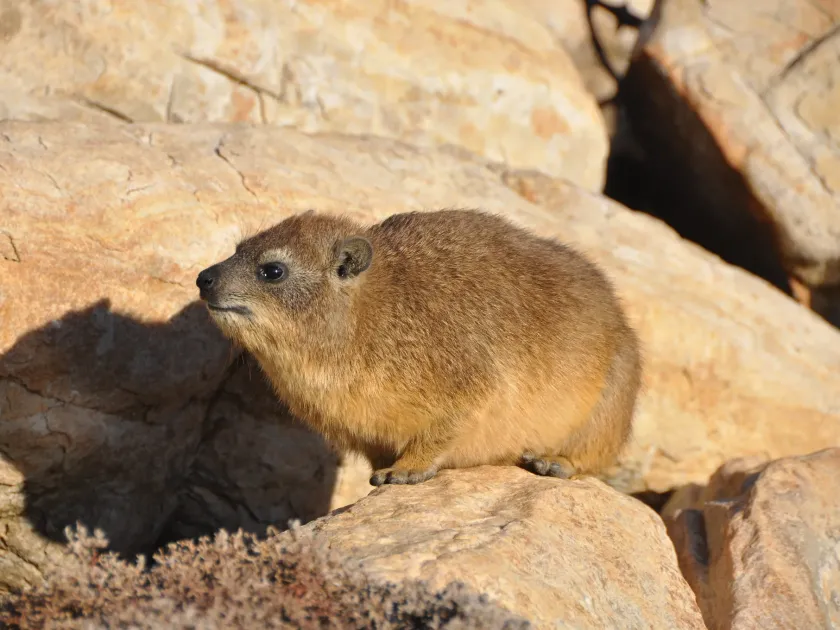
The rock hyrax (Procavia capensis), belonging to the order Hyracoidea, is a stout, medium-sized mammal often found in rocky terrains near agricultural lands.
Despite their small size, reaching up to 50 cm in length, these animals are highly social and live in large colonies that can exert significant pressure on local vegetation.
They are characterized by short ears, a lack of a tail, and specialized feet with nail-like hooves, which allow them to navigate steep rock faces with ease.
The colonies maintain a strict hierarchy, and specialized "sentinels" guard the group while they forage, making them difficult to approach or surprise.
Though they appear harmless, their high adaptability and biological success make them a persistent challenge for farmers in affected regions.
What it damages
Rock hyraxes are generalist herbivores that consume a wide variety of plant materials, making them a significant threat to many agricultural crops.
Cereal crops, such as wheat and maize, are particularly vulnerable during the early stages of growth when the plants are tender and highly nutritious.
Vegetable gardens are also prime targets, with hyraxes consuming foliage, stems, and fruits of crops like cabbage, tomatoes, and various root vegetables.
Beyond ingestion, the animals cause secondary damage by trampling large areas of standing crops while creating pathways or resting areas within the fields.
In orchard settings, they can cause long-term damage by gnawing on the bark of young fruit trees, which can lead to the loss of entire saplings.
When it appears
Hyrax activity is closely linked to the crop growing season, with peak damage occurring when fields provide a concentrated source of fresh vegetation.
Springtime often sees the most intense raids on new seedlings, as the young plants are easier to digest and provide high energy for the colony.
Their daily behavior is driven by temperature; they prefer to forage during the cooler early morning and late afternoon hours to avoid heat exhaustion.
During prolonged droughts, when natural forage in their rocky habitats becomes scarce, they are more likely to venture into irrigated agricultural zones.
Reproductive peaks within the colony translate into increased food demands, often leading to sudden spikes in agricultural damage during certain months.
Signs of infestation
Identifying a hyrax infestation is often marked by the precise, angled bite marks left on plant stems, which appear as if they were cut with sharp shears.
Well-worn trails radiating from rocky outcrops toward the fields are clear indicators of constant traffic between their burrows and the food source.
Accumulations of fecal matter, often found in communal latrines or near rocky shelters, are definitive signs of a nearby colony.
Damage often manifests as expanding bare patches within a field where the animals have intensively grazed and trampled the crops over time.
A high-pitched, piercing whistle serves as a common alarm call, often heard by farmers or agricultural workers before the animals disappear into crevices.
Control measures
The most effective strategy is the installation of robust, buried fencing, as hyraxes are adept at digging and squeezing through small gaps.
Modifying the habitat by clearing rock piles or dense vegetation around the perimeter of fields reduces the shelter available for colonizing groups.
Integrated pest management, including the use of sensory deterrents, can provide short-term relief, though they often require frequent adjustment.
In specific cases, non-lethal trapping and relocation may be considered, provided they comply with local wildlife protection laws and regulations.
Professional monitoring is recommended to determine the size of the colony, as population management should be balanced with ecological impact considerations.
Taxonomy
- Latin name
- Procavia capensis
- Family
- Procaviidae
- EPPO code
- PROACA
Discussion
No discussions yet — be the first.