
Rock hyrax
Procavia
Description
How to identify
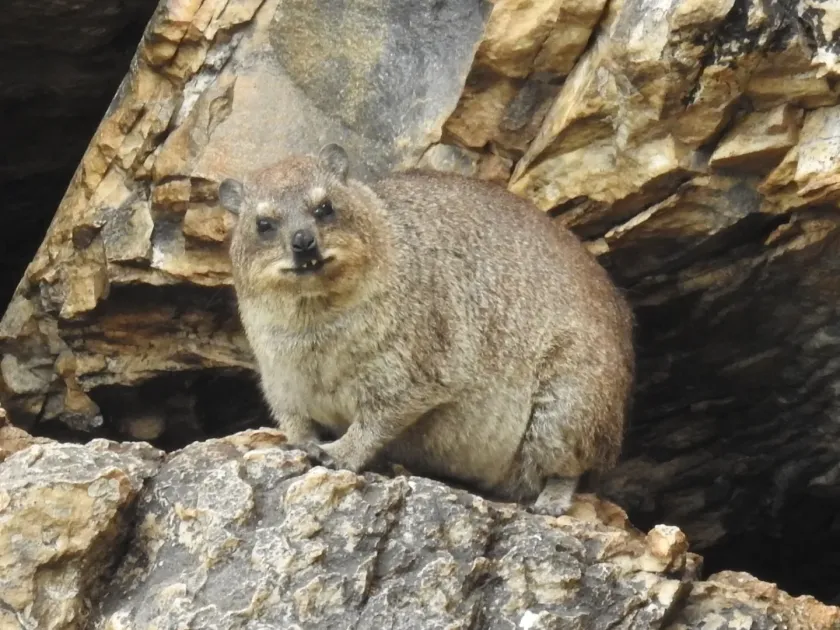
The rock hyrax (order Hyracoidea, family Procaviidae) is a small mammal that appears similar to a large rodent or pika, though it is genetically related to elephants.
These animals have a stocky build, short ears, and specialized incisors that act like cutting tools, allowing them to process tough fibrous plant material efficiently.
They are characterized by soft, rubbery pads on their feet, which provide exceptional grip on rocky surfaces and allow them to climb trees to reach foliage.
Hyraxes are highly social animals that live in colonies, which makes their impact on local agriculture significant when they target cultivated fields for food.
Their reproductive cycle is relatively slow compared to typical small rodents, yet their population density in suitable habitats remains remarkably high.
What it damages
Rock hyraxes cause severe damage to vegetable crops, orchards, and grains located in proximity to their rocky dens or natural habitats.
They consume young plant shoots, buds, and leaves, often stripping entire plants bare during feeding sessions that can occur at any time of day.
During droughts, hyraxes turn to agricultural crops as their primary water and nutrient source, leading to rapid destruction of fields.
Feeding on bark causes significant stress to fruit trees, leading to stunted growth, secondary infections, or even the death of the tree after repeated attacks.
Beyond direct feeding, the physical presence of a colony leads to trampling of delicate crops, creating large patches of destroyed vegetation throughout the field.
Signs of infestation
Distinctive bite marks, characterized by clean, sharp-edged cuts on stems and branches, are the most reliable visual evidence of rock hyrax feeding.
The formation of well-worn trails leading from rocky areas towards the crops indicates the regular movement patterns of the colony.
Accumulations of droppings in specific spots, known as midden sites, are clear indicators of a established colony presence in the vicinity.
Hyraxes are diurnal animals that are usually spotted basking on rocks, which makes them easier to identify during daylight hours compared to nocturnal pests.
Root damage and uprooted young seedlings are common in vegetable patches if the colony has discovered a particularly succulent variety of crop.
Control measures
Exclusion is the most effective strategy for managing rock hyraxes, typically involving the installation of robust, buried fencing to block their entry.
Regular maintenance of the fencing is required, as these agile climbers can bypass poorly maintained barriers or leverage nearby obstacles to jump over.
While ultrasonic deterrents are marketed, their efficacy is often inconsistent as the animals tend to habituate to non-threatening noises over time.
Good agricultural hygiene, including the removal of debris or brush piles near crop fields, significantly reduces the appeal of the area to hyrax colonies.
- Install buried wire mesh fencing around the perimeter.
- Clear rocks and debris that provide harbor for the animals.
- Use motion-activated sprinklers to deter foragers.
- Protect young tree trunks with protective guards or wraps.
Taxonomy
- Latin name
- Procavia
- Family
- Procaviidae
- EPPO code
- PROASP
Discussion
No discussions yet — be the first.