
Pristionchus
Pristionchus
Description
How to identify
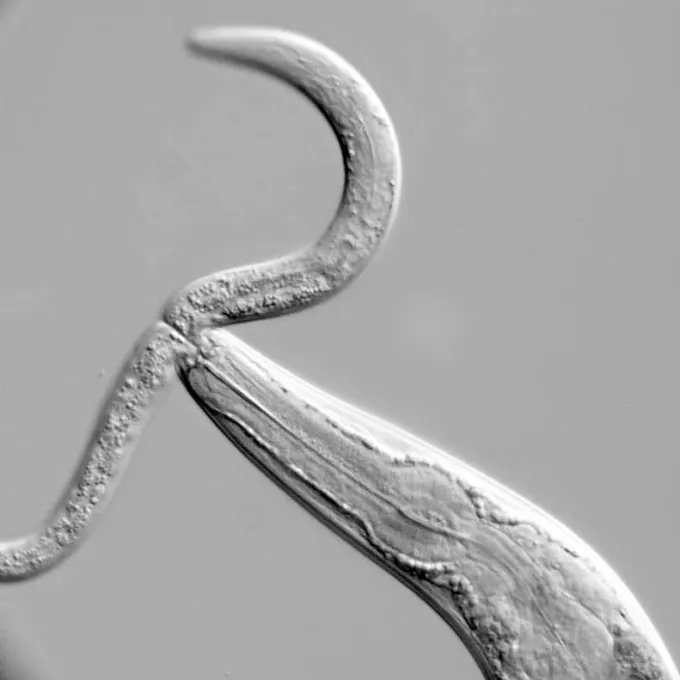
The genus Pristionchus belongs to the family Diplogastridae, order Rhabditida. These are tiny soil-dwelling organisms characterized by remarkable evolutionary flexibility.
They exhibit a complex biology with a mouth dimorphism that allows these nematodes to adapt their feeding habits to the available substrate in the soil.
Often, these nematodes are associated with insects, utilizing them as transport hosts to move across agricultural landscapes to new feeding sites.
Scientific identification requires high-level microscopy, as they are easily confused with other rhabditid nematodes commonly found in the rhizosphere.
Their life cycle consists of several larval stages, with the dauer larva stage being particularly resistant to adverse environmental conditions like drought.
What it damages
Pristionchus nematodes often act as secondary invaders, colonizing plants that have already been stressed or damaged by primary pests or environmental factors.
They are known to be associated with root and tuber crops, as well as various grains, where they contribute to the degradation of plant tissues.
By damaging the integrity of the root system, they facilitate the entry of bacteria and fungi, exacerbating rot symptoms in the plant host.
The damage is not just structural but metabolic, as the plant redirects resources to cope with the nematode presence instead of focusing on yield formation.
Significant economic losses occur in high-density populations where cumulative damage to the root zone leads to total plant collapse.
Signs of infestation
Signs of infestation usually begin with stunted growth and a general lack of vigor in the crop during early developmental stages.
Leaves may show symptoms of chlorosis or temporary wilting, signaling that the root system is no longer effectively taking up water and nutrients.
Root inspection often reveals brown, necrotic lesions or soft rot, indicating that microorganisms have followed the nematodes into the plant tissue.
In fields, the patches of affected plants often correspond to areas with poor soil drainage or high organic matter content that favors nematode survival.
Reduced root hair development and stunted lateral roots are key indicators that can be observed upon careful examination of the soil-root interface.
Control measures
Integrated Pest Management (IPM) is the most effective approach, focusing on crop rotation to break the survival cycle of the nematodes.
Maintaining soil health through proper drainage and appropriate organic matter management significantly reduces the attractiveness of the environment to Pristionchus.
Biological control, including the use of entomopathogenic fungi or antagonistic bacteria, can suppress population growth in a sustainable manner.
Where soil fumigation is necessary, it must be performed strictly according to regulatory guidelines to avoid negative impacts on soil biota.
Early detection and phytosanitary inspections of transplants or seeds are crucial to preventing the introduction of these nematodes into clean agricultural land.
Taxonomy
- Latin name
- Pristionchus
- Order
- Nematodes
- Family
- Diplogasteridae
- EPPO code
- PRITSP
Discussion
No discussions yet — be the first.