
Andean potato weevil
Premnotrypes zischkai
Description
How to identify
The Andean potato weevil (Premnotrypes zischkai) belongs to the family Curculionidae within the order Coleoptera. Adult weevils are relatively small, typically measuring between 6 to 8 mm, and possess a dark coloration that allows them to blend into the soil environment effectively.
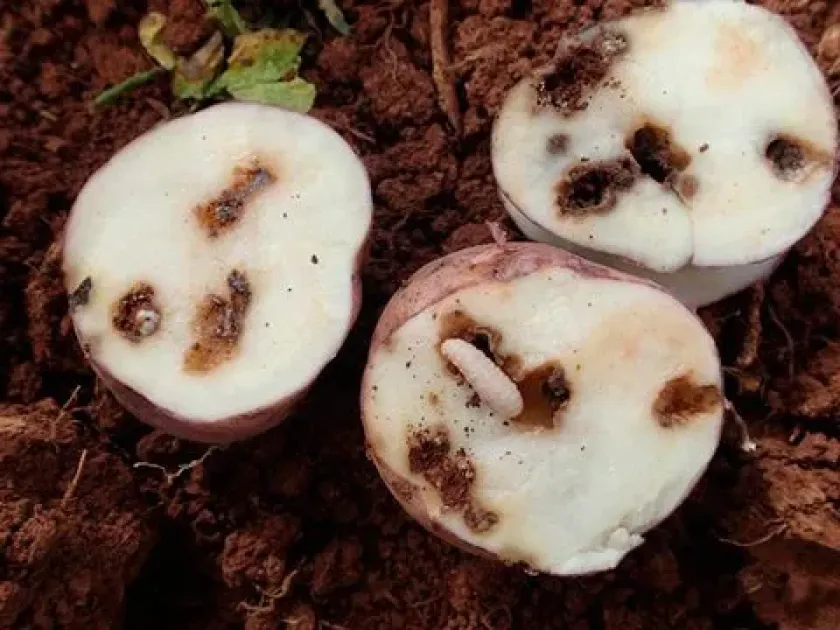
Larvae are characterized by a fleshy, legless body with a distinct, hardened head capsule. They are strictly endophagous, meaning they complete their development inside the host plant's tubers, which is a key adaptation for survival and protection against external environmental factors.
What it damages
This pest is a significant threat to potato cultivation, particularly in high-altitude regions. The primary damage is caused by the larvae, which burrow into the tubers, creating extensive tunnels that compromise the structural integrity and marketability of the potato crop.
Adult weevils contribute to the damage by feeding on the foliage, although this is usually secondary compared to the subterranean damage. The resulting holes in the tubers not only decrease yield but also facilitate secondary infections by bacteria and fungi during storage.
When it appears
The life cycle of the Andean potato weevil is synchronized with the potato growing season. Adult beetles emerge from the soil as temperatures rise, typically coinciding with the early development stages of the potato plants.
Females deposit eggs in the soil or on the surface of exposed tubers. Upon hatching, the young larvae immediately seek out the tubers to penetrate the skin and begin feeding. They stay protected within the tuber throughout their larval stage, eventually pupating in the soil.
Signs of infestation
Field identification often begins with observing adult feeding damage on the margins of potato leaves. These semi-circular notches are a primary diagnostic sign that the pest is present in the field during the vegetative growth phase of the plant.
At harvest, tubers displaying small entry holes covered with larval frass are a definitive sign of infestation. Upon slicing the potato, one will observe tunnel networks that render the tuber unfit for consumption or processing, indicating heavy pest pressure.
Control measures
Management of the Andean potato weevil relies heavily on strict phytosanitary measures to prevent the spread of the insect to non-infested areas. Importing potato tubers from regions where the weevil is present must be strictly prohibited.
Cultural practices, such as crop rotation, are essential to break the life cycle of the pest. Additionally, thorough soil tillage after harvest disrupts the pupation sites, exposing the insects to predators and unfavorable weather conditions, which significantly reduces the next generation's population.
Chemical control can be implemented using targeted soil applications of insecticides. It is also crucial to conduct rigorous inspection and sorting of potatoes before storage to ensure that no infested tubers are introduced into storage facilities, where they could jeopardize the entire stock.
Taxonomy
- Latin name
- Premnotrypes zischkai
- Order
- Coleoptera (beetles)
- Family
- Curculionidae
- EPPO code
- PREMSI
Discussion
No discussions yet — be the first.