
Andean potato weevil
Premnotrypes latithorax
Description
How to identify
The Andean potato weevil (Premnotrypes latithorax) is a severe agricultural pest belonging to the Curculionidae family. It is primarily known for causing significant damage to potato crops in the high-altitude regions of the Andes.
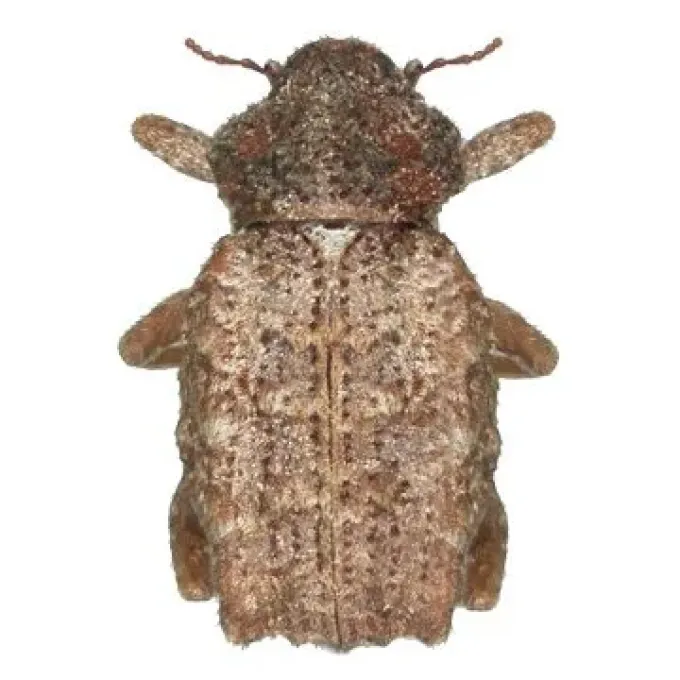
Adult weevils typically measure 7–9 mm in length and possess a dark gray or brown coloration. They feature the characteristic elongated snout common to many weevil species, which they use for feeding and egg-laying.
The larvae are legless, white to cream-colored grubs with a distinct brown head. They are primarily found inside the potato tubers, making them difficult to detect through superficial inspection of the plant.
The pupal stage occurs within the soil, where the insect constructs a specialized earthen cell. This stage allows the pest to survive dormant periods effectively until conditions improve.
Because adults are flightless, the primary mode of dissemination for this species is the transportation of infested tubers, soil, or contaminated farming equipment between fields.
What it damages
The primary host plant for this pest is the potato (Solanum tuberosum). Larvae are responsible for the most significant economic loss, as they bore into the tubers to feed.
As larvae tunnel through the tuber tissue, they create channels that destroy the structure of the potato. This severely reduces both the market value and the overall yield of the harvest.
The damage caused by feeding facilitates the entry of secondary pathogens, such as bacteria and fungi, leading to post-harvest decay and storage loss in warehouses.
In addition to tubers, larvae may feed on stolons and roots, which stunts the growth of the potato plant and prevents proper tuber development during the season.
Adult weevils feed on the leaves of the potato plant, leaving semicircular notches on the leaf edges, although this damage is generally less destructive than the larval activity underground.
When it appears
The life cycle of the Andean potato weevil is closely synchronized with the potato growing season. Adults emerge from the soil as the potato plants begin to sprout.
Females typically deposit eggs in the soil near the base of the stems or on the underside of leaves. Once hatched, the larvae migrate downward to locate and penetrate the developing tubers.
The peak of larval infestation usually occurs during the middle of the growing season, when tubers are expanding and accumulating starch, providing an ideal food source.
Overwintering occurs primarily in the adult stage within the soil profile, often at depths of up to 30 cm, or as pupae waiting for the next cycle of environmental triggers.
The emergence of adults in the spring is often staggered, which makes it challenging to time insecticide applications for maximum efficacy across the entire field.
Signs of infestation
The most immediate sign of an infestation is the presence of irregular, semicircular notches on the margins of potato leaves, which indicates adult weevil feeding activity.
During harvest, small entry holes on the surface of the tubers reveal larval presence. Internally, one will find tunnels filled with larval excrement, which may cause the tuber to become hollowed out.
Stored potatoes that have been infested often emit a foul odor due to bacterial rot that quickly colonizes the channels created by the larvae during their growth period.
General plant wilting, chlorosis, or stunted growth can be indicators of high larval pressure on the root system and underground plant organs.
Monitoring the field using pheromone or food-based traps is highly recommended to detect the presence of the insect early in the season before the larval damage becomes irreversible.
Control measures
Strict quarantine protocols are the most effective way to prevent the spread of the weevil, including the prohibition of moving uninspected potatoes from infested regions.
Implementing a rigorous crop rotation schedule helps reduce the population density of the weevil by breaking the life cycle and removing the primary food source.
Using certified, pest-free seed potatoes is essential. Additionally, treating seed tubers with systemic insecticides before planting can protect the developing plants.
Chemical control involving timely insecticide spraying when adults emerge from the soil can significantly reduce the number of females available to lay eggs on the plants.
- Practicing deep plowing after harvest to expose pupae to predators and desiccation.
- Removing all crop residues and volunteer potatoes after the season ends.
- Employing biological control agents, such as entomopathogenic fungi, to target larvae in the soil.
Taxonomy
- Latin name
- Premnotrypes latithorax
- Order
- Coleoptera (beetles)
- Family
- Curculionidae
- EPPO code
- PREMLA
Discussion
No discussions yet — be the first.