
Andean potato weevil
Premnotrypes
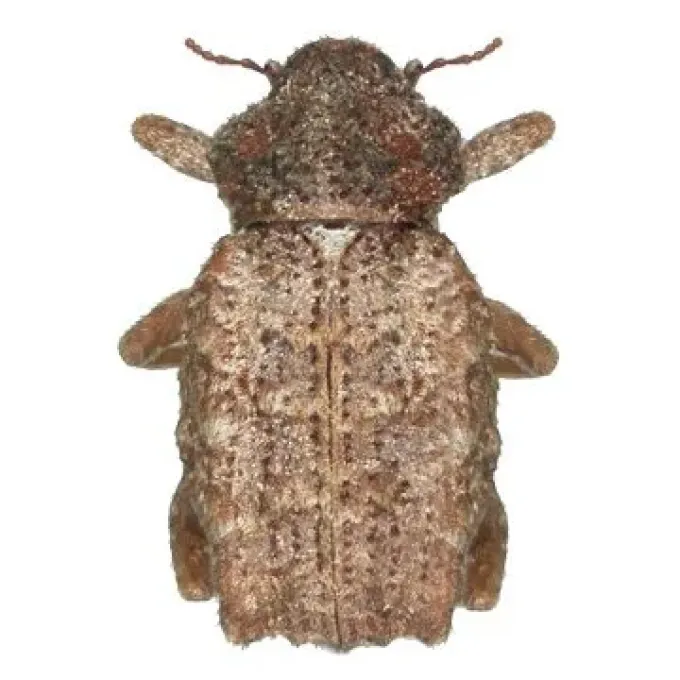
Description
How to identify
The Andean potato weevil (Premnotrypes spp.) belongs to the Curculionidae family. It is considered one of the most destructive pests affecting potato crops in the high-altitude regions of the Andes.
The adult weevils are about 6–8 mm long, typically dark brown or black. Their bodies are covered in scales and hairs, which helps them blend into the soil, making them difficult to spot during field inspections.
The larval stage is characterized by legless, creamy-white bodies with dark head capsules. These larvae are the primary stage responsible for the extensive damage caused to potato tubers.
Since the wings of these weevils are poorly developed, their natural dispersal is limited. They mostly move by walking or are spread via the transportation of infested tubers and soil.
The life cycle is highly adapted to the cool climate of the Andean highlands. Both the temperature and the availability of host tubers dictate the intensity of their development and reproduction.
What it damages
The Andean potato weevil primarily targets the potato plant. It is a highly specialized pest that has evolved to thrive alongside potato cultivation in mountain ecosystems.
Adult weevils feed on the foliage, leaving semi-circular notches on the leaf margins. While this foliage damage is noticeable, the economic impact is mainly driven by the subterranean activities of the larvae.
Larvae bore into the tubers, creating intricate tunnels. These galleries destroy the internal structure of the potato, making it susceptible to rot and secondary pathogens.
Severe infestations can lead to total crop loss, as the infested tubers are often rendered completely inedible and unfit for market distribution or storage.
Because the larvae reside inside the tubers, the pest can easily be transported into storage facilities, where it continues to feed and destroy the harvested crop over time.
When it appears
The emergence of adult weevils from the soil coincides with the onset of the spring planting season, triggered by rising soil temperatures.
Egg-laying activity is synchronized with the development of the potato tubers. Females typically lay eggs near the base of the plant or in soil crevices close to the forming potatoes.
The peak infestation period occurs during the summer months, as larvae complete their development within the tubers throughout the growing season.
As the season ends and the potatoes are harvested, the remaining larvae are often carried into storage with the tubers, while others may survive in the soil until the next year.
The pest's seasonal cycle is closely tied to the potato growth stages, ensuring that the most vulnerable parts of the plant are available for larval feeding.
Signs of infestation
The first signs of infestation are the distinct, scalloped notches found on the leaves, indicating the presence of adult weevils actively feeding on the crop.
Underground, the presence of the pest is marked by small entry holes on the skin of the tubers, often accompanied by frass (larval excrement) near the openings.
- Internal tunneling within the tuber flesh.
- Soft patches or localized rotting on the tuber surface.
- Premature yellowing or wilting of the potato plants in localized patches.
Because much of the damage occurs below the soil surface, farmers often do not realize the extent of the infestation until the harvest begins.
Careful inspection of the tubers at harvest is the most reliable way to identify the presence of the larvae before they are placed in storage.
Control measures
Strict quarantine measures are essential to prevent the spread of the weevil into new potato-growing regions, especially via the trade of seed potatoes.
Cultural practices, such as crop rotation, are highly effective. By planting non-host crops in infested fields, the pest cycle is broken, significantly reducing population levels.
Using certified, pest-free seed potatoes is the most important preventive step to avoid establishing the weevil in clean fields.
Insecticide applications are most effective when timed with the adult emergence phase, targeting the weevils before they have a chance to lay eggs.
Proper post-harvest management, including the careful sorting and destruction of infested tubers, is crucial to prevent the pest from spreading through stored crops.
Taxonomy
- Latin name
- Premnotrypes
- Order
- Coleoptera (beetles)
- Family
- Curculionidae
- EPPO code
- PREMSP
Discussion
No discussions yet — be the first.