
Bornean orangutan
Pongo pygmaeus
Description
How to identify
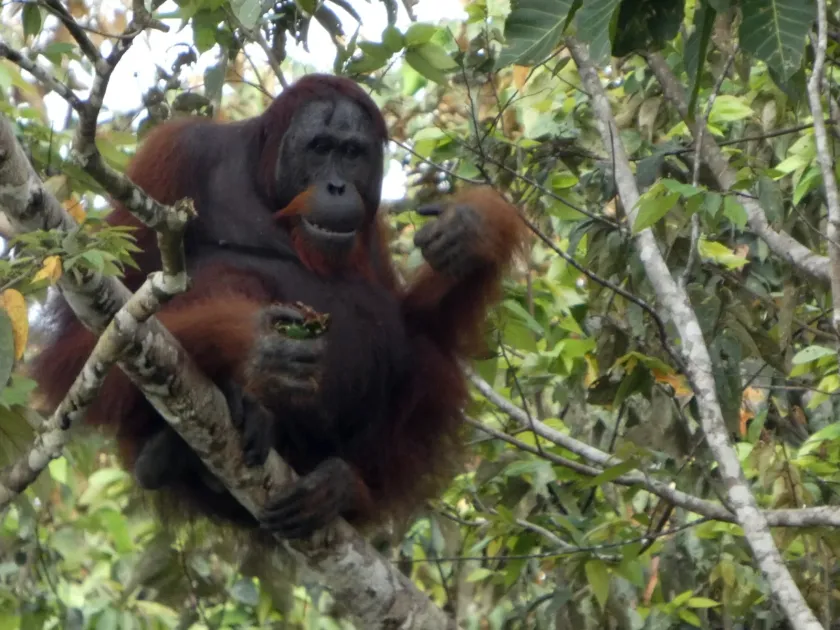
The Bornean orangutan (Pongo pygmaeus) is a great ape species belonging to the Hominidae family. These primates are characterized by their shaggy, reddish-brown fur and significant physical strength, adapted for life in the dense forests of Borneo.
They are primarily arboreal, utilizing the forest canopy for movement and foraging. Their biological life cycle is slow, with a low reproductive rate, which makes population recovery difficult in disturbed environments.
Orangutans possess remarkable intelligence, enabling them to adapt to changes in their habitat. When natural forest habitats are converted into monoculture plantations, these primates often shift their feeding behaviors.
From an agricultural standpoint, they are categorized as opportunistic pests that consume high-energy resources available in oil palm plantations when natural food supplies are scarce.
Recognized as a critically endangered species, any interaction between orangutans and plantations requires a balanced approach that respects international conservation laws while protecting agricultural interests.
What it damages
The main crop affected by Bornean orangutans is the oil palm (Elaeis guineensis). They target young seedlings, consuming the tender apical meristem, which leads to the complete death of the palm tree.
Mature plantations suffer from the destruction of oil palm fruits. Orangutans strip bunches and consume unripened fruit, causing substantial losses in yield and preventing harvest.
Mechanical damage is significant as they build elaborate nests using palm fronds. This process breaks branches and harms the integrity of the canopy, reducing the photosynthetic capacity of the trees.
The intensity of damage fluctuates based on seasonal food availability. During dry seasons, orangutans venture deeper into plantations, leading to increased conflicts with plantation management.
Beyond physical damage, the constant disturbance to plantations interferes with maintenance operations, such as fertilization and harvesting, due to the need to monitor and manage wildlife presence.
Signs of infestation
The presence of orangutans is easily identified by the distinct, cup-shaped nests constructed from broken palm leaves, clearly visible in the tree tops of the plantation.
Evidence of feeding includes abandoned palm fruit bunches on the ground, shredded fronds, and young palms with their hearts missing or severely mangled.
Specific trails and patterns of movement between palm rows can be observed after a group has visited an area. Broken midribs of palm leaves are a common indicator of their path.
Vocalizations, specifically the long calls of adult males, act as an acoustic sign that can be heard at significant distances, alerting workers to their presence.
Trees subjected to repeated damage often show stunted development and secondary symptoms of decay, as the wounded areas become susceptible to fungal and insect infestations.
Control measures
Management strategies focus on non-lethal deterrents. As the species is protected, any form of harm is strictly prohibited under local and international conservation mandates.
The most successful approach involves creating biodiversity corridors, which allow orangutans to move between forest fragments without passing through commercial plantation blocks.
Deterrent techniques include the use of light, sound, or natural aromatic substances that discourage orangutans from entering critical planting zones without causing them stress.
Collaboration with wildlife conservation groups is essential for the sustainable management of plantations, ensuring that farmers and local wildlife can coexist effectively.
- habitat restoration to provide alternative food sources;
- regular monitoring of populations using drone technology;
- implementation of community-led wildlife conflict programs.
Taxonomy
- Latin name
- Pongo pygmaeus
- Family
- Hominidae
- EPPO code
- PONGPY
Discussion
No discussions yet — be the first.