
Common chimpanzee
Pan troglodytes
Description
How to identify
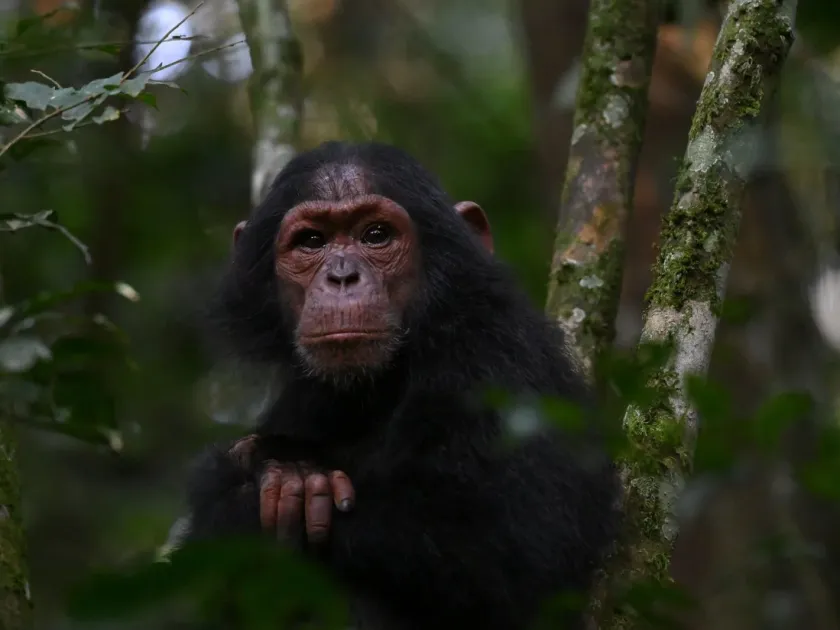
The common chimpanzee (lat. Pan troglodytes) is a great ape of the Hominidae family. In an agricultural context, it is considered a significant vertebrate pest capable of causing substantial damage to commercial plantations.
Adult individuals are powerful, weighing between 40 and 60 kilograms, and exhibit high levels of intelligence, which allows them to bypass various physical obstacles set by farmers.
The species biology is characterized by complex social structures and a long learning period, enabling younger members of the troop to adopt foraging behaviors from elders, including crop raiding.
Chimpanzees possess excellent memory and spatial navigation, which makes them effective at locating and returning to highly nutritious food sources found on farms.
Their adaptability to human-disturbed landscapes allows these primates to thrive in areas where forest edges meet cultivated land, increasing the frequency of human-wildlife conflicts.
What it damages
Common chimpanzees cause severe damage to crops such as cocoa, oil palm, bananas, and corn. They are not merely fruit consumers; they often break branches and damage tree trunks, reducing the yield potential for future seasons.
During foraging, they selectively harvest the highest quality fruit, leading to significant economic losses for farmers aiming for premium produce markets.
Groups of chimpanzees can cause widespread physical destruction by trampling through crop fields, which often ruins young plants or seedlings during their development phase.
In oil palm plantations, they are known to shred the fruit bunches and cause damage to the central growth points of the trees, which can eventually kill the plant.
The cumulative damage often forces farmers to abandon certain portions of their land or invest heavily in protective infrastructure that would not otherwise be necessary.
When it appears
Chimpanzee activity on plantations is strongly correlated with the ripening cycle of cultivated fruit. They tend to raid fields most intensively when the nutritional content of the crops is at its peak.
During the dry season, when natural food availability in the forest declines, chimpanzees are much more likely to venture into human-managed areas to seek alternative sources of sustenance.
Activity patterns typically peak in the early morning and late afternoon hours, coinciding with the chimpanzees' natural foraging behavior and movement between nesting and feeding sites.
Climatic factors, such as extreme weather events or drought, can significantly alter the migration routes of chimpanzee troops, leading to unpredictable spikes in crop damage.
The frequency of raids is also influenced by the proximity of the plantation to core forest habitats, which serve as secure refuges for the troop between feeding sessions.
Signs of infestation
Clear evidence of chimpanzee presence includes partially eaten fruit strewn across the field, with distinctive teeth marks and discarded husks found near trees.
Broken limbs, partially shredded stalks, and cleared paths through tall crops or bush are reliable indicators that a group of primates has recently passed through the area.
- Distinctive footprints found in damp soil
- Damaged or breached perimeter fences
- Vocalizations heard in nearby forest patches
- Clusters of immature fruit dropped on the ground
Evidence of nesting sites or 'day beds' near the field boundary is a strong indication that a troop has established a consistent foraging route nearby.
Observing the specific pattern of plant destruction—such as stripped stems and broken crowns—is often sufficient for experienced farmers to distinguish chimpanzee activity from that of smaller rodents or birds.
Control measures
Mitigating chimpanzee damage requires an integrated pest management approach, as these intelligent animals quickly learn to avoid or bypass static deterrents like scarecrows.
Electric fencing is generally regarded as the most effective physical deterrent, provided that it is properly installed and regularly maintained to prevent grounding or breaches.
Active guarding by human patrols, often supported by trained dogs, can be effective in deterring groups from entering fields, provided the presence is consistent throughout the ripening season.
Buffer zones using less attractive crops or physical barriers like wide trenches can help limit the reach of primates toward high-value commercial plantations.
In many regions, community-based monitoring programs are used to alert farmers to the location of nearby troops, allowing for a proactive response before the crops are severely damaged.
Taxonomy
- Latin name
- Pan troglodytes
- Family
- Hominidae
- EPPO code
- PANZTR
Discussion
No discussions yet — be the first.