
Round-mouthed snail
Pomatias elegans
Description
How to identify
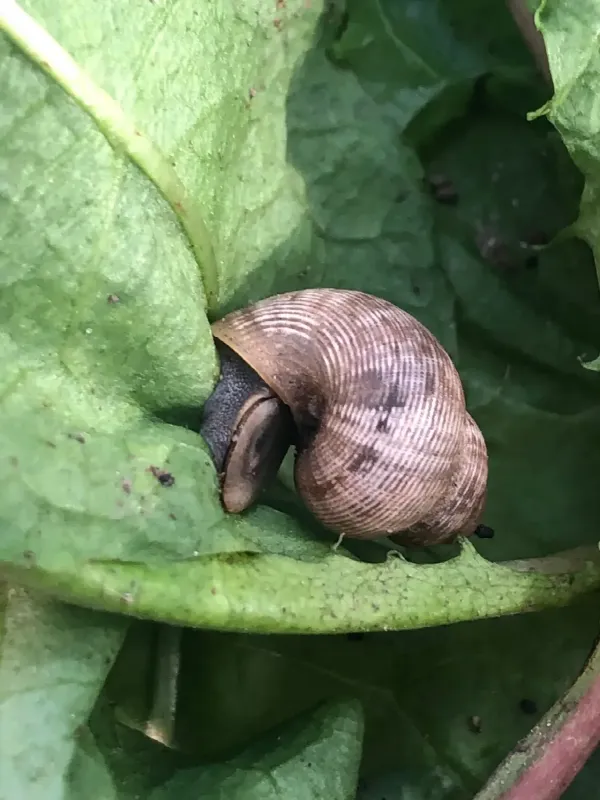
The round-mouthed snail (Pomatias elegans) is a terrestrial operculate gastropod belonging to the family Pomatiasidae. Unlike typical garden snails, it features a thick, conical, ribbed shell with distinct whorls, colored in yellowish-brown tones.
A key biological feature of this species is the presence of an operculum, a hardened "trapdoor" that allows the snail to seal its shell tightly during periods of drought or extreme heat.
Adult individuals reach a height of 12–16 mm. The body is typically grayish or brownish, featuring a distinct snout and two elongated tentacles with eyes located at the tips.
The species is strongly associated with calcareous soils, as it requires calcium carbonate to maintain the integrity and strength of its robust shell, which influences its distribution.
Reproduction involves laying eggs in moist soil. The development process is slow, with the juvenile snails gradually building their shells and emerging into activity only when environmental conditions are optimal.
What it damages
While the round-mouthed snail is a generalist feeder, it causes significant damage in moist garden environments, nurseries, and greenhouses by feeding on young plant tissues.
Primary target crops include various leafy greens, brassicas, and the tender sprouts of ornamental flowers and garden vegetables.
The snail uses its radula to rasp away plant tissue, resulting in characteristic irregular holes on leaves and damaged stems, which can weaken or kill young seedlings.
Economic losses are highest during the early stages of plant growth, as the destruction of leaves and stems often halts development or leads to total plant loss.
Furthermore, the physical wounds caused by feeding provide entry points for secondary pathogens, such as fungal and bacterial infections, further compromising plant health.
When it appears
The activity of the round-mouthed snail is closely linked to soil moisture levels and temperature, with peak activity typically occurring during the spring and summer months.
Prolonged periods of rain trigger increased activity, as the snails emerge from their daytime soil refuges to forage on the surface.
During hot, dry summer spells, the snails retreat deep into the soil or hide beneath leaf litter and organic debris, entering a state of dormancy to prevent dehydration.
Cooler, damp weather during autumn may induce a secondary period of activity before the snails settle deeper into the ground for overwintering.
The optimal temperature range for these mollusks is between 15°C and 22°C, provided that high humidity levels are maintained throughout the habitat.
Signs of infestation
One of the primary indicators of infestation is the presence of irregular, notched feeding patterns along the margins of leaves or within the leaf blades.
A tell-tale sign of their presence is the appearance of dried mucus trails on the soil surface or the stems of affected plants, which shimmer when dried.
Nighttime inspections or surveys conducted shortly after irrigation may reveal the snails actively feeding near the base of the plants or on lower foliage.
The discovery of empty or crushed calcareous shells within the topsoil layer is a strong indicator of an established local population.
Stunted growth or the sudden disappearance of young seedlings in the absence of obvious root rot often points to the activity of these mollusks.
Control measures
Cultural control measures focus on maintaining garden hygiene, such as removing excess plant debris and weeds that provide essential hiding spots for snails.
Creating physical barriers, such as rings of wood ash, lime, or crushed eggshells around susceptible plants, can help deter the snails by creating a dry, abrasive surface.
Chemical control involves the application of molluscicides, typically those containing metaldehyde or iron phosphate, formulated as baits to be placed near crops.
- Utilize drip irrigation rather than overhead sprinkling to keep the surface soil drier and less hospitable for snails.
- Install homemade traps using containers with beer or fermented liquids, which attract and drown the mollusks.
- Encourage the presence of natural predators, including hedgehogs, ground beetles, and various bird species that hunt snails.
In cases of severe infestation, integrated pest management (IPM) strategies, combining biological practices with targeted chemical treatments, are recommended for long-term control.
Taxonomy
- Latin name
- Pomatias elegans
- Order
- Molluscs
- Family
- Pomatiidae
- EPPO code
- POMTEL
Discussion
No discussions yet — be the first.