
Spruce bark beetle
Polygraphus ssiori
Description
How to identify
The spruce bark beetle (Polygraphus ssiori) is a member of the Curculionidae family, specifically the Scolytinae subfamily. Adult beetles are small, typically ranging from 2.2 to 3.0 millimeters in length.
The body is cylindrical in shape and exhibits a dark brown to black coloration. A distinguishing feature of this species is the dense covering of short hairs on the elytra, giving the beetle a matte appearance rather than a shiny finish.
The head is retracted into the pronotum, which is narrowed anteriorly. The antennae and legs are generally lighter in color, often appearing reddish-brown compared to the darker body.
Larvae are white, legless, and possess a C-shaped body with a dark-colored head capsule. They develop exclusively in the cambial layer under the bark of host trees.
Accurate identification is based on these morphological characteristics as well as the specific pattern of egg galleries engraved into the surface of the sapwood beneath the bark.
What it damages
The primary host for this beetle is the spruce (Picea). While it often attacks weakened or stressed trees, population outbreaks can lead to successful attacks on healthy, vigorous specimens.
Damage is caused by both adults, which construct egg galleries, and larvae, which tunnel through the inner bark and cambium. This feeding activity disrupts the flow of water and nutrients.
By consuming the phloem, the beetles interfere with the tree's vascular system. This damage often results in rapid crown yellowing, followed by tree mortality if the trunk is fully girdled by galleries.
In addition to physical damage, the beetles introduce various fungal pathogens into the host tree. These fungi colonize the wood, accelerating the decay process and damaging the quality of the timber.
Stands infested with Polygraphus ssiori often show rapid decline, leading to significant economic losses in spruce plantations and native forests.
When it appears
Adult flight activity typically begins in early spring, once temperatures are consistently warm enough to support insect metabolic processes, usually around May or June.
During the flight period, beetles actively seek out suitable host trees. They bore into the bark to initiate the formation of mating and egg-laying chambers.
The life cycle is generally completed within a single season. After eggs are laid, the larvae hatch and begin feeding, creating a complex network of tunnels beneath the bark.
Development from egg to adult occurs throughout the summer months. By autumn, the new generation of adults is fully formed and prepared to overwinter.
Overwintering usually takes place in the bark of the infested tree or in the leaf litter at the base of the tree, protecting the beetles from extreme winter temperatures.
Signs of infestation
The most common sign of infestation is the presence of small entry holes on the bark, accompanied by "frass" (a mixture of wood dust and excrement) that gathers in bark crevices.
Visual inspection of the canopy often reveals premature discoloration of the needles, turning yellow or reddish-brown, which indicates that the tree's internal circulation is failing.
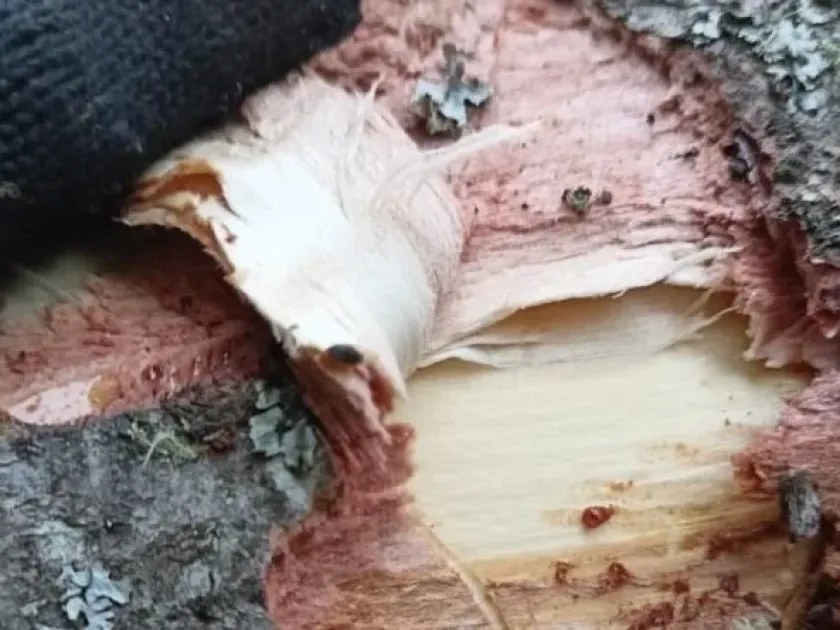
Peeling away the bark exposes the intricate gallery system. These galleries are often star-shaped or multi-branched, representing the expansion of the larval tunnels.
Woodpecker activity is a prominent secondary sign. These birds search for beetle larvae, frequently stripping off large patches of bark in the process, leaving the wood surface visible.
Advanced infestation signs include complete crown desiccation and shedding of needles, indicating that the tree has reached the final stages of decline and death.
Control measures
Effective control relies heavily on sanitary logging. Infested trees must be identified and removed before the next generation of beetles can emerge and spread.
Proper forest hygiene is crucial, which includes the prompt removal of downed logs, slash, and storm-damaged timber that could serve as breeding grounds for the population.
Integrated Pest Management (IPM) techniques, such as the use of pheromone traps, are utilized to monitor population levels and track the activity of the beetle in high-risk areas.
Maintaining high forest stand vigor through appropriate silvicultural practices makes the spruce trees more resilient and less attractive to colonizing bark beetles.
- Regular forest monitoring for early detection of entry holes.
- Debarking or controlled burning of infested material to kill larvae.
- Encouraging natural predators like birds and parasitic wasps to suppress beetle numbers.
Taxonomy
- Latin name
- Polygraphus ssiori
- Order
- Coleoptera (beetles)
- Family
- Curculionidae
- EPPO code
- POLGSS
Discussion
No discussions yet — be the first.