
Spruce bark beetle
Polygraphus grandiclava
Description
How to identify
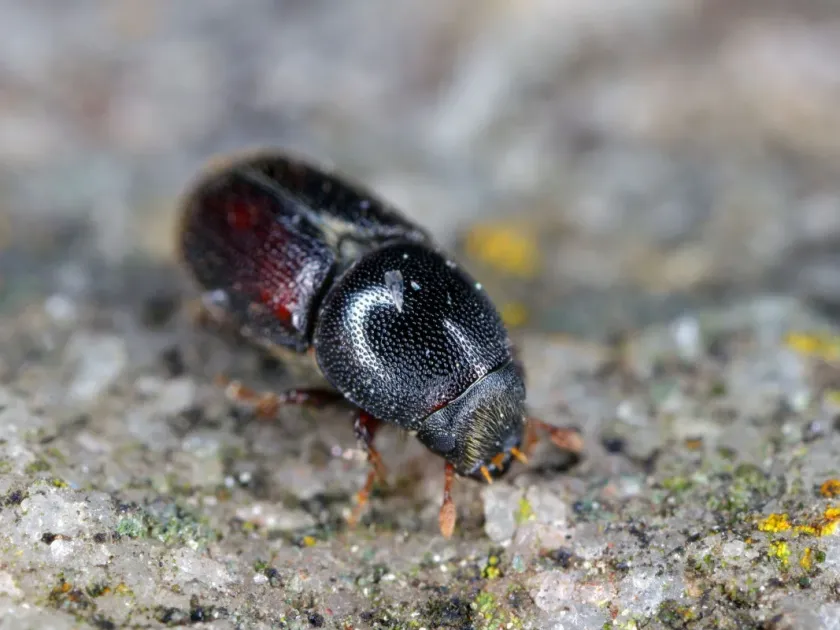
The spruce bark beetle, Polygraphus grandiclava, belongs to the family Curculionidae and the subfamily Scolytinae. This is a small beetle with a dark brown or black body covered in dense hairs.
A distinctive feature of this species is the structure of the antennal club, which has a specific shape, as reflected in its scientific name. The adult individual usually measures between 2 and 3 millimeters in length.
The larvae are legless, white in color, with a yellowish-brown head. They develop under the bark by feeding on the phloem (inner bark), which leads to the tree's death during mass infestations.
These beetles are highly mobile, especially during their flight period, which coincides with the arrival of warm temperatures in the spring.
Systematically, this species is closely related to other bark beetles but possesses a specific host specialization and unique reproduction characteristics.
What it damages
The main host for this pest is the Norway spruce and other spruce species. It is primarily found in mature and overmature forest stands.
The beetle infests weakened trees, windfalls, windthrows, and logging debris left in the forest after thinning or sanitary measures.
In cases of a food source deficit within forest areas, the pest can attack healthy trees, leading to their rapid physiological decline and subsequent death.
Forest stands damaged by fungal diseases or those suffering from drought are at a higher risk of being infested by this bark beetle species.
The economic impact of the pest includes a reduction in timber quality and the triggering of widespread spruce forest dieback across large areas.
When it appears
The pest's active life cycle begins in early spring when the tree bark temperature warms up to critical values required for the beetles to wake up.
The mass flight period usually occurs in May and June, depending on the climatic zone and specific weather conditions of the season.
After mating, females bore maternal galleries under the bark where they lay eggs. The generation development process takes between one to two months.
In favorable years with a long, warm summer, the development of two generations is possible, significantly increasing the risk of population outbreaks.
The insects overwinter primarily in the adult stage, remaining under the bark of host trees or in the litter at the base of the trunk, waiting for stable warmth.
Signs of infestation
The first visible sign of infestation is the presence of entry holes in the tree bark, often accompanied by "boring dust"—fine wood shavings and frass.
Upon a thorough examination of the trunk, one can observe resin flow, which is the tree's attempt to defend itself against beetle intrusion by filling the galleries with resin.
A characteristic sign of the bark beetle's activity is the system of branched maternal and larval galleries, which can be revealed by peeling back the bark.
Gradual yellowing and shedding of needles indicate that the tree's nutrient transport system is severely damaged due to the disruption of vascular vessels in the phloem layer.
The final stage of infestation is bark detachment and the total death of the tree, during which a concentration of predator insects is often observed around the trunk.
Control measures
The primary control method is timely sanitary harvesting of infested trees before the new generation of beetles emerges from under the bark.
It is crucial to clean forest sites of logging debris and ensure the timely removal of wood from the forest during the spring and summer periods.
The use of pheromone traps allows for monitoring population density and diverting some beetles away from healthy stands during their activity period.
The use of biological control agents, including attracting entomophages, contributes to the natural suppression of the pest population in forest ecosystems.
- Conducting scheduled forest pathology surveys.
- Adhering to forest fire safety regulations to prevent tree weakening.
- Using trap trees for the concentration and subsequent destruction of beetles.
Taxonomy
- Latin name
- Polygraphus grandiclava
- Order
- Coleoptera (beetles)
- Family
- Curculionidae
- EPPO code
- POLGGR
Discussion
No discussions yet — be the first.