
Polydrusus cervinus
Polydrusus cervinus
Description
How to identify
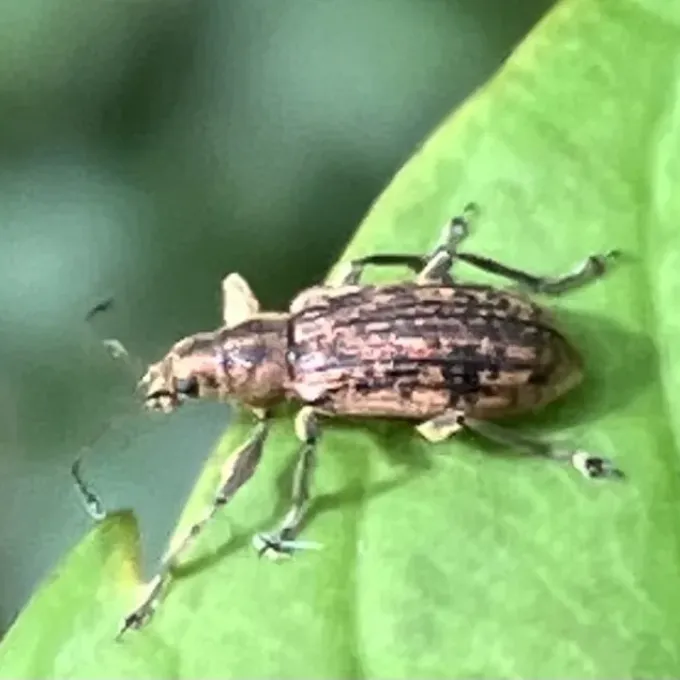
Polydrusus cervinus is a species of broad-nosed weevil belonging to the family Curculionidae. These small beetles typically measure between 5 and 8 millimeters in length and possess an elongated, characteristic body shape.
Their coloration ranges from yellowish-brown to reddish-brown, providing excellent camouflage against tree bark and foliage. The wing covers are densely packed with scales, which often exhibit a greenish or metallic gold sheen when exposed to sunlight.
The snout, or rostrum, of this species is relatively short and broad, distinguishing them from other types of weevils. The larvae are legless, C-shaped, and milky-white, spending their development phase in the soil where they feed on decaying plant matter or fine rootlets.
The life cycle follows a complete metamorphosis: egg, larva, pupa, and adult. Adults are most active during the daylight hours, favoring warm, sunny conditions in orchards, gardens, and woodlands.
Adults possess functional wings and are capable of flight, which aids in their rapid dispersal across agricultural landscapes. They typically overwinter as larvae deep in the soil profile to avoid freezing temperatures.
What it damages
This pest is highly polyphagous, meaning it feeds on a wide variety of plant species. Primary targets include fruit trees such as apples, pears, plums, cherries, and apricots.
In addition to fruit trees, Polydrusus cervinus frequently attacks deciduous forest trees including oaks, beeches, birches, and alders, which can lead to localized infestations in gardens located near wooded areas.
Adult beetles cause damage throughout the growing season by actively feeding on leaf buds, young foliage, and flower parts. Mass infestations can severely defoliate trees, leaving behind characteristic notched or scalloped edges on the leaves.
Larvae living in the root zone may consume small roots, which weakens the tree's overall vigor. This is particularly damaging to young saplings that have not yet established a deep and extensive root system.
The primary economic impact arises from the significant reduction in leaf surface area, which impairs photosynthesis, stunts fruit development, and reduces the tree's energy reserves for the following season.
When it appears
Adults typically emerge in the spring, coinciding with bud burst and the onset of new vegetative growth, usually between April and May, depending on regional climate conditions.
Peak activity occurs during late spring and early summer when the beetles mate and lay eggs in the soil. During this window, the visual symptoms of leaf feeding become most apparent to growers.
By mid-summer, the population of adult beetles naturally declines as their life span ends, though the leaf damage remains visible until the leaves drop in the autumn.
Larvae continue to develop underground throughout the summer and autumn months, remaining active until the onset of winter weather triggers their downward movement into the soil for diapause.
Monitoring for this pest is best achieved by inspecting the tree canopy during the early morning hours or by using the beat-sheet method to shake the beetles onto a white cloth for counting.
Signs of infestation
The most distinctive sign of infestation is the presence of irregular, notched edges along the leaves, a symptom often referred to as "leaf scalloping." In severe cases, feeding can proceed until only the midrib remains.
Early-season signs include damaged buds that fail to open correctly or show signs of being hollowed out before they can expand, as the weevils target the soft inner tissues.
The physical presence of the beetles themselves on the underside of leaves or resting on branches is an indicator of an active infestation.
Indirect symptoms include stunted growth or lack of vigor in young trees that cannot be explained by disease, which may indicate that larval feeding has compromised the root system.
- Notched or scalloped leaf margins.
- Hollowed-out or damaged vegetative buds.
- Beetles visible during canopy shaking.
- Reduced growth rate in young saplings.
Control measures
Integrated pest management starts with cultural practices, such as regular soil cultivation in the root zone. This disrupts the larvae's habitat and exposes them to environmental stressors and natural predators.
Physical control involves shaking the beetles off the branches onto a collection sheet early in the morning, when the insects are less alert. Captured specimens should be disposed of immediately.
In cases of high infestation levels, the application of systemic or contact-action insecticides may be necessary. These should be applied according to local regulations, ideally before or after the flowering period to protect pollinators.
Maintaining a clean garden by removing weeds and undergrowth is essential, as these provide secondary host plants that allow the population to thrive before the primary trees have fully leafed out.
Biological control methods, such as the application of entomopathogenic nematodes or fungi to the soil, can significantly suppress larval populations without the need for synthetic chemicals.
Taxonomy
- Latin name
- Polydrusus cervinus
- Order
- Coleoptera (beetles)
- Family
- Curculionidae
- EPPO code
- POLOCE
Discussion
No discussions yet — be the first.