
European grapevine moth
Polychrosis
Description
How to identify
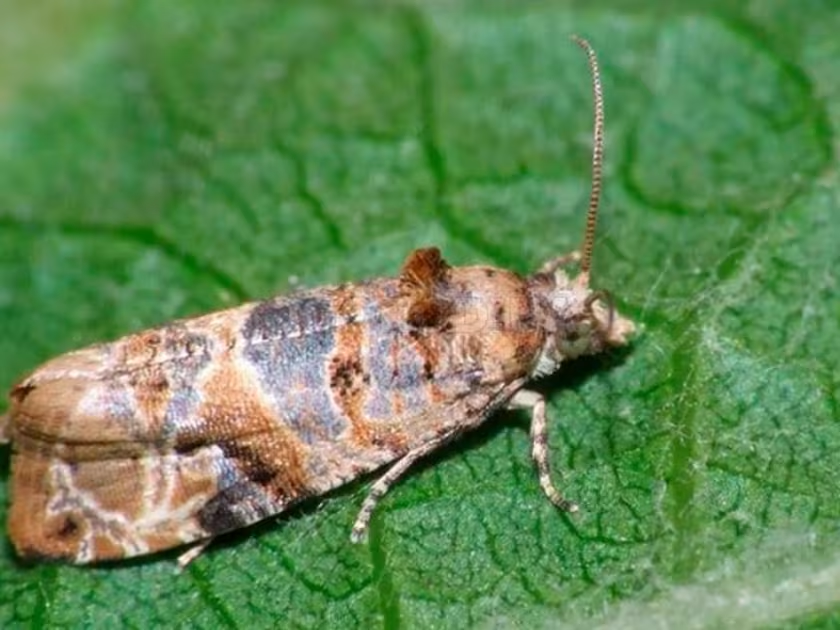
The European grapevine moth (Lobesia botrana, formally Polychrosis botrana) is a significant pest belonging to the Tortricidae family, known for causing severe damage to viticulture.
Adult moths are small, with a wingspan of approximately 12–13 mm. Their forewings feature a complex pattern of olive, grey, and brown markings, providing effective camouflage.
Larvae, which are the primary destructive stage, go through several instars, eventually reaching 10–12 mm in length with a brownish-green body and a dark head capsule.
Pupae are small, brown, and protected within a sturdy silken cocoon, which is usually spun in protected areas like bark crevices or leaf folds to survive adverse conditions.
These moths are primarily nocturnal, making them difficult to spot during daylight hours, which necessitates the use of monitoring tools such as pheromone traps.
What it damages
The moth feeds almost exclusively on grapevines. The larvae cause direct damage to flowers and fruits, leading to both quantitative and qualitative yield losses.
First-generation larvae feed on flower clusters, webbing the buds together, which often leads to the withering of the entire inflorescence and loss of future berries.
Second and third-generation larvae damage developing and ripening berries by boring into the fruit, which destroys the interior pulp and makes the grape susceptible to secondary infections.
A major indirect threat is the colonization of damaged grapes by Botrytis cinerea (grey mold), which can spread rapidly through the cluster, causing widespread rot.
In high-infestation years, if left unmanaged, the pest can ruin a substantial portion of the crop, significantly affecting the profitability of the vineyard.
When it appears
The lifecycle of the moth is highly dependent on environmental temperatures and the specific growth stages of the grapevines throughout the growing season.
The species overwinters as a pupa, hiding in crevices of the vine's bark or on surrounding trellis infrastructure to protect itself from winter temperatures.
Adult emergence typically occurs in spring as soon as temperatures exceed 12–14°C, which usually aligns with the bud break and early flowering stages of the vine.
Depending on the local climate, the moth can complete two to four generations per year, with overlapping generations often occurring by the mid-summer period.
Constant vigilance is required from spring through harvest to disrupt the reproductive cycles and prevent the pest population from reaching economic injury levels.
Signs of infestation
The presence of fine webbing covering flower clusters in late spring is a primary indicator of the early generation's feeding activity.
During the fruit development stage, signs include berries that appear shriveled or have visible boreholes, often accompanied by silk threads connecting the fruit together.
The appearance of grey, fuzzy mold on cluster portions is often a tell-tale sign that larvae have opened the grape skins, inviting fungal pathogens to colonize.
- Webbing on flower clusters or developing berries.
- Berries with small holes or hollowed-out interiors.
- Premature ripening or shriveling of grapes.
- Presence of larval frass on the grape surface.
Finding white cocoons tucked away in the rough bark of older vines during winter pruning is a sure sign of a local population waiting for spring.
Control measures
Effective management involves a multifaceted approach, integrating cultural practices, biological controls, and judicious chemical applications.
Cultural methods include the removal of old, loose bark from trunks during winter, which destroys overwintering sites, and thinning the canopy to improve ventilation.
Pheromone mating disruption is a highly effective control measure that prevents male moths from finding females, thereby significantly reducing the number of fertilized eggs.
Targeted insecticide applications are crucial and must be timed precisely with the peak hatch of the larvae to ensure protection before they bore into the grapes.
Integrated Pest Management (IPM) strategies should always be preferred, focusing on preserving natural predators while strictly adhering to pesticide safety guidelines.
Taxonomy
- Latin name
- Polychrosis
- Order
- Lepidoptera (butterflies)
- Family
- Tortricidae
- EPPO code
- POLYSP
Discussion
No discussions yet — be the first.