
Water springtail
Podura aquatica
Description
How to identify
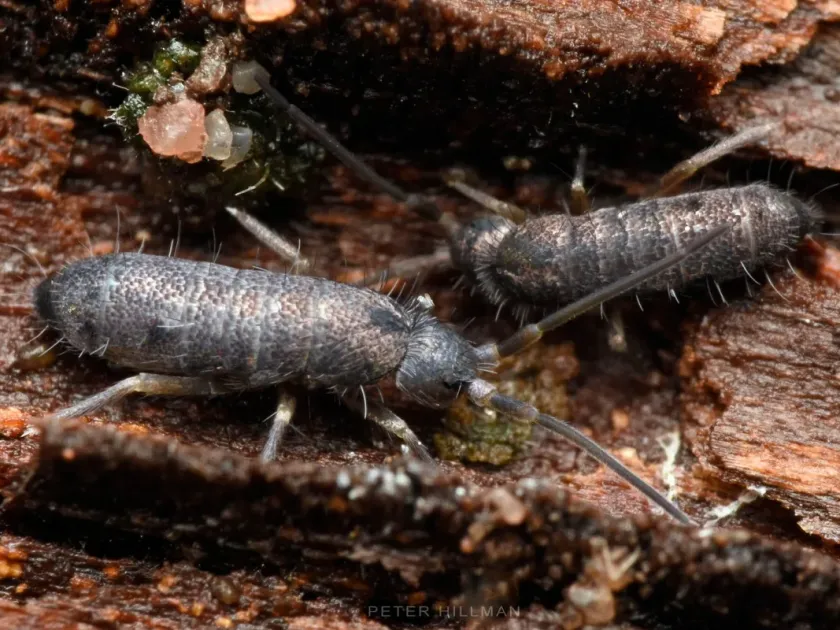
The water springtail (Podura aquatica) is a small arthropod belonging to the order Collembola. They typically measure between 1 to 1.5 mm in length and possess a unique furcula (springing organ) on their abdomen.
Adults are dark grey or bluish-black, making them easily visible against light-colored soil or water surfaces. They are semi-aquatic organisms that thrive in damp, high-humidity environments.
The life cycle involves incomplete metamorphosis. Eggs are laid in moist substrates or on water surfaces, hatching into nymphs that resemble adults but are significantly smaller.
Their population dynamics are closely linked to moisture availability; they can reach high densities very rapidly if environmental conditions remain stagnant and damp.
While they are natural decomposers, their presence in high numbers in greenhouse environments classifies them as a nuisance and occasional pest for tender vegetation.
What it damages
The primary concern regarding Podura aquatica is the damage they cause to greenhouse seedlings. When food sources like fungi or decaying matter are scarce, they feed on delicate plant roots and stems.
This feeding activity can stunt the growth of young plants and cause severe wilting, as the damaged root system loses its ability to uptake water and nutrients effectively.
Springtails also act as mechanical vectors, transporting fungal spores and bacteria to root zones, which can exacerbate issues like damping-off or root rot diseases.
The damage is most visible on young, soft-tissued plants grown in pots, trays, or hydroponic systems where constant moisture is maintained.
Targeted plants include:
- Tomato and pepper seedlings
- Cucumber sprouts
- Ornamental flowers in seed trays
- Hydroponic greens
When it appears
Springtails are most prevalent during periods of high humidity, particularly in the spring when propagation and seedling production are at their peak.
In indoor environments or glasshouses, they can be present year-round if soil management is poor and aeration is neglected, allowing damp conditions to persist.
Outdoor populations are most active during the early spring thaw or after heavy rainfall, when ephemeral pools of water provide ideal habitat conditions.
Temperature fluctuations between 15°C and 22°C are ideal for their reproduction and activity, though they can survive in a wide range of temperate conditions.
Monitoring is crucial during the early stages of plant development to detect outbreaks before they compromise the health of the entire nursery.
Signs of infestation
A hallmark sign of infestation is the presence of small, jumping insects on the surface of the soil or floating in irrigation water trays.
When the soil is disturbed or watered, large clusters of these tiny grey insects jump simultaneously, often creating a visible ripple effect across the surface.
Plants in infested containers may show signs of stress, such as yellowing leaves or stunted development, even when moisture levels appear to be adequate.
Root system inspection may reveal minor scarring or signs of localized decay where the springtails have been feeding on the root hairs.
Hydroponic systems may show cloudy nutrient solutions and debris buildup, signaling that springtail populations have taken hold within the medium.
Control measures
The most effective strategy for managing springtails is the manipulation of soil moisture. Allowing the surface of the growing medium to dry out thoroughly between waterings is usually sufficient to discourage them.
Improving soil aeration by incorporating perlite, coarse sand, or pumice into the potting mix creates a less hospitable environment for these moisture-dependent pests.
Biological control agents, such as entomopathogenic fungi or predatory mites, can be introduced to manage high populations in organic and professional greenhouse settings.
In severe cases, systemic soil insecticides or insect growth regulators may be applied, ensuring that the chemical chosen is safe for use on the specific crop variety.
Sanitation is key: ensure all pots, trays, and tools are cleaned and disinfected regularly to prevent the transfer of eggs and nymphs between batches of seedlings.
Taxonomy
- Latin name
- Podura aquatica
- Family
- Poduridae
- EPPO code
- PODUAQ
Discussion
No discussions yet — be the first.