
Podura
Podura
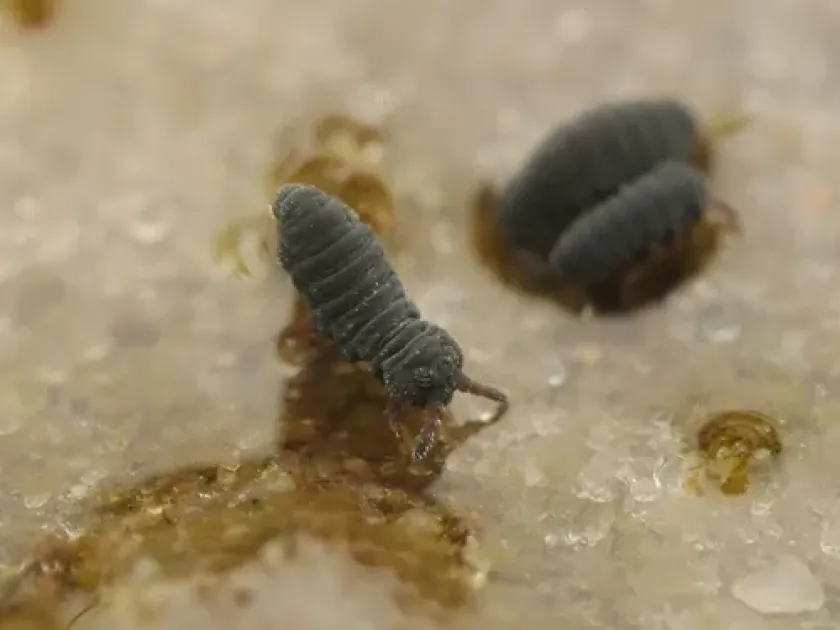
Description
How to identify
Podura, commonly known as springtails or Collembola, are tiny arthropods that belong to the order Collembola.
They are characterized by a furcula, a spring-like appendage on their abdomen that allows them to jump significant distances when disturbed.
These pests usually measure between 1 and 3 millimeters in length and are often found in moist soil environments, such as potting mix or garden beds.
Their color varies from white and grey to pale yellow, making them blend in with various types of soil and organic matter.
Springtails are highly dependent on humidity, thriving in environments where organic decomposition provides them with a constant source of food.
What it damages
While springtails generally feed on decaying organic material, they can become pests in greenhouses and indoor gardens when their population explodes.
In cases of high density, they may turn their attention to healthy plant tissue, specifically targeting delicate root hairs and young seedlings.
The damage caused to roots creates open wounds that are highly susceptible to secondary infections like root rot and bacterial pathogens.
Seedlings are particularly vulnerable, as their root systems are not yet developed enough to withstand feeding pressure, often leading to total plant failure.
By disrupting the root function, these pests indirectly hinder nutrient uptake, leading to stunted growth and yellowing of the foliage.
Signs of infestation
The most obvious sign of an infestation is the presence of numerous tiny, jumping insects on the surface of the soil immediately after watering.
Plants may show signs of stress, such as sudden wilting, discoloration, or failure to grow, despite regular care and optimal light conditions.
A closer look at the soil surface under bright light often reveals the tiny organisms actively moving around the stem base of the plant.
An unpleasant, damp, or earthy smell from the soil is frequently associated with high moisture levels that promote springtail activity.
Slow or uneven seedling development in trays or pots is another clear indication that the root zone might be infested with these spring-loaded pests.
Control measures
The most effective strategy to control springtails is to adjust irrigation practices by allowing the top inch of soil to dry out between waterings.
Adding a thin layer of dry, coarse sand to the surface of the soil acts as a physical barrier, making it difficult for the insects to move and reproduce.
Systemic insecticides or soil drenches labeled for indoor plant pests can be used to eradicate large infestations effectively.
Improving soil aeration through regular shallow cultivation and ensuring proper drainage in pots is essential for long-term prevention.
If an infestation is severe, consider repotting the plant into fresh, sterile substrate and thoroughly cleaning the container to eliminate hidden eggs or larvae.
Taxonomy
- Latin name
- Podura
- Family
- Poduridae
- EPPO code
- PODUSP
Discussion
No discussions yet — be the first.