
Plumatella
Plumatella
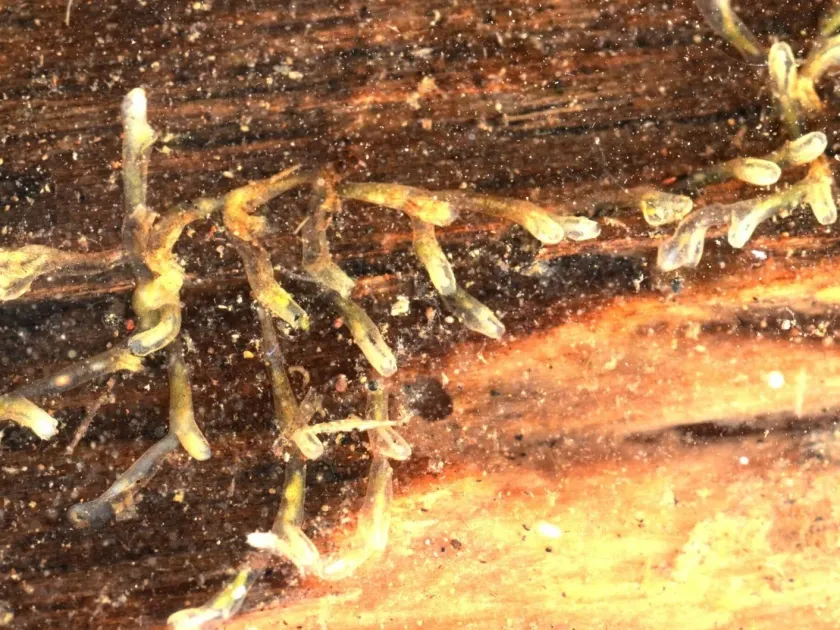
Description
How to identify
Plumatella is a genus of freshwater colonial organisms belonging to the phylum Bryozoa, class Phylactolaemata. They form branching, moss-like colonies that anchor themselves to solid surfaces in aquatic environments.
The colony consists of individual organisms known as zooids. These zooids possess a lophophore, a crown of ciliated tentacles used for filter-feeding on microorganisms and organic detritus in the water column.
Reproduction is both sexual and asexual. The formation of statoblasts — durable, dormant buds — is a critical biological adaptation that allows the species to survive drying and freezing conditions.
Plumatella typically thrives in stagnant or slow-moving water bodies. They show a strong preference for hard substrates, which leads them to colonize pipes, valves, and irrigation equipment.
Morphologically, colonies can appear as gelatinous masses, brown-colored branching structures, or dense crusts, depending on the specific environmental conditions and the developmental stage of the colony.
What it damages
The primary economic damage caused by Plumatella is not direct herbivory but the severe biofouling of irrigation and water supply systems. They act as significant technical pests.
By colonizing the inner walls of pipes, these organisms significantly reduce the internal diameter. This results in increased friction loss, decreased water flow, and lower operational efficiency of irrigation systems.
Colonies frequently clog filtration units, screens, and drip irrigation emitters. This leads to pump cavitation, overheating, and mechanical stress on the entire hydraulic network.
The resulting uneven distribution of water directly affects crop development. In regions with strict irrigation scheduling, a drop in water supply can cause physiological stress in plants, reducing final yields.
Furthermore, the decomposition of dead bryozoan colonies can lead to secondary water contamination, potentially introducing pathogenic bacteria into the soil environment.
When it appears
Plumatella activity follows a seasonal cycle dictated by water temperature. Growth typically commences in spring as temperatures consistently exceed 15–18 degrees Celsius.
Peak biomass accumulation occurs during the warmest summer months. During this period, the rapid growth of colonies can create massive blockages in irrigation infrastructure within a short timeframe.
As water temperatures drop in the autumn, colonies stop expanding and begin producing large quantities of statoblasts. These survival structures enter a dormant state, waiting for the return of favorable conditions.
The winter months constitute a dormant phase where the adult colonial structures die off, leaving the hardy statoblasts to overwinter in sediment or attached to equipment surfaces.
Understanding this cycle is vital for operational planning. Preventive actions such as thorough system flushing should be conducted before the onset of spring temperatures.
Signs of infestation
The first indication of a Plumatella infestation is an unexplained decrease in pressure at the outlets of the irrigation system, despite the pump operating at full capacity.
Visible signs include the accumulation of a brownish, slimy, or sponge-like substance on external water intake screens and within filtration chambers.
Users may notice a distinctive, somewhat fishy or musty odor coming from the irrigation water, which indicates the presence of decomposing biological material within the pipes.
- Reduced discharge rate from drip emitters or sprinklers.
- Frequent clogging of fine-mesh inline filters.
- Mechanical resistance felt during system maintenance or pipe disassembly.
- Presence of sediment-like clumps during routine system drainage.
If irrigation water appears cloudy or carries fine organic debris that was not previously present, it is often a sign that a colony upstream is being disrupted or degraded.
Control measures
Effective management of Plumatella requires a combination of physical and operational strategies rather than relying solely on chemical intervention.
Mechanical cleaning is the most effective approach. Using pipe brushes, high-pressure water jets, or "pigging" techniques can successfully remove accumulated biofouling from the piping network.
In irrigation systems prone to infestations, installing automatic back-flushing filtration systems can mitigate the impact of colony fragments and statoblasts entering the distribution lines.
Drying the irrigation system is a highly effective control measure. Since Plumatella requires a constant aquatic environment, draining the system completely between seasons will kill off established colonies.
Preventive maintenance, such as regular inspection of intake areas and prompt replacement of severely fouled sections, ensures the long-term reliability of the irrigation infrastructure.
Taxonomy
- Latin name
- Plumatella
- Family
- Plumatellidae
- EPPO code
- PLUMSP
Discussion
No discussions yet — be the first.