
Fir shoot sawfly
Pleroneura brunneicornis
Description
How to identify
The fir shoot sawfly (Pleroneura brunneicornis) is a small hymenopteran insect that specializes in attacking fir tree species. Due to its cryptic nature, it often goes unnoticed until significant damage to the host tree has already occurred.
Adults are small, dark-colored sawflies that are difficult to spot against the bark of conifer trees. Their activity is limited to a short period in the early spring, coinciding with the flushing of the host plant's buds.
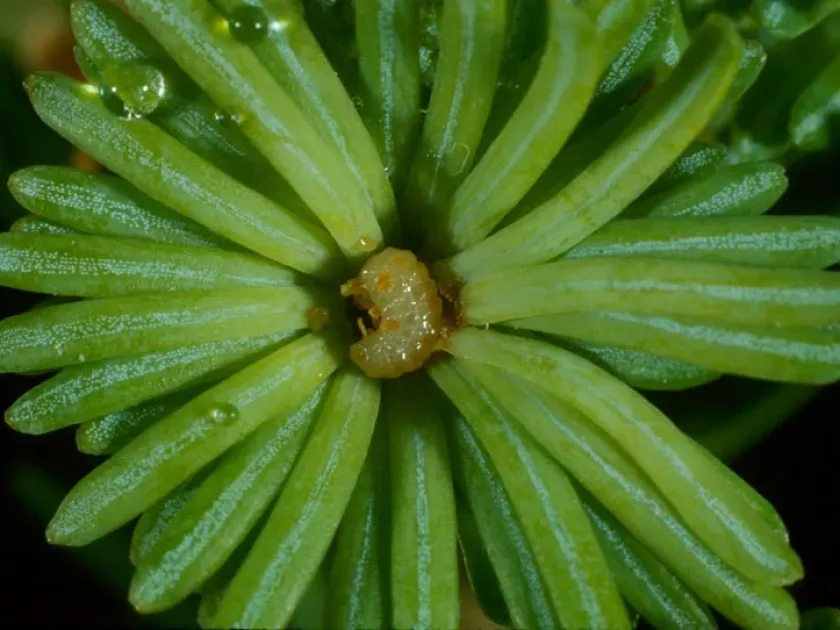
The larvae are typically pale with a distinct dark head capsule. They are internal feeders, spending their entire active developmental stage hidden within the tissues of the developing fir shoots.
The species has a univoltine life cycle, meaning only one generation is produced each year. A significant portion of its life is spent in the soil in a state of diapause, waiting for the appropriate environmental triggers.
Accurate identification requires careful scouting during the spring season to spot the emergence of adults or the initial signs of larval feeding on new, succulent growth.
What it damages
Fir trees (genus Abies) are the primary hosts for the fir shoot sawfly. The pest is particularly problematic in nurseries and young plantations where the loss of a leader shoot can result in permanent structural deformities.
By mining the internal tissues of young shoots, larvae disrupt the flow of water and nutrients. This causes the shoot to wilt and die, effectively killing the current year's growth.
Persistent infestations lead to crown distortion and a significant reduction in the tree's height increment. In severe cases, the tree may lose its aesthetic value or marketability as a timber or ornamental crop.
While mature trees can often withstand occasional attacks, repeated infestation by this sawfly can lead to extreme tree stress and secondary vulnerability to diseases or bark beetles.
The presence of larvae inside the shoot also attracts other secondary pests and fungi, which can exacerbate the decline of the affected branch or the entire tree.
When it appears
The adult sawflies emerge in the early spring, perfectly synchronized with the swelling and opening of fir buds. This is when the eggs are laid directly into the soft, developing tissues.
Larval development takes place during the late spring months. By early summer, the larvae have typically completed their feeding and are ready to exit the shoot.
After leaving the shoots, the larvae descend to the soil and create a chamber where they pupate and remain in diapause for the remainder of the year and throughout the winter.
Because the larvae are protected inside the shoot during the spring and in the soil for the rest of the year, there is only a narrow window of opportunity for effective control.
Understanding this tight seasonal alignment is essential for successful pest management programs in both forestry and landscape horticulture.
Signs of infestation
The most prominent sign of infestation is the drooping and subsequent browning of new shoots. These affected shoots often appear wilted while the rest of the tree remains healthy.
Upon closer inspection, entry holes or tunnels filled with frass can be found on the affected shoots. The shoot itself may be brittle and easily broken off by wind or during handling.
In many cases, the leader shoot will curl or kink, a characteristic symptom often referred to as "shepherd's crook," which is a common indicator of shoot-feeding insects.
Premature needle shed on the affected shoots is another indicator that the vascular system of the branch has been compromised by the larval mining activity.
Regular visual surveys during May and June are critical for detecting these symptoms early enough to mitigate the impact on the overall health of the plantation.
Control measures
Sanitation is the most effective manual method of control. Pruning and destroying the infested shoots before the larvae emerge into the soil can significantly lower the population for the next season.
Chemical control can be effective if applied during the adult flight period or shortly after egg hatch, using systemic insecticides that can penetrate the plant tissues where larvae feed.
Biological control, including the use of entomopathogenic fungi or predators, is being explored but requires strict adherence to environmental conditions to be successful.
Maintaining high tree vigor through proper fertilization and irrigation helps trees recover more quickly from sawfly-induced stress and prevents secondary infestations.
Effective monitoring with pheromone or sticky traps helps to precisely time any necessary chemical applications, reducing the overall pesticide footprint on the environment.
Taxonomy
- Latin name
- Pleroneura brunneicornis
- Order
- Hymenoptera
- Family
- Xyelidae
- EPPO code
- PLERBO
Discussion
No discussions yet — be the first.