
Platythrips
Platythrips
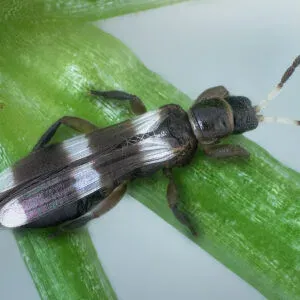
Description
How to identify
Platythrips is a genus of insects belonging to the order Thysanoptera, specifically the family Thripidae. These tiny insects are characterized by a slender body and unique fringed wings, which are typically folded along the back when the insect is at rest.
Adults exhibit variations in color ranging from pale yellow to dark brown, providing excellent camouflage against their host plants. Their minute size often makes them difficult to spot with the naked eye until a significant population has already established itself.
The life cycle of Platythrips involves several stages: egg, larva, propupa, pupa, and adult. Development speed is highly dependent on environmental factors, particularly temperature and humidity, allowing for rapid reproduction during warmer seasons.
They are capable of both sexual and asexual (parthenogenetic) reproduction, which contributes to their high survival rate under diverse conditions. Larvae resemble adults in body shape but lack wings and are generally smaller in size.
These pests prefer secluded locations such as leaf axils, flower buds, and tight spaces within plant inflorescences. This behavior makes detection difficult, requiring consistent monitoring to identify initial infestation signs.
What it damages
Platythrips are polyphagous pests, meaning they feed on a wide variety of plant species, including vegetables, ornamental plants, and flowers. They pose significant threats to crops grown in both open fields and greenhouses.
By piercing the epidermis of young leaves and flower tissues, they extract cell sap. During feeding, they inject saliva containing enzymes that cause necrosis, chlorosis, and severe physical deformation of the plant tissues.
Damage typically appears as silvery or white streaking, stippling, or distorted growth on foliage. As the plant loses nutrients, its overall vigor declines, often leading to reduced yield and poor aesthetic quality in ornamental crops.
A primary concern with Platythrips is their ability to act as vectors for various plant viruses. Even low population numbers can lead to widespread viral infection within a field, making them highly dangerous in agricultural settings.
In flowering plants, infestation causes flower buds to abort or open into malformed blooms. Vegetable crops often exhibit stunted growth and curled leaves, which significantly impacts their ability to photosynthesize and develop healthy fruits.
Signs of infestation
The most visible sign of an infestation is the presence of silvery or bleached patches on the undersides of leaves, caused by air entering the cells after the insect has pierced them.
Upon closer inspection, small black dots—which are the excrement of the insects—can be found in the corners of leaves or near the base of buds. These deposits are often more visible than the insects themselves and indicate an active colony.
Heavy infestations may lead to leaf curling and the development of a sticky residue that attracts secondary infections, such as sooty mold. Wilting or stunted terminal growth is another warning sign of a hidden pest presence.
Blue sticky traps are an essential monitoring tool for detecting the presence of adults. By placing these in the growing area, growers can identify early flights and take action before the population reaches an uncontrollable level.
In ornamental gardens, deformed flowers and petals with white edges are strong indicators of thrips activity. Fruit-bearing crops might show distorted fruit shapes or failure of the flowers to set, signaling significant feeding damage.
Control measures
Effective management of Platythrips requires an integrated pest management (IPM) approach that combines cultural, biological, and chemical methods. Crop rotation and weed removal are fundamental, as many weeds serve as host plants for these pests.
Chemical control often involves the use of systemic insecticides that are absorbed by the plant. Rotating classes of pesticides is critical to prevent the development of resistance within the insect population.
In controlled environments like greenhouses, biological control agents such as predatory mites (e.g., Amblyseius species) or pirate bugs can be introduced to keep the thrips population in check.
Sanitation practices, including the removal of crop residues and cleaning of equipment, are vital to breaking the pest's life cycle. Maintaining optimal humidity levels can also create an environment that is less favorable for thrips reproduction.
- Utilize systemic insecticides during early growth stages.
- Deploy blue sticky traps for continuous monitoring.
- Introduce predatory biological agents to the greenhouse.
- Remove host weeds from the surrounding area.
- Maintain consistent humidity to discourage infestation.
Taxonomy
- Latin name
- Platythrips
- Order
- Thrips
- Family
- Thripidae
- EPPO code
- PLTTSP
Discussion
No discussions yet — be the first.