
Platypus modestus
Platypus modestus
Description
How to identify
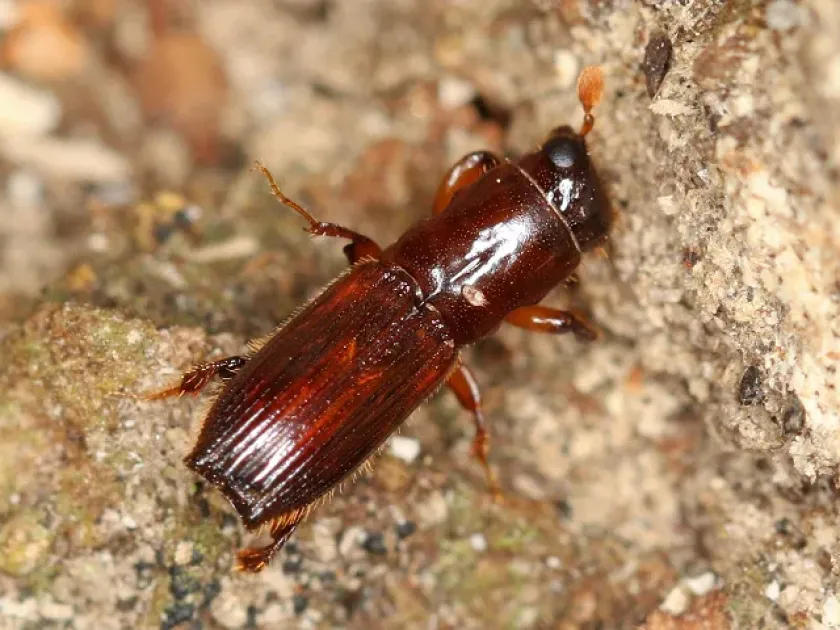
Platypus modestus is a species of ambrosia beetle belonging to the Platypodinae subfamily. These beetles are characterized by their extremely elongated, cylindrical bodies, typically measuring 5–7 mm in length.
The adults are generally dark brown to black in color, possessing a matte surface. Their head is deeply embedded into the pronotum, which is a key diagnostic feature for the genus.
The elytra feature distinct longitudinal grooves and ridges. Males often exhibit unique morphological structures at the apex of the elytra, which aid in clearing frass from their tunnels.
Larvae are legless, white, and specialized for dwelling within deep tunnels. They do not feed on wood fibers directly but rely on symbiotic fungi cultivated within the galleries.
The lifecycle is entirely dependent on these fungi. The beetles carry fungal spores in specialized structures called mycangia and inoculate the wood galleries they excavate.
What it damages
This pest primary affects various broadleaf tree species, including oak, beech, and hornbeam. It is a significant pest in both forestry and the timber industry.
The beetle typically targets stressed, dying, or recently felled timber. However, high-density populations can attack healthy trees, causing significant physiological stress.
The primary damage occurs deep within the wood, as the beetles bore long, radial tunnels that penetrate through the sapwood and into the heartwood.
These galleries cause extensive structural damage and serve as entry points for rot-causing fungi, leading to severe discoloration and loss of timber market value.
In stored logs, the presence of these beetles can lead to rapid degradation of the wood, making it unsuitable for high-quality carpentry or structural use.
Signs of infestation
The most visible sign of infestation is the accumulation of fine, white frass (sawdust) on the bark surface, beneath the entry points of the beetles' tunnels.
Entry holes are perfectly circular and often numerous, arranged in small clusters along the main trunk of the infested tree.
Internal inspection of damaged timber reveals a complex network of dark-stained tunnels, caused by the symbiotic fungi that line the walls of the beetle galleries.
Affected trees may show premature yellowing or wilting of the foliage, which is often a secondary symptom of the internal colonization of the vascular system by fungi.
Resin or sap bleeding at the entry points can be observed if the tree is still vigorous enough to mount an active defense against the boring beetles.
Control measures
Sanitation felling is the most effective control method. Removing infested trees and branches promptly prevents the emergence and spread of the next generation.
Proper timber storage is essential. Logs should be debarked or moved to processing facilities quickly to minimize the window for beetle attack on stored raw wood.
Pheromone traps are used for monitoring and mass trapping, helping to reduce the overall population density within vulnerable forestry stands.
Chemical protection of log piles using contact insecticides is recommended when rapid extraction is not feasible during the peak flight season of the adults.
- Regular forest health assessments.
- Rapid extraction of harvested timber.
- Encouraging natural predators and parasitoids.
Taxonomy
- Latin name
- Platypus modestus
- Order
- Coleoptera (beetles)
- Family
- Curculionidae
- EPPO code
- PLTPMO
Discussion
No discussions yet — be the first.