
Platypus gracilis
Platypus gracilis
Description
How to identify
Platypus gracilis belongs to the family Curculionidae, subfamily Scolytinae. These insects are classified as ambrosia beetles, which exhibit a sophisticated symbiotic relationship with fungi.
Adult beetles are characterized by their elongated, cylindrical body shape, which allows them to move efficiently through tunnels bored deep into the wood.
Their coloration is typically dark brown to black, aiding in camouflage against the tree bark during their initial entry and subsequent life cycle stages.
A distinctive biological feature is the presence of specialized structures called mycangia, used by females to carry fungal spores for cultivation within their galleries.
Larvae are legless and reside entirely within the wood, feeding on the mycelium of the fungi grown by their parents rather than the woody tissue itself.
What it damages
This beetle primarily attacks stressed, dying, or recently felled hardwood trees, showing a preference for hosts with high moisture content in the sapwood.
The primary economic damage is caused by the construction of tunnels that penetrate deeply into the heartwood, significantly reducing the quality of the timber.
The presence of beetle galleries disrupts the vascular system of the tree, impeding the transport of water and nutrients, which contributes to the decline of the host.
Secondary infections by pathogens and sapstain fungi frequently occur within the tunnels, further devaluing the wood and compromising the tree's health.
In forest nurseries and plantations, severe infestations can lead to total tree mortality if conditions remain favorable for the beetle's development.
Signs of infestation
The most reliable sign of an infestation is the presence of fine, sawdust-like frass accumulating on the bark surface or at the base of the tree trunk.
Small, circular entry holes are visible on the outer bark, often accompanied by resinous weeping or sap flux if the tree is still vigorous enough to respond.
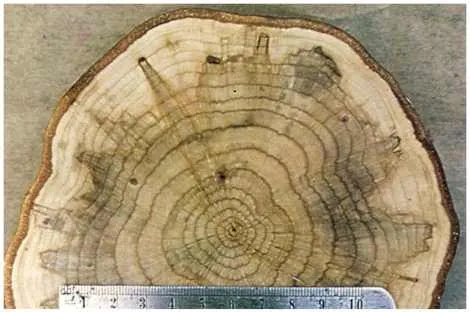
Internally, wood galleries exhibit distinct dark discoloration on their walls, which is caused by the localized growth of the symbiotic ambrosia fungi.
Crown dieback, yellowing leaves, and premature leaf drop are common visible indicators of a significant larval population damaging the vascular tissues.
Cross-sections of infested logs show a complex network of tunnels, which can be easily identified by their consistent, radial boring pattern.
Control measures
Effective management begins with strict forest hygiene, including the prompt removal and destruction of infested and storm-damaged timber from the vicinity.
Timing of timber harvest is critical; logs should be processed or moved from the forest as quickly as possible to prevent colonization by the beetles.
Pheromone-based trapping systems are highly recommended for monitoring local population levels and determining the precise timing for intervention.
Chemical control involving systemic insecticides can be applied to high-value trees, though its utility is often limited by the beetle's internal lifestyle.
- Sanitary removal of dead and infested wood.
- Prompt log extraction and processing.
- Use of pheromone traps for population surveillance.
- Maintenance of tree vitality through proper irrigation.
Taxonomy
- Latin name
- Platypus gracilis
- Order
- Coleoptera (beetles)
- Family
- Curculionidae
- EPPO code
- PLTPGR
Discussion
No discussions yet — be the first.