
Omnivorous leafroller
Platynota stultana
Description
How to identify
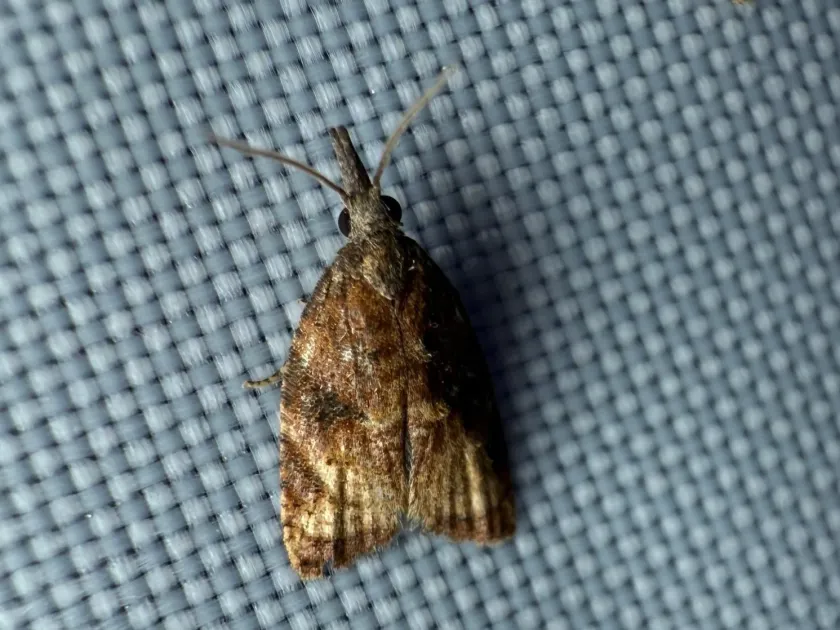
The Omnivorous leafroller (Platynota stultana) belongs to the order Lepidoptera and the family Tortricidae. The adult moth is small, with a wingspan of approximately 12–18 mm, typically displaying a brownish or tan coloration with darker diagonal bands across the forewings.
The larvae, or caterpillars, pass through several developmental stages (instars), initially appearing pale yellow and transitioning to a distinct green color as they mature. A notable identification feature is their dark head capsule, which remains visible throughout their growth.
Females lay eggs in overlapping masses that resemble fish scales on the upper leaf surfaces. These egg masses are often difficult to detect due to their camouflage, which helps them survive in various environmental conditions.
The life cycle is highly temperature-dependent, allowing for multiple generations per year, especially in warm climates or greenhouses. They are known for their high reproductive potential.
As a highly adaptable species, this moth has successfully expanded its range, colonizing a wide variety of both native and introduced plant hosts across different agricultural regions.
What it damages
The Omnivorous leafroller is a notorious polyphagous pest, known to feed on a vast range of crops, including grapes, tomatoes, peppers, citrus, cotton, and various greenhouse ornamentals.
The primary damage is caused by larvae that web leaves together and feed on tender tissues, flowers, and developing fruit. This feeding behavior ruins the visual appearance and marketability of the produce.
Larvae often burrow into the fruit, causing deep feeding scars. These wounds are not only damaging in themselves but also create entry points for secondary pathogens like fungi, leading to rot.
In addition to direct feeding, the larvae cause damage by severing stems or mining into terminal buds, which stunts plant growth and impacts overall vigor.
In intensive cropping systems, the pest can cause significant economic losses if not managed correctly, often resulting in heavy culling of harvested produce due to contamination or damage.
When it appears
Activity usually begins in the spring as temperatures rise above the development threshold, triggering the emergence of the first generation of adults from overwintering pupae.
In greenhouse environments, the Omnivorous leafroller is capable of breeding throughout the year, with generation times as short as 3–4 weeks depending on the temperature.
Field populations typically peak in mid-to-late summer. Because generations often overlap, different life stages can be found simultaneously, which complicates the timing of control measures.
As autumn arrives and temperatures drop, the pest seeks overwintering sites in bark crevices, leaf litter, or debris, preparing for the colder season.
The seasonal monitoring of the pest is crucial, particularly during the flowering and fruit-set stages, as these are the most vulnerable periods for the crops.
Signs of infestation
The most characteristic sign of infestation is the presence of silk webbing used by larvae to tie leaves together or to attach leaves to the surface of fruits.
Feeding damage on fruit appears as shallow surface scars or deeper, irregular holes. In many cases, dried frass (larval waste) will be visible near the feeding sites.
Terminal growth may appear distorted, twisted, or stunted, as larvae frequently target the apical buds of young plants during their early development.
Presence of larvae inside flowers or buds often results in the abscission (dropping) of these structures, leading to a noticeable reduction in the potential fruit count.
- Webbing between leaves
- Scars or holes on fruit skin
- Dead or discolored flowers
- Distorted shoot tips
Control measures
Integrated Pest Management (IPM) is essential for effective control, starting with the use of pheromone-baited traps to monitor adult moth populations and determine the timing of insecticide applications.
Cultural practices are highly effective, including the prompt removal and destruction of infested plant material and the cleanup of crop debris to eliminate overwintering sites.
Biological control agents, such as the application of Bacillus thuringiensis or the release of parasitic wasps like Trichogramma species, can significantly reduce larval populations.
Chemical control should be used judiciously, prioritizing products that are effective against young larvae and rotating chemical classes to prevent the development of resistance.
Maintaining a clean growing environment and monitoring crop phenology closely allows for early intervention, keeping the population levels below the economic injury threshold.
Taxonomy
- Latin name
- Platynota stultana
- Order
- Lepidoptera (butterflies)
- Family
- Tortricidae
- EPPO code
- PLAAST
Discussion
No discussions yet — be the first.