
Platynota rostrana
Platynota rostrana
Description
How to identify
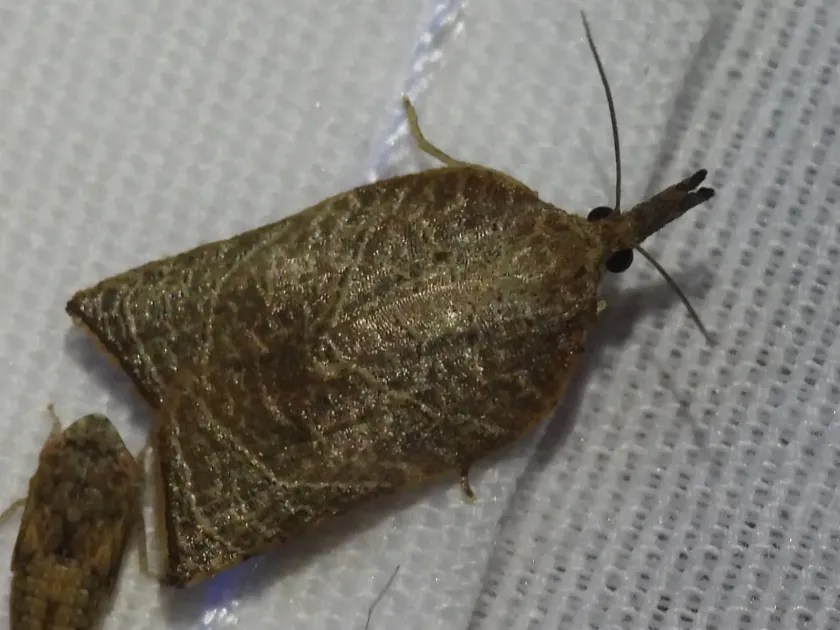
Platynota rostrana belongs to the order Lepidoptera and the family Tortricidae. These moths have a wingspan typically ranging from 15 to 20 millimeters.
Adult moths feature forewings with a color pattern varying from brown to ocher shades, characterized by distinct darker transverse bands. The hindwings are generally lighter, often grayish-brown.
The larvae go through several developmental stages (instars). Young larvae have light-colored bodies with dark head capsules, darkening to a brownish-green shade as they reach maturity, with clearly visible segmentation.
A key identifying feature of the pupae is their habit of hiding inside tightly rolled leaves or silk webs, which provides significant protection against environmental stressors and predators.
This species is a typical leafroller moth that has successfully adapted to a wide range of climates, particularly thriving in tropical and subtropical agricultural regions.
What it damages
Platynota rostrana is a polyphagous pest, meaning it feeds on a wide variety of plant hosts, including fruit trees, citrus, and various ornamental shrubs.
Larvae cause damage by feeding on young leaves, buds, and fruits. They use silk to bind leaves together, creating protective shelters where they actively graze on plant tissues.
Generative organs are at high risk, as larvae feeding on flower buds or ovaries significantly reduce yields and affect the commercial quality of the produce.
Mass infestations can lead to total defoliation of shoots, weakening the plant's overall vigor and making it more susceptible to secondary pathogens and fungal diseases.
In ornamental nurseries, damage to apical growth points often results in permanent deformation of the plant's structural branches, lowering its aesthetic value.
When it appears
The life cycle of Platynota rostrana is highly dependent on ambient temperature, allowing for multiple overlapping generations within a single growing season.
Females lay eggs in clusters on the underside of leaves, covering them with a protective secretion. Incubation typically lasts about one week, depending on temperature.
Larval activity is observed throughout the warmer months, from spring until late autumn, with population peaks often coinciding with the rapid growth of succulent plant tissues.
Pupation occurs within rolled leaf structures, which serves as a shield against both natural predators and contact-based chemical pesticides.
In regions with mild winters, the pest may continue to reproduce year-round, which creates significant challenges for monitoring and effective intervention planning.
Signs of infestation
The primary symptom of infestation is the presence of rolled or folded leaves bound by silk, which contain larvae or their distinctive frass (excrement).
The presence of fine webbing within flower clusters or at the tips of branches is a strong indicator of active larval feeding and shelter building.
Feeding damage appears as irregular «window-pane» patterns or holes in leaves, which eventually brown and desiccate, impairing the plant's photosynthetic efficiency.
When fruits are attacked, the larvae cause surface scarring or shallow pits, which often act as entry points for rot-inducing fungi and other secondary infections.
- Yellowing or wilting of succulent terminal shoots.
- Webbing visible in floral clusters and branch tips.
- Deformation of young fruitlets and premature fruit drop.
Control measures
Integrated pest management relies heavily on monitoring adult moth populations using pheromone traps to determine the precise timing for control measures.
Cultural practices include regular sanitary pruning of infested shoots and the removal of leaf litter, which can harbor overwintering pupae.
Biological control agents, such as formulations containing Bacillus thuringiensis, are highly effective against young larvae and offer a low-impact solution for beneficial insects.
Systemic chemical insecticides should be applied only when economic thresholds are reached, rotating active ingredients to prevent the development of pesticide resistance.
Promoting a healthy ecosystem that supports natural enemies, such as parasitic wasps and predatory bugs, is crucial for long-term population suppression.
Taxonomy
- Latin name
- Platynota rostrana
- Order
- Lepidoptera (butterflies)
- Family
- Tortricidae
- EPPO code
- PLAARO
Discussion
No discussions yet — be the first.