
Platynota flavedana
Platynota flavedana
Description
How to identify
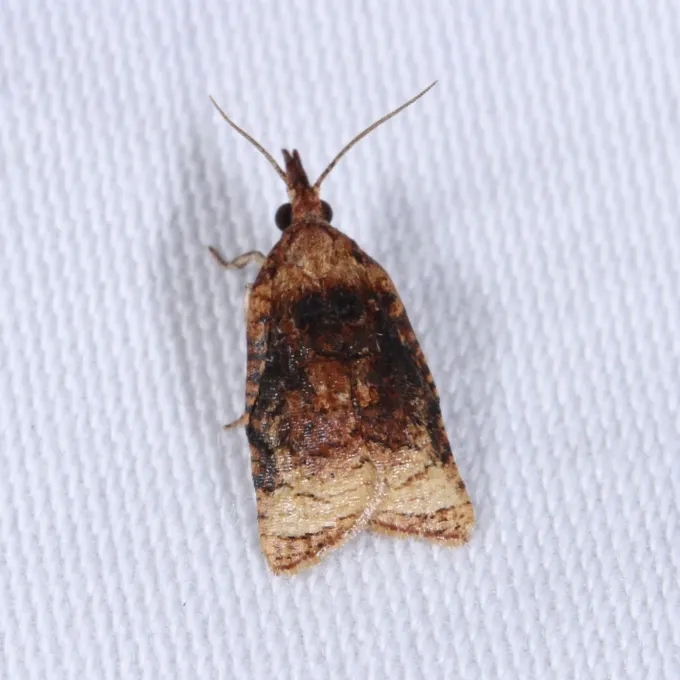
Platynota flavedana is a species of moth in the family Tortricidae. Adults are small, with a wingspan ranging from 15 to 20 mm, making them relatively inconspicuous in the field.
The forewings of the moth are typically yellowish-brown, adorned with darker, often reddish-brown bands or patches, providing excellent camouflage against tree bark.
Larvae, or caterpillars, progress through several instars. They vary in color from light to yellowish-green and possess a distinct dark head capsule, which is a key identification feature.
Pupae are usually concealed within rolled leaves or bark crevices. They are brown and elongated, designed to remain hidden from predators throughout their transformation stage.
Eggs are deposited in small, flat, overlapping clusters on the upper surfaces of leaves. These masses are covered with a protective secretion that mimics the leaf's natural texture.
What it damages
This pest is highly polyphagous, attacking a vast array of crops, including apples, pears, strawberries, and grapevines, impacting both foliage and fruit development.
Caterpillars feed primarily on leaf tissues, skeletonizing them or causing them to roll up. This activity reduces the plant's photosynthetic capacity and weakens overall plant vigor.
Beyond foliage, larvae frequently damage flower buds and young fruitlets. This feeding behavior often leads to fruit drop or significant deformity, resulting in economic losses.
Surface feeding on mature fruit leaves behind unsightly scars and abrasions. These wounds serve as entry points for secondary fungal and bacterial pathogens, leading to rot.
In nursery settings, larvae target terminal buds, causing stunted growth and irregular branch development, which can permanently ruin the shape of young ornamental or fruit trees.
When it appears
The emergence of adults typically begins in late spring when temperatures consistently exceed 15°C, often coinciding with the bloom period of many host trees.
Platynota flavedana is multivoltine, meaning it can complete multiple generations per season, depending on regional climatic conditions and average temperatures.
Peak flight activity of the adults is observed throughout the summer months. Because generations often overlap, different life stages can be found in the field simultaneously.
Overwintering occurs primarily as late-instar larvae. They spin protective silk shelters in fallen leaf litter, dead plant material, or deep within the crevices of tree trunks.
Warm, humid seasons provide optimal conditions for the survival and development of egg masses and early-stage larvae, leading to sudden spikes in pest pressure.
Signs of infestation
Rolled or tied leaves are the most visible sign of infestation. Larvae use silk webbing to fold leaves, creating a protected micro-environment where they feed undisturbed.
Frass (larval excrement) accumulation within these rolled leaves or near feeding sites on the fruit is a definitive indicator of the presence of active caterpillars.
Small, dry, brownish depressions on the surface of developing fruit, often at the site where a leaf was attached, are classic symptoms of Platynota flavedana feeding.
The use of pheromone traps allows growers to detect adult moths early, providing crucial data on flight patterns and helping to time intervention strategies effectively.
Wilting of terminal shoots and disfigured leaf growth are secondary signs that point to high population densities, necessitating immediate scouting and assessment.
Control measures
Good orchard sanitation is the first line of defense. Removing and destroying fallen leaves and overwintering debris significantly reduces the survival rate of the population.
Hand-picking and crushing rolled leaves can be effective in smaller gardens or organic setups to manage localized infestations before they spread to the rest of the canopy.
Biological control agents, such as Bacillus thuringiensis (Bt), are highly effective when applied during the early larval stages while preserving beneficial insects.
Chemical control programs should be based on threshold levels derived from trap monitoring. Systemic insecticides can provide effective protection when applied at the correct timing.
- Pruning for better air circulation and spray penetration
- Encouraging natural predators like parasitic wasps (Trichogramma)
- Using pheromone-based mating disruption to suppress populations
Taxonomy
- Latin name
- Platynota flavedana
- Order
- Lepidoptera (butterflies)
- Family
- Tortricidae
- EPPO code
- PLAAFL
Discussion
No discussions yet — be the first.