
White-legged damselfly
Platycnemis pennipes
Description
How to identify
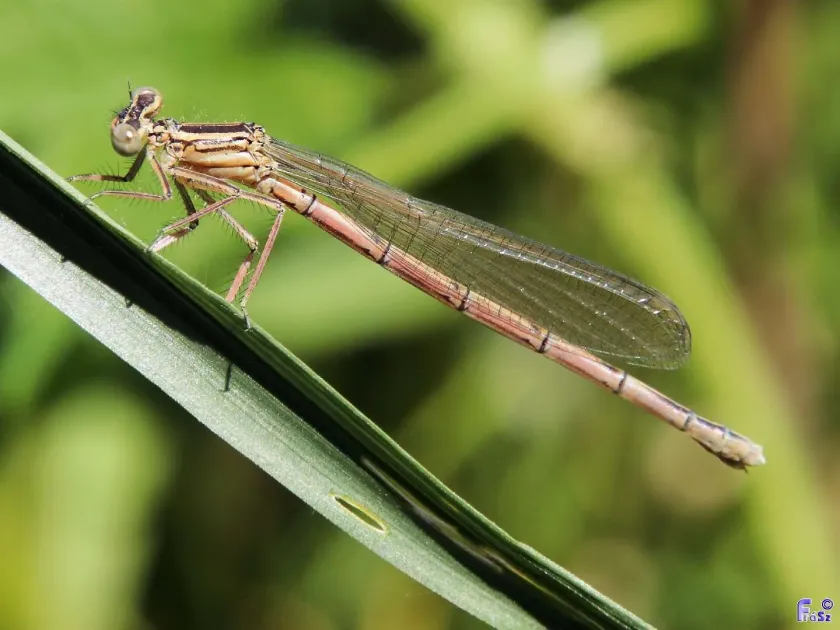
The White-legged damselfly (Platycnemis pennipes) is a species of damselfly in the family Platycnemididae. It is a slender, elegant insect known for its distinctive appearance.
Adults typically grow up to 36 millimeters in length. Their body color ranges from pale blue to greenish-yellow, featuring a characteristic black pattern on the abdomen.
The most reliable identification feature is the tibia of the middle and hind legs, which is noticeably widened and adorned with long hairs in males.
The wings are clear, thin, and feature a dense network of veins, which is a signature characteristic of damselflies in the suborder Zygoptera.
Larvae are aquatic predators living in slow-moving water; they have a slender body, three gills at the end of the abdomen, and a prehensile mask to catch prey.
What it damages
It is important to clarify that the White-legged damselfly is not a pest of agricultural crops. It does not feed on leaves, stems, or fruits of cultivated plants.
Both adults and larvae are active predators. They play a positive role by feeding on small insects such as mosquitoes, midges, and other aquatic pests.
Their presence near irrigation canals and ponds is an indicator of a healthy aquatic ecosystem and natural biological control of flying insect pests.
In aquaculture, their larvae may occasionally consume fish fry, but this is considered a minor ecological issue rather than a significant agricultural threat.
Generally, this species is considered highly beneficial to the environment, as it helps regulate insect populations near water sources used for irrigation.
When it appears
The adult flight period typically starts in late May and continues through mid-August, coinciding with the peak growing season of many crops.
Mating and egg-laying occur in or near stagnant or slow-flowing waters, where females deposit eggs directly into the submerged tissues of aquatic plants.
The larval stage is prolonged, often lasting up to two years, which ensures the species can survive across various environmental conditions and seasons.
Adults are most active on warm, sunny days, often congregating near water bodies with abundant riparian vegetation to hunt and find mates.
By late summer, the adult population declines, and larvae seek shelter on the bottom of water bodies or among plant debris to prepare for overwintering.
Control measures
Since the White-legged damselfly is a beneficial insect, no control measures are necessary. They do not damage crops and do not require pest management.
Indiscriminate use of broad-spectrum insecticides near water sources should be avoided to preserve these natural predators, which help manage mosquito populations.
If population control is required in specific commercial fish ponds, biological methods such as habitat management are preferred over chemical interventions.
Maintaining the natural vegetation along irrigation canals helps sustain populations of these beneficial insects, which in turn benefits the surrounding agricultural area.
Promoting biodiversity and protecting water habitats are the best ways to keep the ecosystem balanced without needing any artificial intervention against this species.
Taxonomy
- Latin name
- Platycnemis pennipes
- Family
- Platycnemididae
- EPPO code
- PLAKPE
Discussion
No discussions yet — be the first.